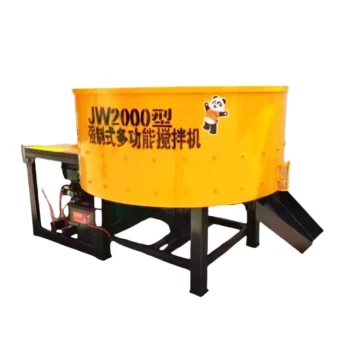
Thematics Concrete Mixer

concrete mixer

Concrete mixers are essential for construction projects, ensuring efficient and uniform mixing of cement, sand, gravel, and water. Our range includes:

  • Drum Mixers: Ideal for large-scale projects with high-efficiency mixing.
  • Portable Mixers: Compact and easy to transport, perfect for small to medium sites.
  • Batching Plants: Automated systems for precise and high-volume concrete production.
  • Hydraulic Mixers: Powerful and durable, suitable for demanding environments.

Each mixer is designed to enhance productivity and ensure consistent quality.


Why Choose Our Concrete Mixers?

Our concrete mixers are engineered to meet the diverse needs of construction projects, from small DIY tasks to large-scale industrial applications. Here’s what sets our products apart:

Advanced Mixing Technology

Our mixers feature rotating drums with internal blades that ensure thorough mixing, preventing cement lumps and ensuring uniform consistency. The inclined drum design is perfect for handling coarse aggregates, making it ideal for foundations, slabs, and structural elements.

Durability and Reliability

Built with high-quality materials, our mixers are designed to withstand harsh working conditions. Whether it’s a portable electric mixer for small jobs or a heavy-duty batching plant for large projects, our equipment delivers long-term performance with minimal maintenance.

Versatility

From JZC series portable mixers to HZS series batching plants, our range caters to various applications:

  • Construction Sites: Efficient mixing for buildings, roads, and bridges.
  • Hydropower Projects: Robust mixers for dams and large-scale infrastructure.
  • Precast Factories: Precise batching for prefabricated components.

Cost-Effectiveness

Investing in a concrete mixer saves time and labor costs compared to manual mixing or frequent rentals. Our mixers are energy-efficient, reducing operational expenses while delivering high productivity.

Customizable Solutions

We understand that every project has unique requirements. Our team can tailor mixers to your specific needs, whether it’s adjusting capacity, power source, or mobility features.

Easy Operation and Maintenance

User-friendly controls and straightforward maintenance procedures ensure smooth operation. Many of our models come with automated features, reducing the need for constant supervision.

Eco-Friendly Design

Our mixers are designed to minimize waste and energy consumption, aligning with sustainable construction practices.

Applications of Concrete Mixers

Our mixers are widely used in:

  • Building Construction: Foundations, walls, and slabs.
  • Road and Bridge Projects: High-strength concrete for durable infrastructure.
  • Water Conservancy: Dams, canals, and hydropower stations.
  • Precast Concrete: Uniform mixing for prefabricated elements.

Get Started Today

Ready to enhance your construction efficiency? Explore our range of concrete mixers and find the perfect solution for your project. Have questions or need a customized option? Contact us today for expert advice and tailored solutions. Let’s build something great together!

FAQ

What Are The Main Applications Of Concrete Mixers?

Concrete mixers are widely used in various construction projects, including building construction, road construction, water projects, and hydropower projects. They are essential for producing uniform and high-quality concrete efficiently.

What Are The Different Types Of Concrete Mixers Available?

There are several types of concrete mixers, including drum mixers, twin-shaft mixers, volumetric mixers, and self-loading mixers. Each type is designed for specific applications, from small DIY projects to large-scale industrial construction.

How Does A Concrete Mixer Work?

A concrete mixer works by rotating a drum or using twin shafts to mix cement, water, and aggregates (like sand and gravel) to form a uniform concrete mixture. The mixing process ensures that all components are evenly distributed, resulting in consistent and high-quality concrete.

What Are The Advantages Of Using A Concrete Mixer?

The advantages of using a concrete mixer include high efficiency, uniform mixing, time-saving, and the ability to handle large volumes of concrete. Additionally, modern mixers are designed to be durable, portable, and easy to operate, making them suitable for various construction needs.

What Should I Consider When Choosing A Concrete Mixer?

When choosing a concrete mixer, consider factors such as the size of your project, the type of concrete you need, the mixer's capacity, portability, and power source (electric or hydraulic). It's also important to look for features like durability, ease of maintenance, and warranty.

Are There Portable Concrete Mixers Available?

Yes, there are portable concrete mixers available, such as the JZC350 and JZC400 models. These mixers are designed for small to medium projects and are easy to transport, making them ideal for construction sites and DIY projects.

What Is The Capacity Range Of Concrete Mixers?

Concrete mixers come in a wide range of capacities, from small mixers like the JZC350 with a capacity of 350 liters to large industrial mixers like the JS3000 with a capacity of 3000 liters. The choice of capacity depends on the scale of the construction project.

Can Concrete Mixers Be Used For Other Materials Besides Concrete?

Yes, some concrete mixers, like the shaft mixer, can be used for mixing other materials such as mortar and mud. However, it's important to ensure that the mixer is compatible with the specific materials you intend to mix.

What Maintenance Is Required For A Concrete Mixer?

Regular maintenance for a concrete mixer includes cleaning the drum or mixing blades after each use, checking for wear and tear, lubricating moving parts, and inspecting the electrical or hydraulic systems. Proper maintenance ensures the longevity and efficient operation of the mixer.

Are There Eco-friendly Concrete Mixers Available?

Yes, there are eco-friendly concrete mixers available, such as the Belle JS3000 and HZS120 models. These mixers are designed to reduce energy consumption and minimize environmental impact while maintaining high efficiency and performance.

REQUEST A QUOTE

Our professional team will reply to you within one business day. Please feel free to contact us!


Related Articles

The Single Point of Failure: Why a Winch Is Not a Hoist

The Single Point of Failure: Why a Winch Is Not a Hoist

A winch pulls, a hoist lifts. The critical difference lies in the braking system, a distinction that prevents catastrophic failure in vertical lifting.

Read more
How to Choose the Right Wire Rope Hoist: Matching Motor and Drum Configurations to Your Needs

How to Choose the Right Wire Rope Hoist: Matching Motor and Drum Configurations to Your Needs

Learn how to choose the right wire rope hoist by matching motor and drum configurations to your operational needs for efficiency and longevity.

Read more
The Unseen Architects: Mastering Concrete Performance with Chemical Admixtures

The Unseen Architects: Mastering Concrete Performance with Chemical Admixtures

Discover how concrete admixtures are not mere additives, but precision tools that solve critical construction challenges from weather to complex designs.

Read more
How Capstan Safety Protocols Prevent Accidents: Engineering Principles Explained

How Capstan Safety Protocols Prevent Accidents: Engineering Principles Explained

Learn how capstan safety protocols prevent accidents through friction, wrap thresholds, and real-world lessons for secure operations.

Read more
Beyond the Buttons: The Cognitive Shift to Automated Concrete Batching

Beyond the Buttons: The Cognitive Shift to Automated Concrete Batching

Modern control panels do more than automate; they shift concrete production from fallible human judgment to a system of digital precision, cutting waste.

Read more
How to Match Winch Specifications to Your Operational Needs

How to Match Winch Specifications to Your Operational Needs

Learn how to match winch specs to operational needs—load dynamics, environmental stressors, and duty cycles for marine, mining, and industrial use.

Read more
Gravity vs. Force: The Engineering Choice That Defines Every Concrete Structure

Gravity vs. Force: The Engineering Choice That Defines Every Concrete Structure

Understanding concrete mixer classifications—gravity vs. forced, mobile vs. stationary—is key to preventing costly failures and ensuring structural integrity.

Read more
How Electric Winches Transform Industrial Workflows: Efficiency & Safety Upgrades

How Electric Winches Transform Industrial Workflows: Efficiency & Safety Upgrades

Discover how electric winches enhance industrial efficiency & safety with higher load capacity, faster workflows, and built-in safety features.

Read more
The Slow, Unstoppable Force: The Engineering Genius of a Winch

The Slow, Unstoppable Force: The Engineering Genius of a Winch

A winch is a force multiplier that trades speed for immense, controlled power, making heavy-load operations fundamentally safer and more efficient.

Read more
How to Optimize Measurement Hoppers for Uninterrupted Material Flow and Precision Batching

How to Optimize Measurement Hoppers for Uninterrupted Material Flow and Precision Batching

Optimize measurement hoppers for uninterrupted material flow and precision batching with expert design tips and operational best practices.

Read more
Beyond the Tumble: The Physics and Psychology of a Perfect Concrete Mix

Beyond the Tumble: The Physics and Psychology of a Perfect Concrete Mix

Discover how twin-shaft mixers' compulsory action eliminates inconsistent blends, ensuring the structural integrity and predictability your project demands.

Read more
How Electric Winches Prevent Damage in High-Value Material Handling

How Electric Winches Prevent Damage in High-Value Material Handling

Electric winches prevent damage in high-value material handling with precise speed control, torque management, and emergency stop features.

Read more
Beyond Brute Force: The Elegant Physics of the Modern Winch

Beyond Brute Force: The Elegant Physics of the Modern Winch

A winch isn't magic; it's the physics of the wheel and axle, trading distance for force to make impossible construction tasks manageable.

Read more
The Precision Mandate: Why Water Control Defines Modern Concrete

The Precision Mandate: Why Water Control Defines Modern Concrete

Mastering concrete quality means mastering water. Learn how automated systems overcome hidden variables like aggregate moisture for perfect batch consistency.

Read more
How Electrically Driven Winch Brakes Prevent Failures and Ensure Safety

How Electrically Driven Winch Brakes Prevent Failures and Ensure Safety

Learn how electrically driven winch brakes prevent failures with fail-safe mechanisms, maintenance tips, and industry safety standards for heavy loads.

Read more
The Gravity of the Situation: Why Vehicle Weight is the Least of Your Winch's Worries

The Gravity of the Situation: Why Vehicle Weight is the Least of Your Winch's Worries

Choosing a winch isn't about your vehicle's weight; it's about overcoming the hidden physics of resistance from mud, inclines, and friction.

Read more
Beyond the Drum: The Compulsory Logic of Twin-Shaft Concrete Mixers

Beyond the Drum: The Compulsory Logic of Twin-Shaft Concrete Mixers

Discover how the compulsory, turbulent action of a twin-shaft mixer creates homogeneous concrete, ensuring structural integrity and project success.

Read more
Optimizing Concrete Batching Accuracy: Technology-Driven Solutions for Modern Plants

Optimizing Concrete Batching Accuracy: Technology-Driven Solutions for Modern Plants

Boost concrete batching accuracy with IoT sensors, AI analytics, and ISO-compliant practices to cut costs and ensure structural integrity.

Read more
The Unseen Force: Mastering the Psychology of Winch Safety

The Unseen Force: Mastering the Psychology of Winch Safety

Effective winching isn't about power; it's about managing stored kinetic energy through disciplined processes and psychological awareness of risk.

Read more
How to Maintain Concrete Quality During On-Site Delays in High Heat

How to Maintain Concrete Quality During On-Site Delays in High Heat

Learn science-backed strategies to maintain concrete quality during high-heat delays, from retarder adjustments to real-time monitoring protocols.

Read more