Introduction
Wire ropes are the backbone of winch systems, directly impacting safety, efficiency, and operational longevity. Whether you're lifting heavy loads or towing equipment, choosing the right wire rope and maintaining it properly can mean the difference between seamless operations and catastrophic failures. This guide breaks down the mechanics of wire rope performance, selection criteria, and maintenance protocols—helping you minimize downtime and maximize safety.
Wire Rope Mechanics in Winch Operations
Drum-Rope Interaction Dynamics
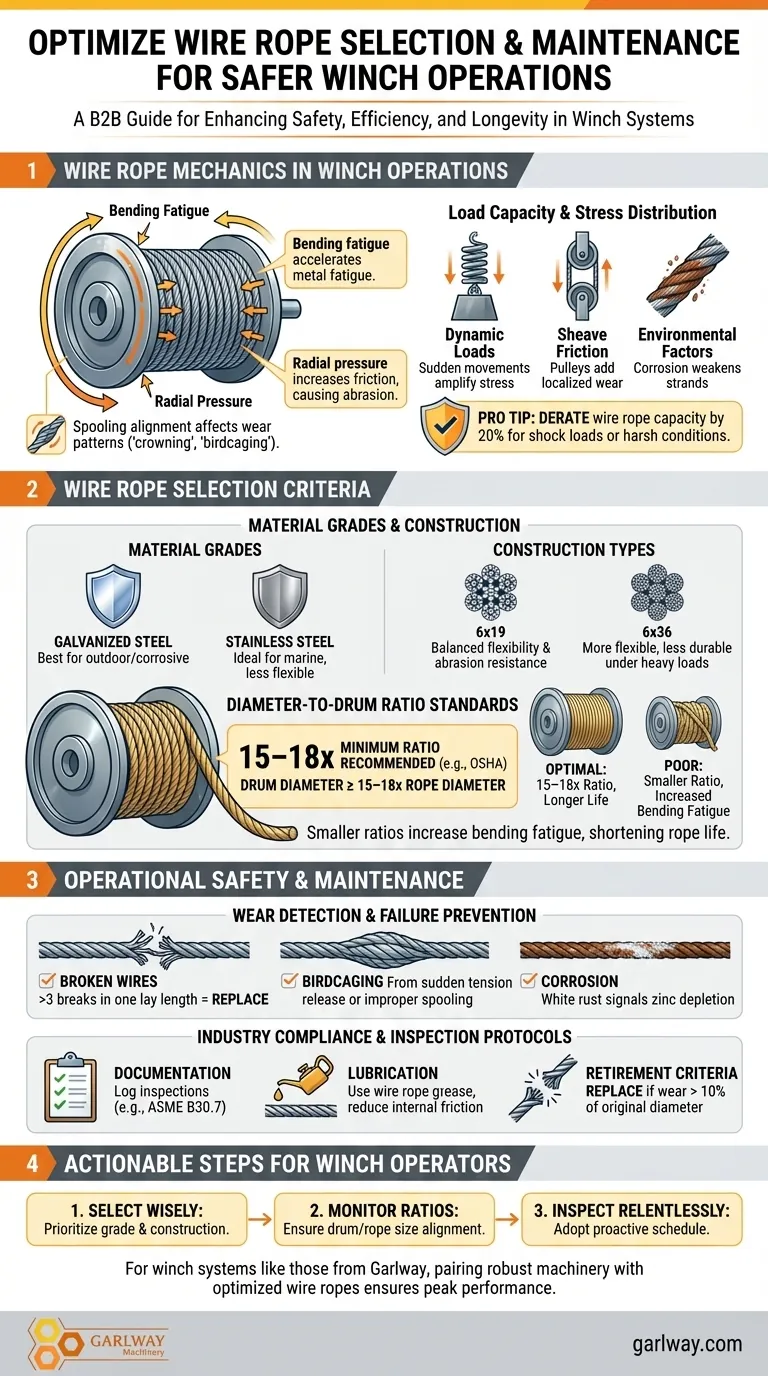
Wire ropes experience complex stresses when spooling onto winch drums. The key factors influencing their lifespan include:
- Bending fatigue: Repeated bending around the drum accelerates metal fatigue.
- Radial pressure: Tight winding increases friction between rope layers, causing abrasion.
- Spooling alignment: Misaligned ropes create uneven wear patterns ("crowning" or "birdcaging").
Ever wondered why some ropes fail prematurely? Often, it’s not the load capacity but the drum interaction that determines longevity.
Load Capacity and Stress Distribution
A rope’s rated capacity is just the starting point. Real-world stress factors include:
- Dynamic loads: Sudden movements or jerks amplify stress.
- Sheave friction: Pulleys redirect force but add localized wear.
- Environmental factors: Corrosion from moisture or chemicals weakens strands over time.
Pro Tip: Always derate wire rope capacity by 20% for shock loads or harsh conditions.
Wire Rope Selection Criteria
Material Grades and Construction Types
Match the rope to your winch’s demands:
- Galvanized steel: Best for outdoor or corrosive environments.
- Stainless steel: Ideal for marine applications but less flexible.
-
Construction types:
- 6x19 (6 strands, 19 wires each): Balanced flexibility and abrasion resistance.
- 6x36: More flexible but less durable under heavy loads.
Diameter-to-Drum Ratio Standards
A critical yet overlooked factor:
- Minimum ratio: Industry standards (e.g., OSHA) recommend a drum diameter at least 15–18x the rope’s diameter.
- Why it matters: Smaller ratios increase bending fatigue, shortening rope life.
Think of wrapping a thick rope around a tiny spool—it’s like bending a paperclip repeatedly until it snaps.
Operational Safety and Maintenance
Wear Detection and Failure Prevention
Spot early warning signs to avoid disasters:
- Broken wires: More than 3 breaks in one lay length warrant replacement.
- Birdcaging: Often caused by sudden release of tension or improper spooling.
- Corrosion: White rust (zinc depletion) signals galvanized rope degradation.
Checklist: Inspect ropes monthly for kinks, flattened areas, or diameter reduction.
Industry Compliance and Inspection Protocols
Follow these best practices:
- Documentation: Log inspections per ASME B30.7 or ISO 4309.
- Lubrication: Use wire rope grease to reduce internal friction.
- Retirement criteria: Replace ropes if wear exceeds 10% of original diameter.
Conclusion: Actionable Steps for Winch Operators
- Select wisely: Prioritize rope grade and construction based on load dynamics.
- Monitor ratios: Ensure drum diameter aligns with rope size.
- Inspect relentlessly: Adopt a proactive maintenance schedule.
For winch systems like those from Garlway, pairing robust machinery with optimized wire ropes ensures peak performance. Remember—safety isn’t just about strength; it’s about smart, informed choices.
Ready to upgrade your winch operations? Start by auditing your current wire ropes against these benchmarks.
Visual Guide
Related Products
- Warn Winch Windlass Boat Trailer Winch
- Electric and Hydraulic Winch for Heavy Duty Applications
- Small Electric Winch 120V and 240V for Compact Applications
- 12000 lb Electric Boat Trailer Winch with Windlass Anchor Warn
- Quick Windlass Portable Winch for Truck and Boat Best Boat Winch
Related Articles
- Beyond the Bumper: The Critical System Choice in Powering Your Trailer Winch
- Force vs. Mass: The Critical Difference in Sizing a Boat Winch
- Lines of Force: The Unseen Geometry of a Boat Winch
- More Than a Number: The Engineering Psychology of Choosing a Boat Winch
- How to Choose and Optimize Winch Speed for Maximum Efficiency