Introduction
Feeding stage bottlenecks can cripple concrete production efficiency, causing costly delays and material waste. This guide reveals practical solutions used by industry leaders to optimize temporary storage systems, valve reliability, and feeding tool performance—directly addressing the core challenges documented in precast concrete case studies. Whether you're managing large-scale projects or routine operations, these actionable strategies will help maintain continuous workflow.
Factors Impacting Feeding Efficiency in Concrete Mixing
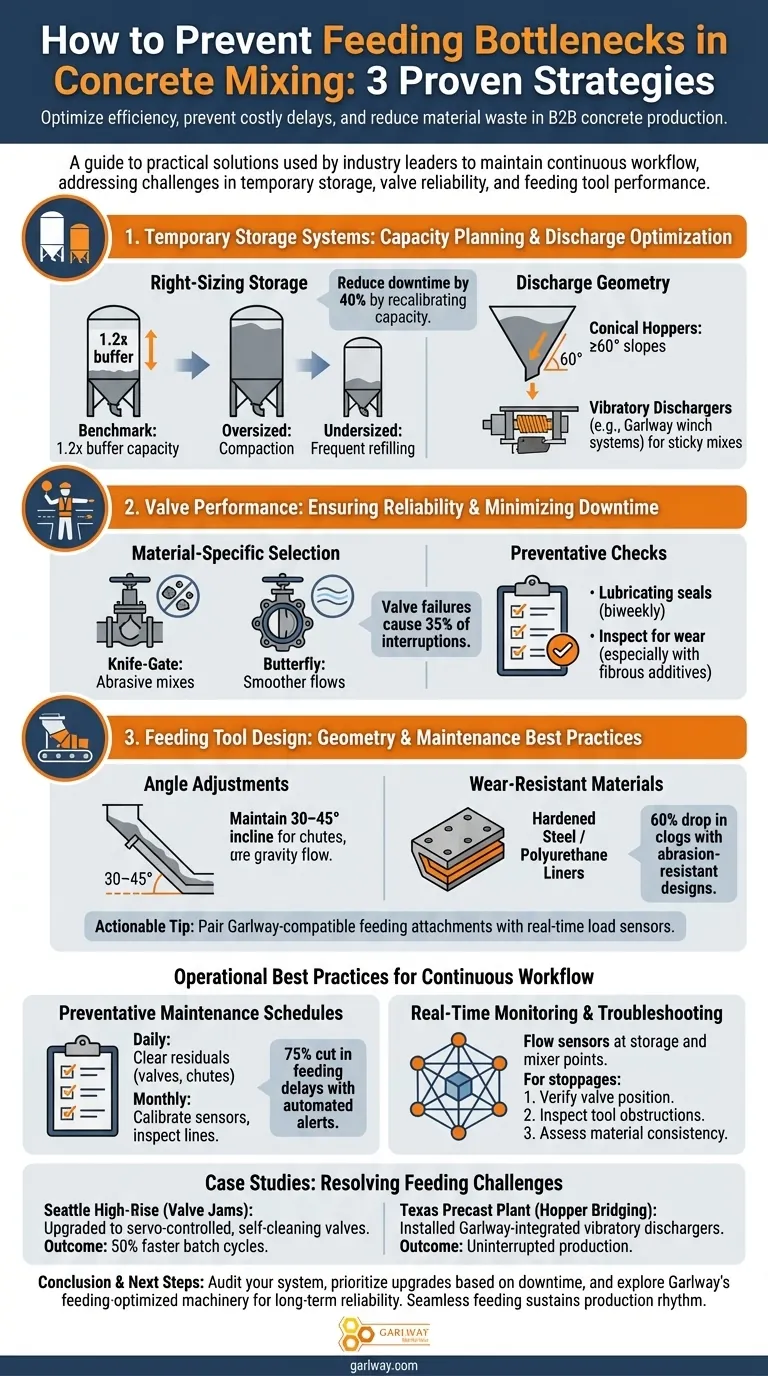
1. Temporary Storage Systems: Capacity Planning and Discharge Optimization
Ever wondered why material flow stalls even with adequate storage? The culprit is often mismatched capacity or poor discharge design.
-
Right-Sizing Storage:
Temporary silos or hoppers must balance volume with discharge speed. Oversized units risk material compaction, while undersized ones require frequent refilling. Industry benchmarks suggest a 1.2x buffer capacity relative to mixer demand. -
Discharge Geometry:
Conical hoppers with ≥60° slopes prevent material bridging. For sticky mixes, vibratory dischargers (like those in Garlway winch systems) can maintain flow.
Key Insight: A precast plant reduced downtime by 40% after recalibrating storage capacity to match batch cycle times.
2. Valve Performance: Ensuring Reliability and Minimizing Downtime
Valve failures account for 35% of feeding interruptions. Proactive measures include:
-
Material-Specific Selection:
Use knife-gate valves for abrasive mixes (e.g., high-aggregate concrete) and butterfly valves for smoother flows. -
Preventative Checks:
Lubricate seals biweekly and inspect for wear—especially after processing fibrous additives.
Visual Metaphor: Think of valves as traffic cops; even a minor malfunction causes gridlock downstream.
3. Feeding Tool Design: Geometry and Maintenance Best Practices
Clogged or misaligned tools disrupt material transfer. Optimize with:
-
Angle Adjustments:
Maintain a 30–45° incline for chutes to leverage gravity flow without spillage. -
Wear-Resistant Materials:
Hardened steel or polyurethane liners extend tool lifespan. Documented cases show a 60% drop in clogs after switching to abrasion-resistant designs.
Actionable Tip: Pair Garlway-compatible feeding attachments with real-time load sensors to detect flow anomalies early.
Operational Best Practices for Continuous Workflow
Preventative Maintenance Schedules for Critical Components
- Daily: Clear residual material from valves and chutes.
- Monthly: Calibrate sensors and inspect hydraulic/pneumatic lines.
Example: A bridge project cut feeding delays by 75% using automated maintenance alerts.
Real-Time Monitoring and Troubleshooting Techniques
- Flow Sensors: Install at storage exits and mixer inlets to flag blockages.
-
Checklist for Stoppages:
- Verify valve position.
- Inspect for tool obstructions.
- Assess material consistency (e.g., excess moisture).
Case Studies: Resolving Feeding Challenges in Large-Scale Projects
-
High-Rise Development in Seattle:
- Issue: Frequent valve jams from rapid-set concrete additives.
- Solution: Upgraded to servo-controlled valves with self-cleaning cycles.
- Outcome: 50% faster batch cycles.
-
Precast Plant in Texas:
- Issue: Hopper bridging slowed nighttime operations.
- Solution: Installed Garlway-integrated vibratory dischargers.
- Outcome: Uninterrupted production during peak demand.
Conclusion & Next Steps
Feeding bottlenecks stem from predictable factors—storage design, valve health, and tool maintenance. By adopting these strategies:
- Audit your current system using the checklist above.
- Prioritize upgrades based on downtime patterns (e.g., valves vs. tools).
- Explore Garlway’s feeding-optimized machinery for long-term reliability.
Final Thought: In concrete production, seamless feeding isn’t just about speed—it’s about sustaining the rhythm that keeps projects on schedule.
Visual Guide
Related Products
- Portable Concrete Mixer Machine Equipment for Mixing Concrete
- Construction Products Concrete Plant Machine Mixing Concrete Mixer
- Portable Electric Concrete Mixer Machine for Cement Mixing
- JZC400 Mobile Small Concrete Mixer Cement Mixer Machine
- Hydraulic Concrete Mixer Machine Cement Mixing Equipment for Mixture Concrete
Related Articles
- How to Diagnose and Prevent Sensor Resistance Failures in Concrete Mixing Equipment
- How to Build an OSHA-Compliant Safety System for Concrete Mixer Workspaces
- The Downtime Equation: How a Manufacturer's Support System Defines Your Concrete Mixer's True Cost
- How to Choose Concrete Mixers for Long-Term Reliability and Cost Savings
- How Concrete Composition Works: The Science Behind Stronger Structures






