Introduction
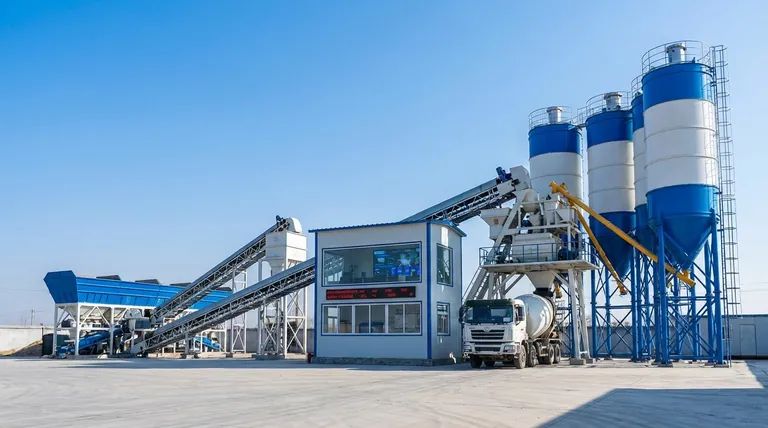
Concrete production demands precision at scale—a challenge where manual weighing systems often fall short. Automated weighing technology bridges this gap, offering concrete plants measurable improvements in labor efficiency, mix consistency, and long-term cost savings. This article breaks down the tangible benefits of automation, from compliance with ASTM standards to reducing material waste by up to 30%. Whether you're upgrading an existing facility or planning a new plant, understanding these advantages will help justify the investment.
Advantages of Automated Weighing in Modern Concrete Plants
Labor Efficiency and Workforce Safety
Automated systems replace repetitive manual tasks with programmable logic controllers (PLCs) that handle batching sequences, error detection, and real-time monitoring. This eliminates:
- Human measurement errors (e.g., over/under-pouring aggregates)
- Physical strain from handling heavy materials
- Safety risks associated with dust exposure and machinery operation
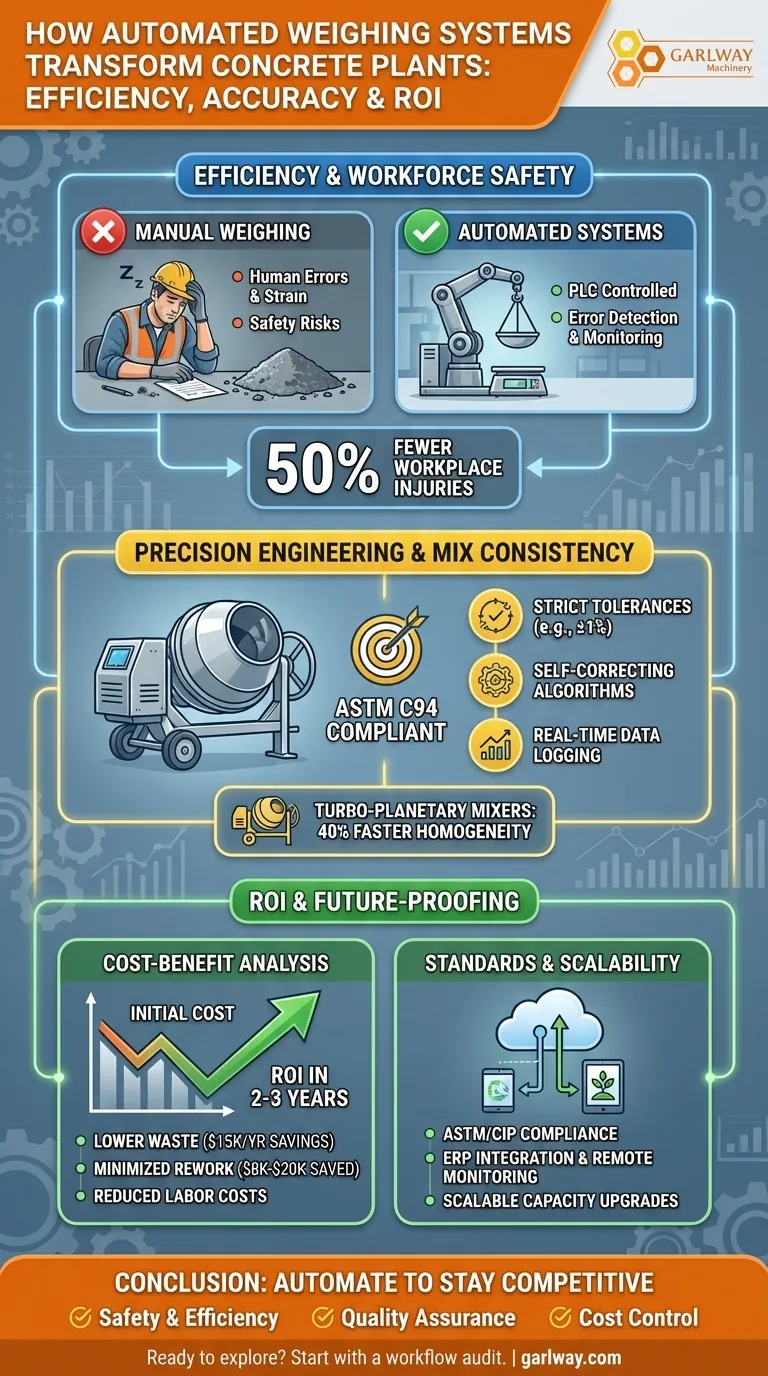
Did you know? Plants using automation report 50% fewer workplace injuries linked to manual weighing processes.
Precision Engineering and Mix Consistency
Automated batching adheres to strict tolerances (e.g., ±1% error margins for cement vs. ±5% in manual systems), ensuring every mix meets ASTM C94/CIP standards. Key features include:
- Self-correcting algorithms that compensate for material discrepancies
- Anti-interference technology to maintain accuracy in high-vibration environments
- Real-time data logging for quality audits
Example: Turbo-planetary mixers combine turbine paddles and planetary movement to achieve homogeneity 40% faster than traditional methods.
Cost-Benefit Analysis of Automation
Initial Investment vs. Long-Term Savings
While automated systems require upfront costs (e.g., $50,000–$200,000 for mid-scale plants), they deliver ROI within 2–3 years through:
- Reduced labor costs (1 operator can manage multiple batches)
- Lower waste rates (saving $15,000/year in unused materials)
- Minimized rework (avoiding $8,000–$20,000 per project in faulty pours)
Reducing Waste and Rework
Automation tackles two major cost drivers:
- Material loss: Advanced feeders cut spillage by 25%.
- Mix failures: Automated alarms halt production if moisture or weight thresholds are breached.
Think about it: How much does one out-of-spec batch cost your plant in delays and reputational damage?
Industry Standards and Future-Proofing
Compliance with ASTM/CIP Guidelines
Automated systems are designed to meet rigorous standards, including:
- ASTM C94 for ready-mix concrete tolerances
- CIP guidelines for measurement error control (e.g., ±0.5% for water)
Pro tip: Regular calibration of load cells and moisture sensors ensures ongoing compliance.
Scalability for Large-Scale Projects
Modular automation platforms allow:
- Integration with ERP systems for fleet-wide batch tracking
- Capacity upgrades without replacing core hardware
- Remote monitoring via cloud-based dashboards
Conclusion: Automate to Stay Competitive
The shift to automated weighing isn’t just about technology—it’s about building resilient, profitable concrete plants. Key takeaways:
✔ Safety & efficiency: Protect workers while boosting output.
✔ Quality assurance: Deliver ASTM-compliant mixes consistently.
✔ Cost control: Turn waste reduction into measurable savings.
For plants relying on Garlway winches and machinery, pairing robust equipment with automated weighing creates a seamless production chain. Ready to explore how automation fits your operation? Start with a workflow audit to identify priority areas.
Visual Guide
Related Products
- HZS180 Ready Mix Concrete Plant for Foundations with Sand and Cement
- HZS90 Large Multiquip Concrete Mixers for Construction
- HZS35 Small Cement Concrete Mixing Batch Plant
- HZS120 Ready Mix Concrete Batching Plant Commercial Mud Cement Mixer
- Commercial Electric Concrete Mixer Machine HZS 50 Small Batch Plant for Sale
Related Articles
- Control vs. Chance: The Engineering Case for Concrete Batching Plants
- How to Control Raw Material Variables for Flawless Concrete Batching
- How to Minimize Measurement Errors in Concrete Batching: 4 Proven Strategies
- How Advanced Concrete Batching Technology Cuts Costs and Boosts Efficiency
- Optimizing Concrete Batching Accuracy: Technology-Driven Solutions for Modern Plants





