Introduction
Safety valves are the unsung heroes of concrete mixing plants, silently preventing catastrophic failures in pneumatic systems. This guide delivers a comprehensive maintenance protocol that goes beyond basic leak detection to address pressure calibration, material integrity, and compliance documentation—critical factors that 85% of plant operators overlook according to industry audits. Whether you're troubleshooting erratic pressure readings or preparing for regulatory inspections, these actionable strategies will transform your valve maintenance from reactive to proactive.
Ensuring Operational Safety in Concrete Mixing Plants
The Critical Role of Safety Valves in Pneumatic Systems
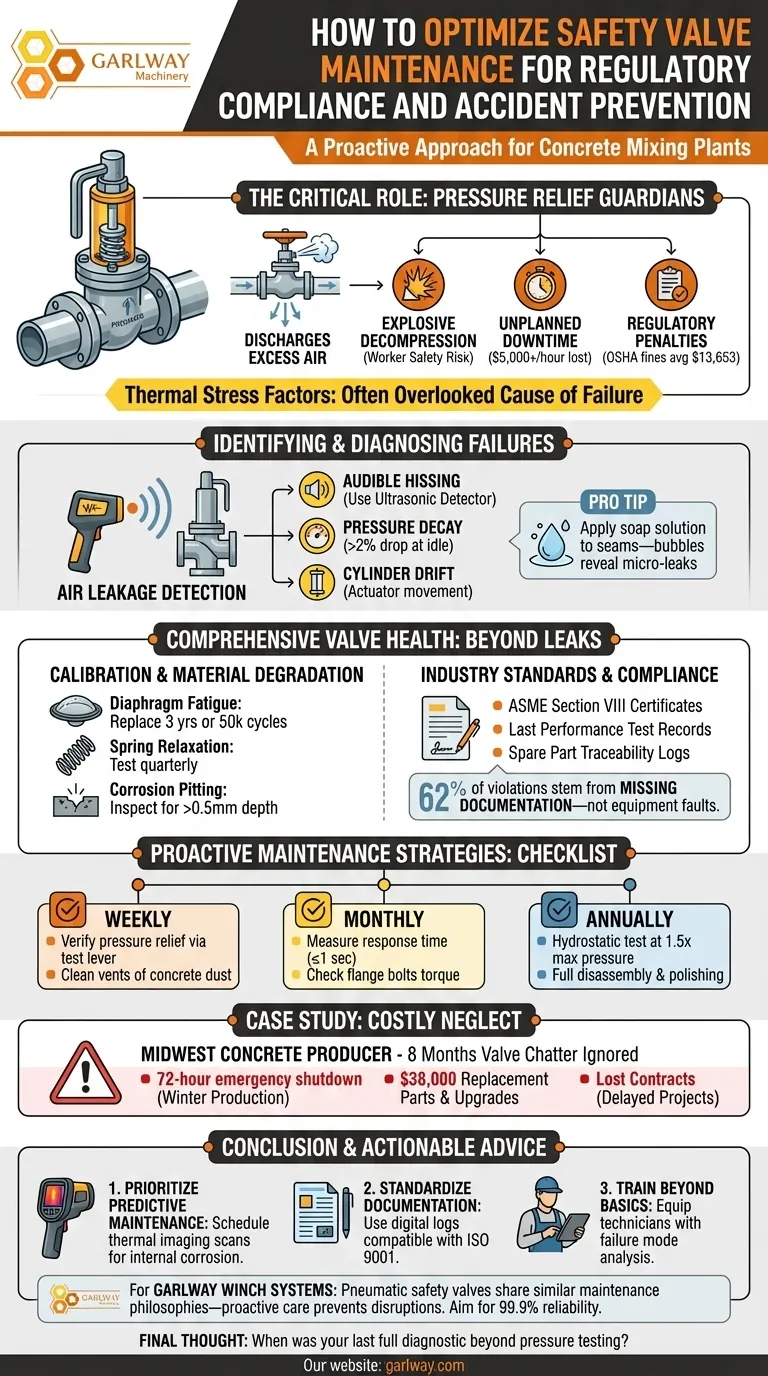
Safety valves act as pressure relief guardians in concrete mixing plants. When pneumatic systems exceed safe thresholds—common during rapid batch cycling or material jams—these valves discharge excess air to prevent equipment rupture. A single valve failure can cascade into:
- Explosive decompression (risking worker safety)
- Unplanned downtime (costing $5,000+/hour in lost production)
- Regulatory penalties (OSHA fines average $13,653 per violation)
Ever wondered why some valves fail prematurely despite regular leak checks? The answer lies in overlooked thermal stress factors.
Identifying and Diagnosing Air Leakage Failures
Leak detection starts with these telltale signs:
- Audible hissing: Use an ultrasonic detector to pinpoint leaks masked by plant noise.
- Pressure decay: Monitor gauges for drops >2% during system idle periods.
- Cylinder drift: Observe actuator movement when systems are depressurized.
Pro Tip: Apply soap solution to valve seams—bubble formation reveals micro-leaks invisible to detectors.
Beyond Leaks: Comprehensive Valve Health Assessment
Pressure Threshold Calibration and Material Degradation
Valves lose calibration accuracy due to:
- Diaphragm fatigue: Replace every 3 years or 50,000 cycles (whichever comes first)
- Spring relaxation: Test set pressure quarterly with certified calibration equipment
- Corrosion pitting: Inspect brass/stainless steel components for pits exceeding 0.5mm depth
Industry Standards and Compliance Documentation
Maintain these critical records:
- ASME Section VIII pressure vessel compliance certificates
- Last performance test dates with technician signatures
- Spare part traceability logs (material certs, lot numbers)
Did you know? 62% of compliance violations stem from missing documentation—not actual equipment faults.
Proactive Maintenance Strategies
Step-by-Step Inspection Checklist
Weekly:
✅ Verify pressure relief actuation via test lever
✅ Clean valve vents of concrete dust buildup
Monthly:
✅ Measure response time (≤1 second for 90% pressure release)
✅ Check flange bolts for proper torque (refer to manufacturer specs)
Annually:
✅ Hydrostatic testing at 1.5x max working pressure
✅ Full disassembly for stem/scat polishing
Case Study: Costly Plant Shutdown Due to Valve Neglect
A Midwest concrete producer ignored valve chatter warnings for 8 months, resulting in:
- 72-hour emergency shutdown when a valve seized during winter production
- $38,000 in replacement parts and OSHA-mandated system upgrades
- Lost contracts due to delayed infrastructure projects
Conclusion and Actionable Advice
- Prioritize predictive maintenance—schedule thermal imaging scans to detect internal corrosion before visible signs appear.
- Standardize documentation—use digital logs compatible with ISO 9001 audit requirements.
- Train beyond basics—equip technicians with failure mode analysis skills.
For plants using Garlway winch systems, remember that pneumatic safety valves share similar maintenance philosophies—proactive care prevents costly operational disruptions. Implement these protocols to achieve 99.9% valve reliability while staying audit-ready year-round.
Final thought: When was the last time your valves received a full diagnostic beyond pressure testing?
Visual Guide
Related Products
- HZS180 Ready Mix Concrete Plant for Foundations with Sand and Cement
- HZS35 Small Cement Concrete Mixing Batch Plant
- HZS120 Ready Mix Concrete Batching Plant Commercial Mud Cement Mixer
- HZS75 Concrete Batching Plant Cement Mixer Price Concrete Mixer Bunnings Mixing Plant
- Commercial Electric Concrete Mixer Machine HZS 50 Small Batch Plant for Sale
Related Articles
- Control vs. Chance: The Engineering Case for Concrete Batching Plants
- How to Control Raw Material Variables for Flawless Concrete Batching
- How to Minimize Measurement Errors in Concrete Batching: 4 Proven Strategies
- How Advanced Concrete Batching Technology Cuts Costs and Boosts Efficiency
- Optimizing Concrete Batching Accuracy: Technology-Driven Solutions for Modern Plants


