Toggle Categories
Get Instant Support
Choose your preferred way to connect with our team
-
Get Free Quote Fill out form for detailed pricing
-
Send Email Detailed inquiry support
-
WhatsApp Quick mobile chat
Response Time
Within 8 hours on working days, 24 hours on holidays


Winch

Small Electric Winch 120V and 240V for Compact Applications
Item Number: GJYJ1T

Portable Small Trailer Winch
Item Number: GJYJ0.5T
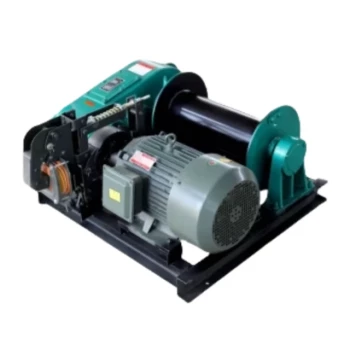
Hydraulic Winding Engine Harbor Freight Winch
Item Number: GJYJ2T

Electric 120V Boat Winch by Badlands
Item Number: GJYJ3T

Electric Hoist Winch Boat Anchor Windlass for Marine Applications
Item Number: GJYJ4T

Warn Winch Windlass Boat Trailer Winch
Item Number: GJYJ5T

12000 lb Heavy Duty Electric Boat Winch
Item Number: GJYJ6T

Quick Windlass Portable Winch for Truck and Boat Best Boat Winch
Item Number: GJYJ8T

Best 18000 Pound Drum Anchor Trailer Winch
Item Number: GJYJ10T

Heavy Duty Electric Boat Winch Windlass Anchor
Item Number: GJYJ20T

12000 lb Electric Boat Trailer Winch with Windlass Anchor Warn
Item Number: GJYJ7T

Electric and Hydraulic Winch for Heavy Duty Applications
Item Number: GJYJ1.5T
Edit This Page
REQUEST A QUOTE
Our professional team will reply to you within one business day. Please feel free to contact us!
Related Articles
How to Build a Fail-Safe Hand Winch Safety System for Heavy Loads
Learn the 3 pillars of hand winch safety—mechanical safeguards, operational protocols, and compliance standards—for fail-safe heavy load handling.
How to Choose the Right Hoisting Device for Your Industry Needs
Learn how to choose the right hoisting device—manual, electric, or hydraulic—based on load capacity, energy efficiency, and industry needs.
How to Optimize Wire Rope Selection and Maintenance for Safer Winch Operations
Learn how to select and maintain wire ropes for safer, more efficient winch operations. Key tips on load capacity, wear detection, and compliance.
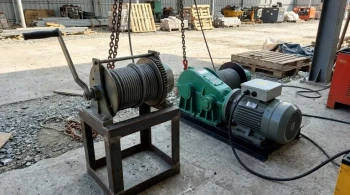
How to Choose Between Manual and Electric Winches for Your Project
Compare manual vs. electric winches: power source, performance, cost, and best use cases for your project. Choose wisely!
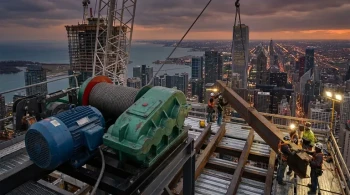
How Precision Slow-Speed Winches Reduce Costs in Critical Industrial Operations
Precision slow-speed winches enhance safety & cut costs in offshore & construction operations through controlled torque & reduced downtime.
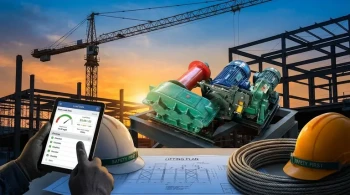
How to Implement Engineering-Led Hoist Safety Protocols That Prevent Catastrophic Failures
Learn engineering-led hoist safety protocols to prevent catastrophic failures through systemic risk management, dynamic testing, and compliance documentation.
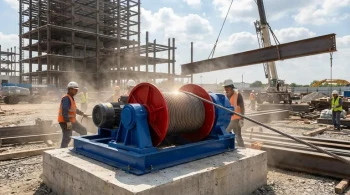
How Electrically Driven Winch Components Ensure Safe and Efficient Heavy Load Management
Learn how electrically driven winch components like drums, brakes, and motors ensure safe heavy load management in construction and marine applications.
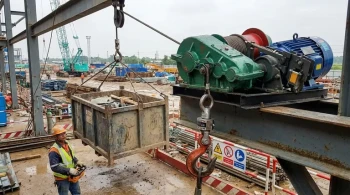
How Hoisting Device Components Ensure Safety and Efficiency in Industrial Operations
Explore critical hoisting device components ensuring safety & efficiency in industrial operations—hooks, winches, cargo boxes & compliance standards.
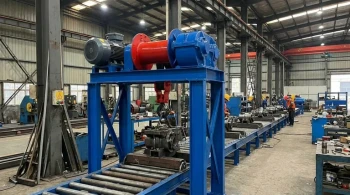
How External Motor Wire Rope Hoists Solve Space and Maintenance Challenges
Discover how external motor wire rope hoists optimize space and simplify maintenance in industrial settings, enhancing workflow efficiency.
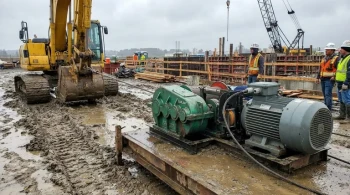
Controlled Force: The Simple Mechanics of Moving the Immovable
A winch isn't just for pulling. Understanding its mechanics as a force multiplier and the vital difference between pulling and lifting is key to safety.
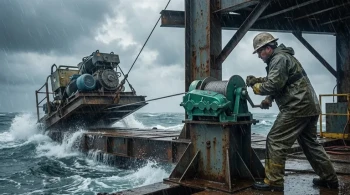
How Manual Winches Deliver Safety and Reliability in Extreme Conditions
Discover how manual winches ensure safety & reliability in extreme conditions with auto-locking brakes, corrosion resistance, and compact designs.
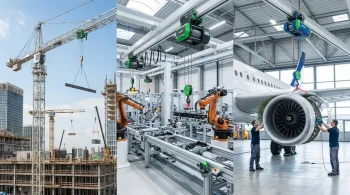
How Hoisting Devices Transform Industries: Efficiency Breakthroughs Explained
Discover how advanced hoisting devices boost efficiency in construction, aviation & manufacturing with smart tech & measurable gains.
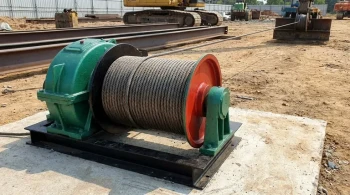
How Wire Rope Mechanics Dictate Winch Drum Design for Optimal Performance
Learn how wire rope mechanics influence winch drum design for optimal performance, including bending stress, fatigue, and industry standards.
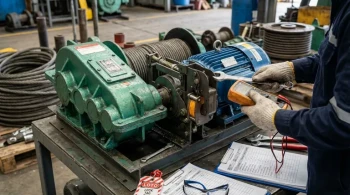
How to Maintain Electric Winch Brake Systems for Maximum Safety and Compliance
Learn essential maintenance steps for electric winch brake systems to ensure safety, compliance, and prevent failures in industrial and marine applications.
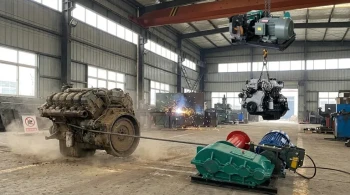
The Single Point of Failure: Why a Winch Is Not a Hoist
A winch pulls, a hoist lifts. The critical difference lies in the braking system, a distinction that prevents catastrophic failure in vertical lifting.
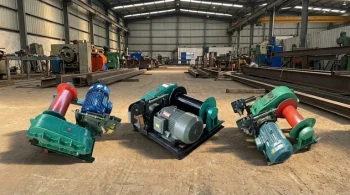
How to Choose the Right Wire Rope Hoist: Matching Motor and Drum Configurations to Your Needs
Learn how to choose the right wire rope hoist by matching motor and drum configurations to your operational needs for efficiency and longevity.
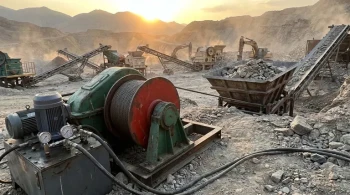
How to Match Winch Specifications to Your Operational Needs
Learn how to match winch specs to operational needs—load dynamics, environmental stressors, and duty cycles for marine, mining, and industrial use.
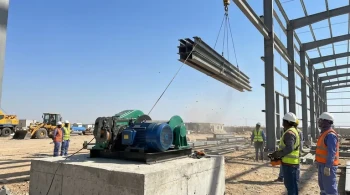
How Electric Winches Transform Industrial Workflows: Efficiency & Safety Upgrades
Discover how electric winches enhance industrial efficiency & safety with higher load capacity, faster workflows, and built-in safety features.
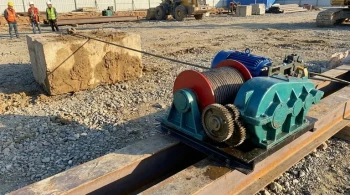
The Slow, Unstoppable Force: The Engineering Genius of a Winch
A winch is a force multiplier that trades speed for immense, controlled power, making heavy-load operations fundamentally safer and more efficient.

How to Optimize Measurement Hoppers for Uninterrupted Material Flow and Precision Batching
Optimize measurement hoppers for uninterrupted material flow and precision batching with expert design tips and operational best practices.