Introduction
For construction teams, mortar quality directly impacts structural integrity and project timelines. This article reveals the engineering principles and operational protocols that ensure ready-mixed mortar arrives at your site in optimal condition—from agitator truck designs to real-world temperature control strategies.
Ready-Mixed Mortar Transportation Process
Role of Mixer Trucks in Preventing Premature Setting
Modern agitator trucks act as mobile laboratories, maintaining mortar workability through three mechanisms:
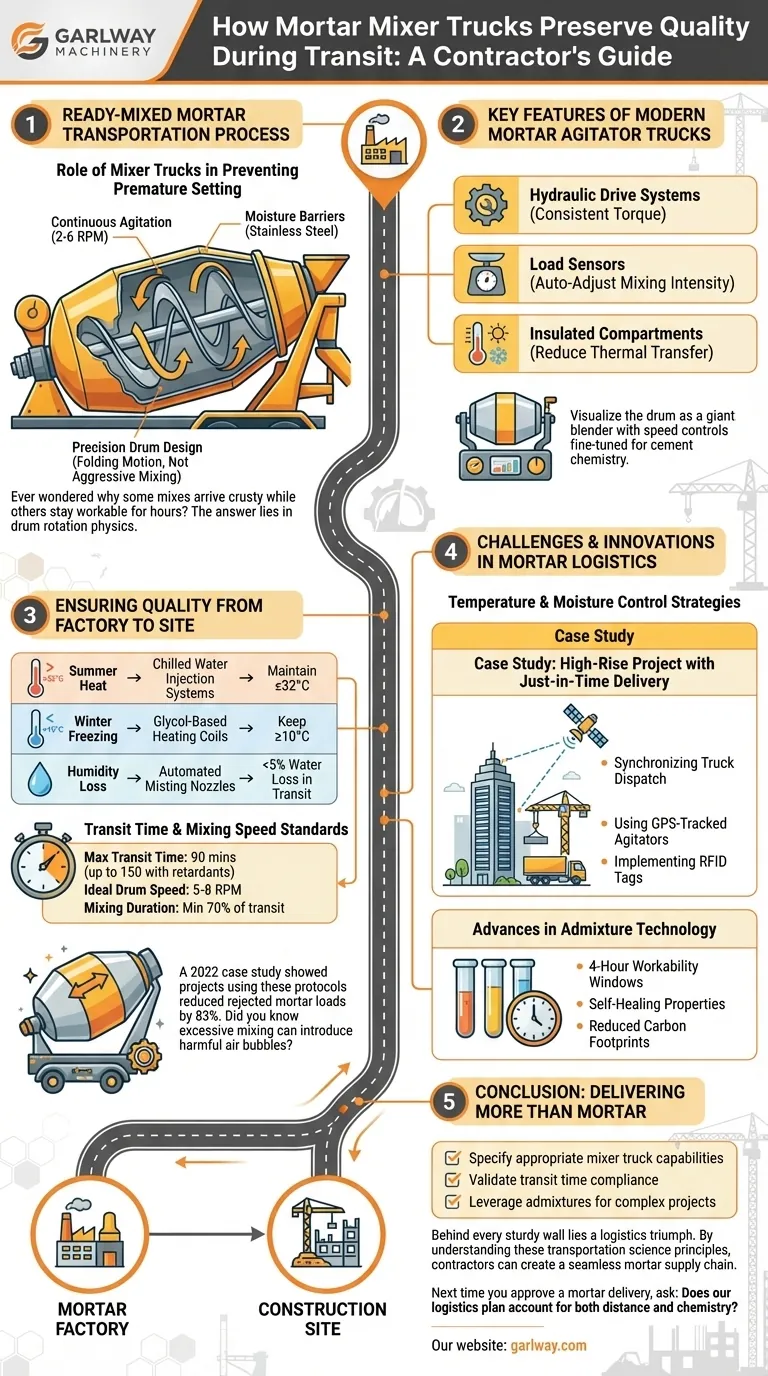
- Continuous agitation – Rotating drums (typically at 2-6 RPM) prevent particle sedimentation
- Precision drum design – Helical blades create a folding motion rather than aggressive mixing
- Moisture barriers – Stainless steel interiors resist water absorption from the mixture
Ever wondered why some mixes arrive crusty while others stay workable for hours? The answer lies in drum rotation physics.
Key Features of Modern Mortar Agitator Trucks
Leading manufacturers like Garlway equip trucks with:
- Hydraulic drive systems – Consistent torque regardless of truck speed
- Load sensors – Auto-adjust mixing intensity based on mortar volume
- Insulated compartments – Reduce thermal transfer in extreme climates
Visualize the drum as a giant blender with speed controls fine-tuned for cement chemistry rather than margaritas.
Ensuring Quality from Factory to Construction Site
Temperature and Moisture Control Strategies
| Challenge | Solution | Industry Standard |
|---|---|---|
| Summer heat | Chilled water injection systems | Maintain ≤32°C (90°F) |
| Winter freezing | Glycol-based heating coils | Keep ≥10°C (50°F) |
| Humidity loss | Automated misting nozzles | <5% water loss in transit |
A 2022 case study showed projects using these protocols reduced rejected mortar loads by 83%.
Transit Time and Mixing Speed Standards
- Maximum transit time: 90 minutes (extendable to 150 mins with retardant admixtures)
- Ideal drum speed: 5-8 RPM for standard mortar mixes
- Mixing duration: Minimum 70% of transit time
Did you know excessive mixing can introduce harmful air bubbles?
Challenges and Innovations in Mortar Logistics
Case Study: High-Rise Project with Just-in-Time Delivery
A Shanghai skyscraper project achieved 98% mortar quality compliance by:
- Synchronizing truck dispatch with tower crane operations
- Using GPS-tracked agitators to reroute based on traffic
- Implementing RFID tags that alert sites to mix expiration times
Advances in Admixture Technology
New polymer-based additives now allow:
- 4-hour workability windows (vs traditional 90-minute limits)
- Self-healing properties that reactivate during placement
- Reduced carbon footprints through limestone replacements
Conclusion: Delivering More Than Mortar
Behind every sturdy wall lies a logistics triumph. By understanding these transportation science principles, contractors can:
✔ Specify appropriate mixer truck capabilities
✔ Validate transit time compliance
✔ Leverage admixtures for complex projects
For teams using Garlway construction equipment, integrating these insights with reliable machinery creates a seamless mortar supply chain—from plant to finished structure.
Next time you approve a mortar delivery, ask: Does our logistics plan account for both distance and chemistry?
Visual Guide
Related Products
- Mini Cement Mortar Mixer Truck for Construction
- JDY350 Electric Hydraulic Mortar Mud Concrete Mixer
- JDC350 Small Cement Concrete Mortar Mixer
- Belle Mixer Drum Self Loading Mortar Mixers JS3000
- Ready Mixer Machine for Construction Ready Mix Machinery
Related Articles
- How to Optimize Mixer Truck Speed for Maximum Efficiency Without Compromising Safety
- How Small Cement Mixers Deliver Cost-Efficiency, Health Safety, and Versatility
- How Small Cement Mixers Solve Big Construction Challenges
- How Small Cement Mixers’ Smart Design Saves Time and Reduces Strain
- How to Optimize Small Cement Mixer Positioning for Maximum Job Site Efficiency