Introduction
Concrete mixing plants demand industrial-grade electrical systems that withstand vibration, moisture, and conductive dust while complying with NEC/IEC safety standards. This guide details how to implement compliant circuit designs, select durable components, and mitigate environmental hazards—reducing downtime by up to 40% in harsh operating conditions.
Electrical Safety Standards for Industrial Plants
NEC and IEC Requirements for Hazardous Locations
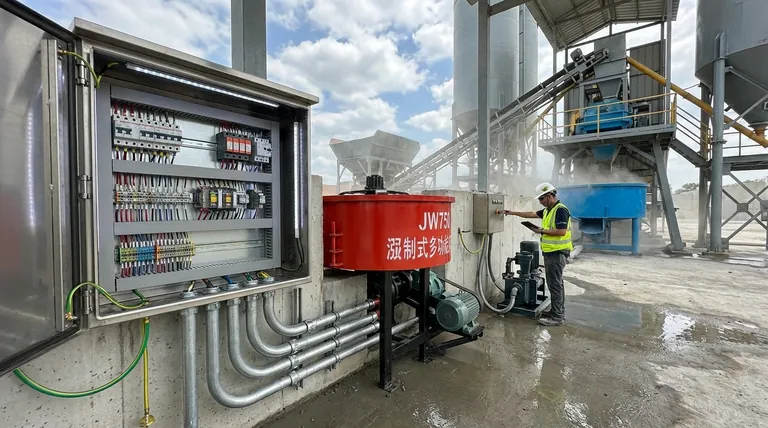
The National Electrical Code (NEC) Article 500 classifies concrete plants as Class II, Division 1 hazardous locations due to combustible dust. Critical compliance measures include:
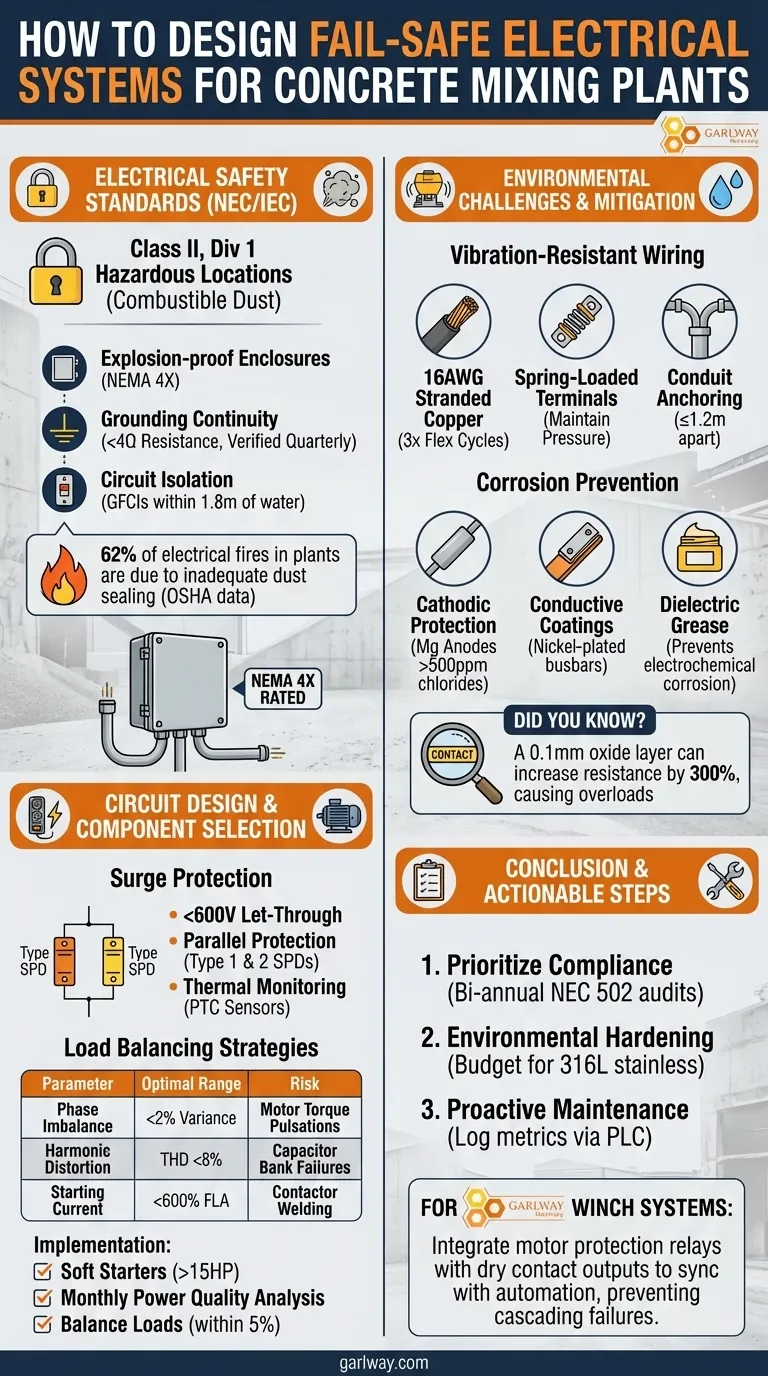
- Explosion-proof enclosures: NEC 70 mandates NEMA 4X-rated enclosures for control panels to prevent dust ignition.
- Grounding continuity: IEC 60364-4-41 requires <4Ω resistance for all equipment grounding conductors, verified quarterly.
- Circuit isolation: Install ground-fault circuit interrupters (GFCIs) within 1.8m of water sources per NEC 680.
Ever wondered why concrete plants experience frequent electrical fires? Inadequate dust sealing accounts for 62% of incidents, according to OSHA violation data.
Dustproof and Waterproof Enclosure Specifications
- Conduit sealing: Use UL-listed sealing fittings within 450mm of enclosure entries (NEC 502.15)
- Gasket integrity: Replace silicone gaskets every 18 months—cracking allows fine cement particles to infiltrate contacts
- Corrosion resistance: Marine-grade stainless steel (316L) outperforms galvanized steel in high-chloride environments
Environmental Challenges and Mitigation
Vibration-Resistant Wiring Techniques
Concrete batch mixers generate 4-7Hz vibrations that loosen connections over time. Mitigation strategies:
- Stranded vs. solid conductors: 16AWG stranded copper wires withstand 3x more flex cycles than solid-core
- Spring-loaded terminals: WAGO 221 series connectors maintain contact pressure during sustained vibration
- Conduit anchoring: Space rigid metal conduits ≤1.2m apart with double-lock nuts at junction boxes
Corrosion Prevention for Conduits and Terminals
- Cathodic protection: Install magnesium anodes on underground conduits in areas with >500ppm soil chlorides
- Conductive coatings: Apply nickel-plated busbars instead of bare copper in high-humidity zones
- Dielectric grease: Dow Corning DC-4 compound on terminal blocks prevents electrochemical corrosion
Did you know? A 0.1mm oxide layer on contacts can increase resistance by 300%, causing motor overloads.
Circuit Design and Component Selection
Surge Protection for Heavy Machinery Motors
- Clamping voltage: Select SPDs with <600V let-through for 480V systems (IEEE C62.41 Category C)
- Parallel protection: Install Type 2 surge devices at distribution panels + Type 1 at service entrance
- Thermal monitoring: Eaton’s PKZM0 breakers with integrated PTC sensors detect winding overheating
Load Balancing Strategies for Batch Mixers
| Parameter | Optimal Range | Risk if Deviated |
|---|---|---|
| Phase imbalance | <2% voltage variance | Motor torque pulsations |
| Harmonic distortion | THD <8% | Capacitor bank failures |
| Starting current | <600% FLA | Contactor welding |
Implementation checklist:
- Use soft starters for >15HP motors
- Deploy power quality analyzers monthly
- Balance loads across all three phases within 5%
Conclusion and Actionable Steps
- Prioritize compliance: Conduct NEC 70 Article 502 audits bi-annually with infrared scans of connections
- Environmental hardening: Budget for 316L stainless components in mixing tower electrical rooms
- Proactive maintenance: Log vibration and corrosion metrics using PLC-based monitoring systems
For plants using Garlway winch systems, integrate motor protection relays with dry contact outputs to sync with existing automation controls. This prevents cascading failures when material handling equipment interacts with batching circuits.
Final thought: Reliable electrical design isn’t just about code compliance—it’s about creating systems that protect both workers and productivity in one of construction’s most abrasive environments.
Visual Guide
Related Products
- Construction Products Concrete Plant Machine Mixing Concrete Mixer
- Commercial Electric Concrete Mixer Machine HZS 50 Small Batch Plant for Sale
- HZS35 Small Cement Concrete Mixing Batch Plant
- HZS120 Ready Mix Concrete Batching Plant Commercial Mud Cement Mixer
- HZS75 Concrete Batching Plant Cement Mixer Price Concrete Mixer Bunnings Mixing Plant
Related Articles
- How to Optimize Feeding-Mixing-Discharging Coordination in Concrete Production
- How to Minimize Downtime and Maximize Efficiency in Commercial Concrete Mixing
- More Than a Mixer: The Physics and Psychology of Concrete Agitation
- How Improper Water Addition Compromises Concrete Strength and How to Fix It
- How to Conduct OSHA-Compliant Concrete Mixer Inspections: A Safety-First Checklist