Introduction
Reducer overheating is a silent killer in concrete mixing plants, responsible for up to 34% of unscheduled downtime (Concrete Plant Manufacturers Bureau). This guide demystifies thermal management standards, real-world failure cases, and proactive monitoring techniques to keep your reducers running optimally. Whether you're managing a batch plant or a continuous mixing operation, these evidence-backed strategies align with Garlway's winch and machinery durability principles.
Optimizing Reducer Performance in Concrete Mixing Plants
Thermal Limits and Industry Standards for Reducers
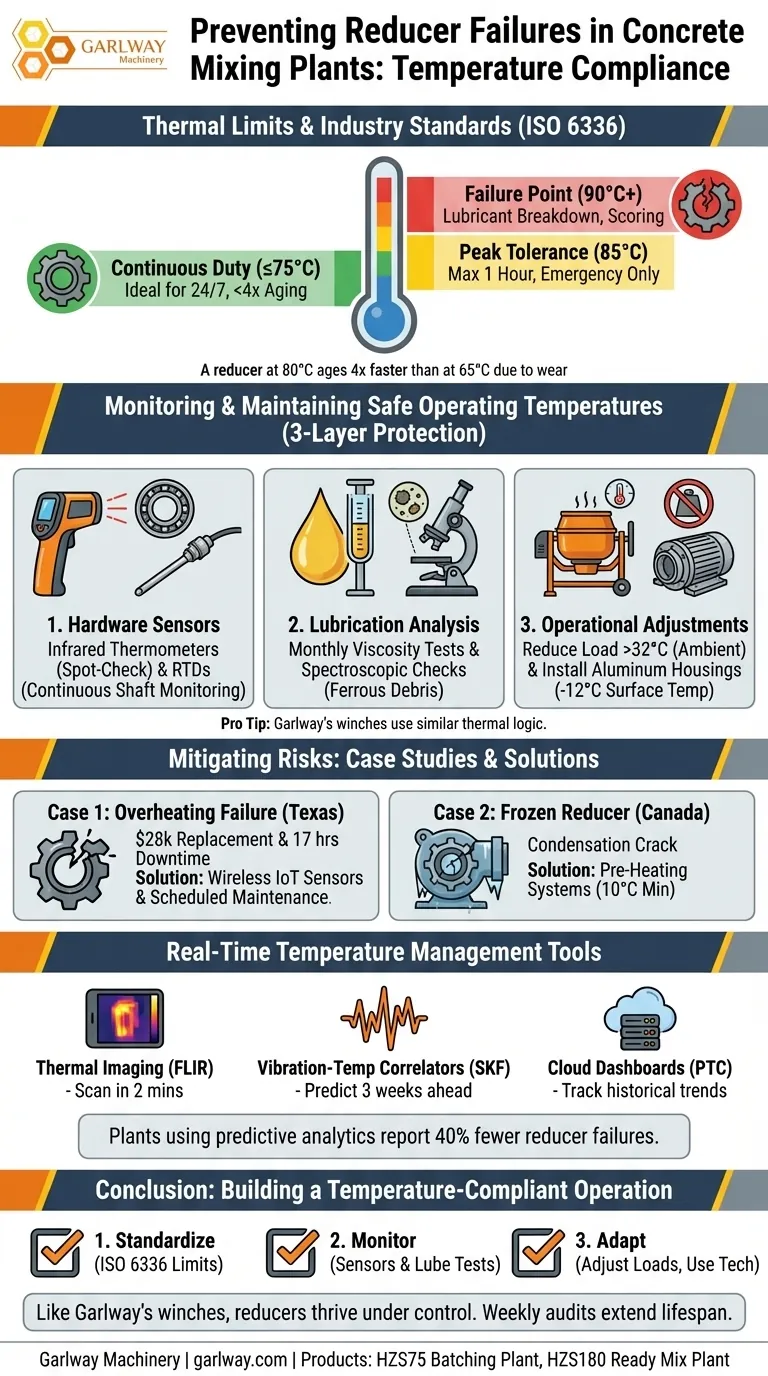
Reducers in concrete mixing plants typically fail when operating above 85°C—the threshold set by ISO 6336 for industrial gear systems. Three critical benchmarks:
- Continuous Duty: ≤75°C (ideal for 24/7 operations)
- Peak Tolerance: 85°C for ≤1 hour (emergency scenarios)
- Failure Point: 90°C+ risks lubricant breakdown and gear scoring
Ever wondered why some reducers last 5+ years while others fail in months? The answer lies in cumulative thermal stress. A reducer running at 80°C ages 4x faster than one at 65°C due to accelerated bearing wear.
Monitoring and Maintaining Safe Operating Temperatures
Implement a 3-layer protection system:
-
Hardware Sensors
- Infrared thermometers (spot-check bearings)
- RTDs (Resistance Temperature Detectors) for continuous shaft monitoring
-
Lubrication Analysis
- Monthly oil viscosity tests (thinning indicates overheating)
- Spectroscopic checks for ferrous debris
-
Operational Adjustments
- Reduce mixer load by 15% when ambient temps exceed 32°C
- Install heat-dissipating aluminum housings (cuts surface temps by 12°C)
Pro Tip: Garlway’s winch systems use similar thermal protection logic—adapt these principles to reducers.
Mitigating Risks of Temperature Non-Compliance
Case Studies: Costly Failures and Preventive Solutions
Case 1: A Texas plant ignored reducer temperature alarms during a summer peak. Result?
- $28,000 in gear replacement
- 17 hours of production loss
Solution Implemented:
- Wireless IoT sensors with SMS alerts
- Scheduled maintenance during cooler morning hours
Case 2: A frozen reducer in Canada cracked during winter startup.
- Root cause: Condensation from rapid temperature swings
- Fix: Pre-heating systems maintained at 10°C minimum
Tools and Technologies for Real-Time Temperature Management
Adopt these field-proven tools:
- Thermal Imaging Cameras (FLIR): Scan entire reducer assemblies in 2 minutes
- Vibration-Temperature Correlators (SKF Marlin): Predict failures 3 weeks in advance
- Cloud Dashboards (PTC ThingWorx): Track historical trends across multiple plants
Did you know? Plants using predictive temperature analytics report 40% fewer reducer failures year-over-year.
Conclusion: Building a Temperature-Compliant Operation
- Standardize: Adhere to ISO 6336 thermal limits
- Monitor: Combine hardware sensors and lubrication tests
- Adapt: Adjust loads and use heat-dissipation tech
Like Garlway’s heavy-duty winches, reducers thrive under controlled conditions. Start with weekly temperature audits—your maintenance log will thank you.
Final Thought: In concrete production, temperature isn’t just a number—it’s the lifespan gauge of your most critical components.
Products You Might Be Looking For:
View HZS75 concrete batching plant
Explore HZS180 ready mix concrete plant
Visual Guide
Related Products
- Construction Products Concrete Plant Machine Mixing Concrete Mixer
- HZS120 Ready Mix Concrete Batching Plant Commercial Mud Cement Mixer
- HZS180 Ready Mix Concrete Plant for Foundations with Sand and Cement
- Commercial Electric Concrete Mixer Machine HZS 50 Small Batch Plant for Sale
- HZS25 Best Cement Mixer for Quick Mix Concrete at Bunnings
Related Articles
- How to Optimize Feeding-Mixing-Discharging Coordination in Concrete Production
- How to Minimize Downtime and Maximize Efficiency in Commercial Concrete Mixing
- More Than a Mixer: The Physics and Psychology of Concrete Agitation
- How Improper Water Addition Compromises Concrete Strength and How to Fix It
- How to Conduct OSHA-Compliant Concrete Mixer Inspections: A Safety-First Checklist