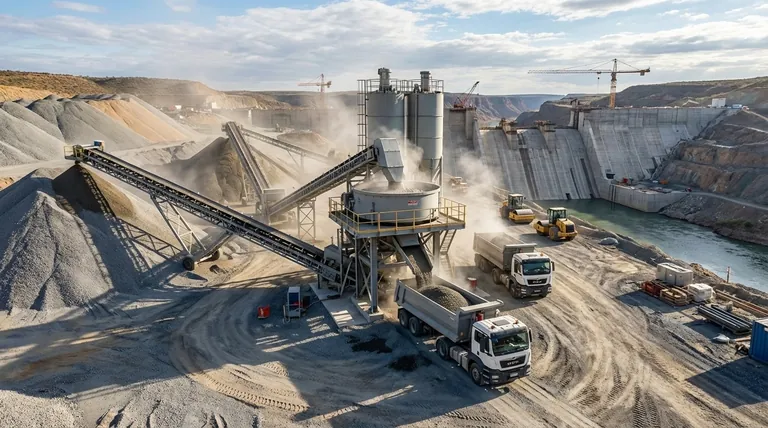
Water conservancy projects demand precision, durability, and speed—qualities that Roller-Compacted Concrete (RCC) batching plants are uniquely designed to deliver. These specialized plants address critical pain points in dam construction and large-scale infrastructure by optimizing aggregate handling, batch output, and energy efficiency. This article explores the engineering breakthroughs behind RCC batching technology and their proven impact on global water conservancy projects.
RCC Batching Plants in Water Conservancy Engineering
Critical Role of Aggregate Size in Dam Construction
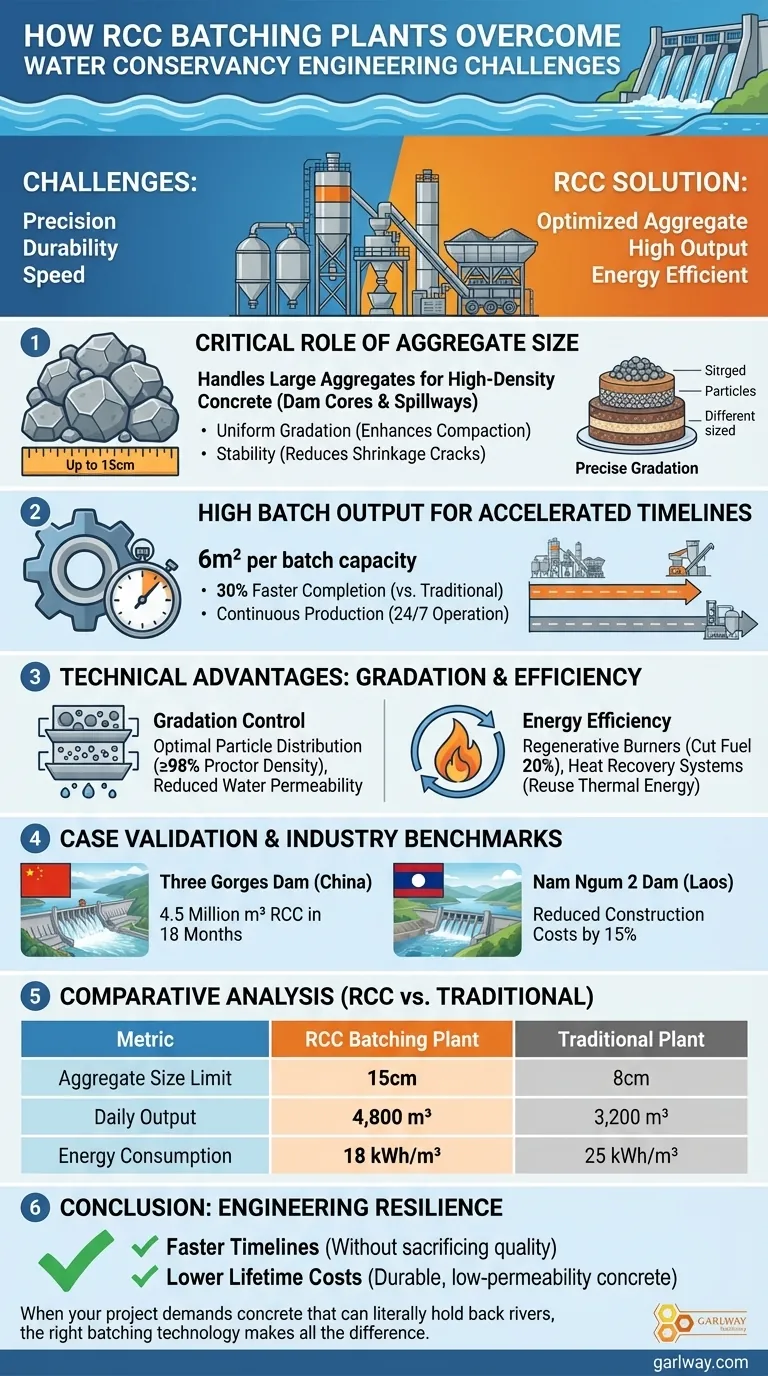
RCC batching plants excel at processing large aggregates (up to 15cm in diameter), a requirement for high-density concrete used in dam cores and spillways. Traditional mixing systems struggle with such coarse materials, often leading to uneven distribution that compromises structural integrity.
Key advantages:
- Uniform Gradation: Prevents voids in the concrete matrix, enhancing compaction under roller pressure.
- Stability: Larger aggregates reduce shrinkage cracks—a common failure point in hydraulic structures.
Ever wondered how mega-dams withstand decades of water pressure? The answer starts with precisely graded aggregates.
High Batch Output for Accelerated Project Timelines
With a capacity of 6 square meters per batch, RCC plants slash production timelines for water conservancy projects. For context, a medium-sized dam requires approximately 1.2 million cubic meters of concrete; this output capability translates to:
- 30% faster completion compared to traditional batch plants.
- Continuous Production: Automated systems enable 24/7 operation without compromising mix consistency.
Technical Advantages Beyond Basic Specifications
Gradation Control for Enhanced Concrete Compaction
Advanced RCC plants use multi-stage screening to segregate aggregates before mixing. This process ensures:
- Optimal particle distribution for maximum density (≥98% Proctor density).
- Reduced water permeability—critical for reservoirs and flood control structures.
Think of it like baking a layered cake: each aggregate size must be placed precisely to prevent weak spots.
Energy Efficiency in Continuous RCC Production
Modern plants integrate:
- Regenerative Burners: Cut fuel consumption by 20% during prolonged operations.
- Heat Recovery Systems: Reuse thermal energy from mixing drums to preheat materials.
These features align with sustainable construction mandates for water conservancy projects globally.
Case Validation and Industry Benchmarks
Successful Applications in Global Dam Projects
RCC batching technology has been deployed in:
- Three Gorges Dam (China): Achieved 4.5 million cubic meters of RCC placement in 18 months.
- Nam Ngum 2 Dam (Laos): Reduced construction costs by 15% through efficient material usage.
Comparative Analysis with Traditional Mixing Systems
| Metric | RCC Batching Plant | Traditional Plant |
|---|---|---|
| Aggregate Size Limit | 15cm | 8cm |
| Daily Output | 4,800 m³ | 3,200 m³ |
| Energy Consumption | 18 kWh/m³ | 25 kWh/m³ |
Conclusion: Engineering Resilience Through Innovation
RCC batching plants solve water conservancy challenges by merging high-capacity production with material science precision. For project managers, this means:
✔ Faster timelines without sacrificing quality.
✔ Lower lifetime costs via durable, low-permeability concrete.
When your project demands concrete that can literally hold back rivers, the right batching technology makes all the difference.
For heavy-duty construction machinery supporting these operations—such as winches for material handling—consider solutions designed for rugged, large-scale environments.
Visual Guide
Related Products
- HZS120 Ready Mix Concrete Batching Plant Commercial Mud Cement Mixer
- HZS35 Small Cement Concrete Mixing Batch Plant
- HZS75 Concrete Batching Plant Cement Mixer Price Concrete Mixer Bunnings Mixing Plant
- HZS180 Ready Mix Concrete Plant for Foundations with Sand and Cement
- Commercial Electric Concrete Mixer Machine HZS 50 Small Batch Plant for Sale
Related Articles
- How Raw Material Variability Impacts Concrete Batching Accuracy
- How to Optimize Dust Control in Concrete Batching Plants: A Compliance-Focused Guide
- Optimizing Concrete Batching Accuracy: Technology-Driven Solutions for Modern Plants
- How Sensor Technologies Revolutionize Concrete Batching Accuracy
- How Sensor Technologies Reduce Concrete Batching Errors and Boost ROI