Concrete batching is a precise science where even minor deviations in raw material properties can compromise structural integrity. This article reveals how moisture, gradation, and contaminants alter batching outcomes and provides actionable strategies to maintain mix consistency—ensuring durable, specification-compliant results every time.
Impact of Raw Material Properties on Batching Precision
Moisture Content: The Hidden Variable in Aggregate Measurement
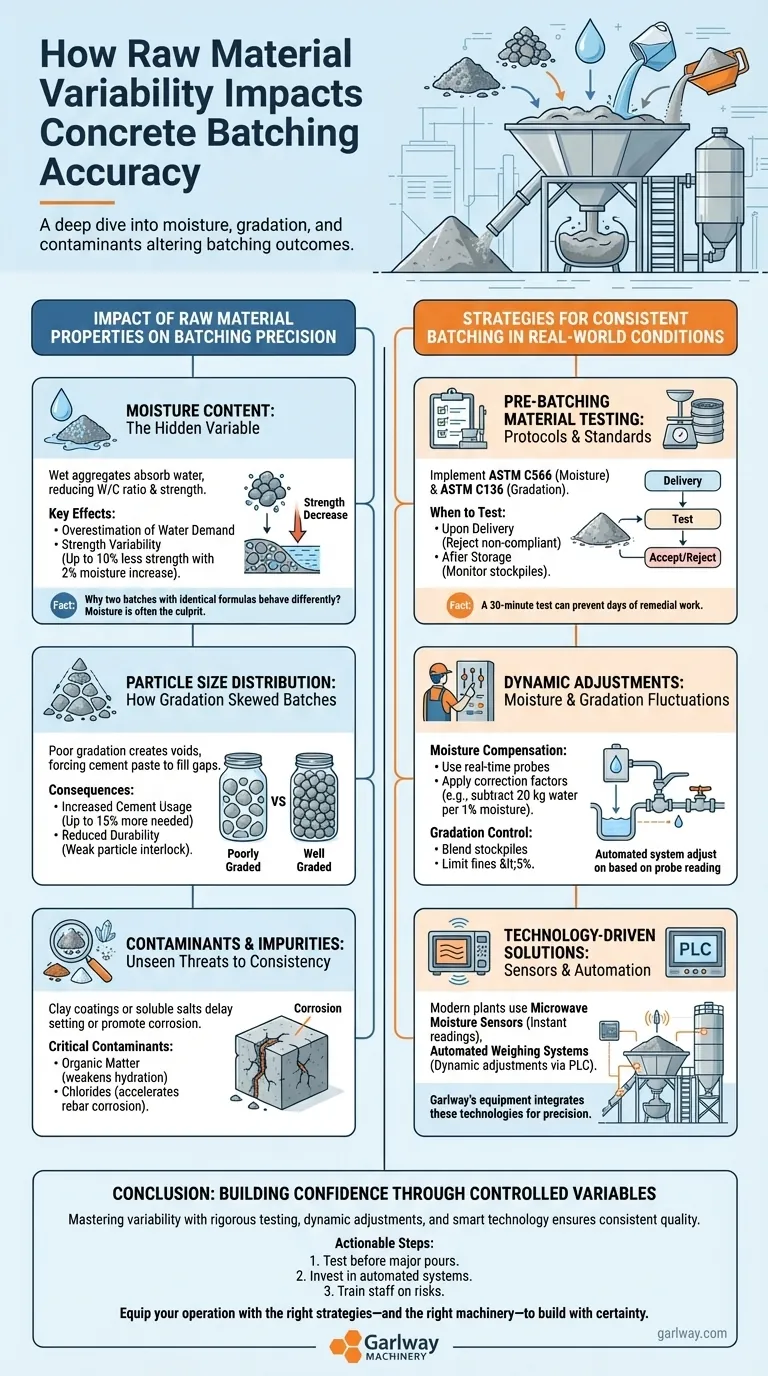
Aggregates rarely arrive at batching plants in a perfectly dry state. Surface moisture absorbs into the mix, effectively reducing the water-cement ratio—a critical factor for strength development.
Key Effects:
- Overestimation of Water Demand: Wet aggregates displace added water, leading to overly dry mixes that hinder workability.
- Strength Variability: A 2% increase in aggregate moisture can reduce compressive strength by up to 10% if unaccounted for.
Ever wondered why two batches with identical formulas behave differently? Moisture content is often the culprit.
Particle Size Distribution: How Gradation Skewed Batches
Aggregate gradation directly impacts particle packing density. Poorly graded materials create voids, forcing cement paste to fill gaps instead of binding particles.
Consequences of Poor Gradation:
- Increased Cement Usage: Up to 15% more cement may be needed to compensate for uneven particle sizes.
- Reduced Durability: Weak particle interlock accelerates cracking under load.
Visualize gradation like a jar of mixed nuts: too many large pieces leave empty spaces, while excess "fines" act like sand clogging the gaps.
Contaminants and Impurities: Unseen Threats to Mix Consistency
Clay coatings on aggregates or soluble salts in mixing water can delay setting times or promote corrosion.
Critical Contaminants to Test For:
- Organic Matter: Decomposing materials weaken cement hydration.
- Chlorides: Accelerate rebar corrosion, especially in marine environments.
Strategies for Consistent Batching in Real-World Conditions
Pre-Batching Material Testing: Protocols and Standards
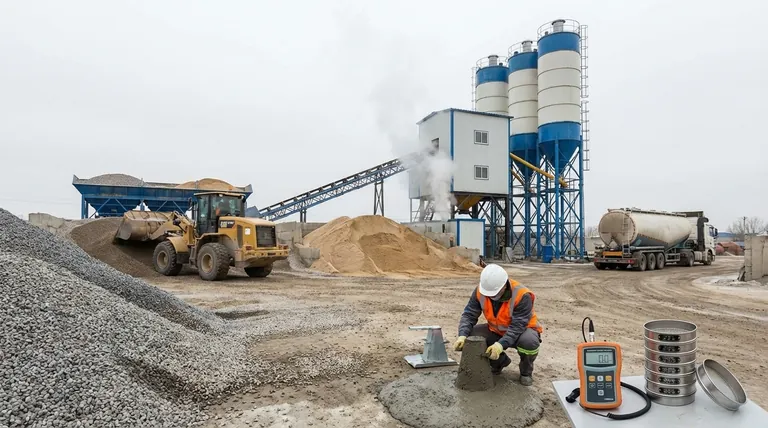
Implement ASTM C566 for moisture tests and ASTM C136 for gradation analysis. Testing should occur:
- Upon Delivery: Reject non-compliant shipments.
- After Storage: Monitor moisture changes in stockpiles.
Did you know? A 30-minute moisture test can prevent days of remedial work on hardened concrete.
Dynamic Adjustments for Moisture and Gradation Fluctuations
Moisture Compensation:
- Use real-time probes to adjust water content automatically.
- Apply correction factors (e.g., subtract 20 kg water per 1% moisture in aggregates).
Gradation Control:
- Blend multiple aggregate stockpiles to achieve optimal particle distribution.
- Limit fines content to <5% for most structural mixes.
Technology-Driven Solutions: Sensors and Automation
Modern batching plants leverage:
- Microwave Moisture Sensors: Provide instant readings without sample extraction.
- Automated Weighing Systems: Adjust ingredient proportions dynamically via PLC controls.
Garlway’s batching equipment integrates these technologies, ensuring precision even with variable materials.
Conclusion: Building Confidence Through Controlled Variables
Concrete’s reliability hinges on mastering raw material variability. By adopting rigorous testing, dynamic adjustments, and smart technology, batch plants can deliver consistent quality—turning unpredictable materials into engineered solutions.
Actionable Steps:
- Test aggregates for moisture and gradation before every major pour.
- Invest in automated systems that compensate for real-time material changes.
- Train staff to recognize and respond to contamination risks.
When materials fluctuate, your processes shouldn’t. Equip your operation with the right strategies—and the right machinery—to build with certainty.
Visual Guide
Related Products
- HZS120 Ready Mix Concrete Batching Plant Commercial Mud Cement Mixer
- HZS35 Small Cement Concrete Mixing Batch Plant
- HZS75 Concrete Batching Plant Cement Mixer Price Concrete Mixer Bunnings Mixing Plant
- HZS180 Ready Mix Concrete Plant for Foundations with Sand and Cement
- Commercial Electric Concrete Mixer Machine HZS 50 Small Batch Plant for Sale
Related Articles
- How to Optimize Dust Control in Concrete Batching Plants: A Compliance-Focused Guide
- Optimizing Concrete Batching Accuracy: Technology-Driven Solutions for Modern Plants
- How Sensor Technologies Revolutionize Concrete Batching Accuracy
- How Sensor Technologies Reduce Concrete Batching Errors and Boost ROI
- How to Reduce Measurement Errors in Concrete Batching: Proven Strategies for Accuracy