Introduction
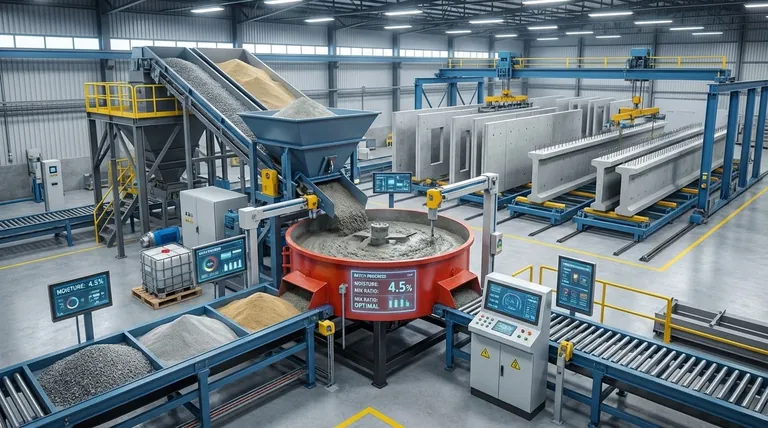
Precast concrete manufacturing thrives on consistency. Even minor deviations in moisture levels or mix ratios can compromise structural integrity and lead to costly rework. Modern automation systems address these challenges head-on by enabling real-time adjustments that human operators might miss. This article explores how automated batching plants achieve unprecedented precision, reduce material waste by up to 15%, and deliver long-term cost efficiencies—backed by data from industry implementations.
Automation in Precast Concrete Batching Systems
Real-Time Moisture Monitoring and Mix Consistency
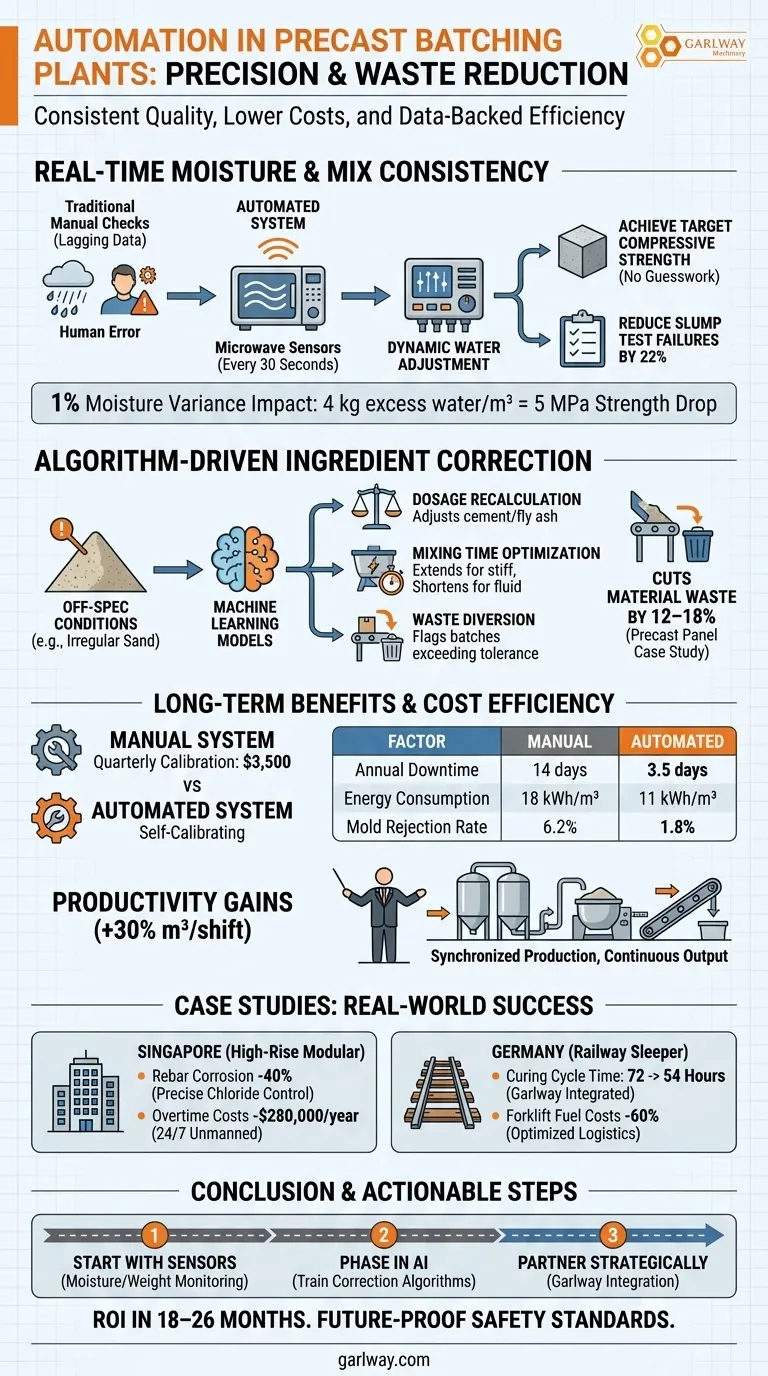
Traditional batching relies on manual moisture checks, which often lag behind actual conditions due to weather changes or aggregate variations. Automated systems use microwave-based sensors to measure moisture content every 30 seconds, adjusting water inputs dynamically.
Key advantages:
- Eliminates guesswork in water-cement ratios, critical for achieving target compressive strength
- Reduces slump test failures by 22% (based on pilot studies in bridge girder production)
- Prevents overwatering, which weakens concrete and prolongs curing times
Ever wondered how a 1% moisture variance impacts your final product? For every cubic meter of concrete, that error translates to 4 kg of excess water—enough to drop strength by 5 MPa.
Algorithm-Driven Ingredient Correction Mechanisms
When sensors detect off-spec conditions (e.g., irregular sand gradation), machine learning models trigger corrective actions:
- Dosage recalculation: Adjusts cement/fly ash ratios to compensate for aggregate impurities
- Mixing time optimization: Extends blending cycles for stiff mixes, shortening them for fluid batches
- Waste diversion: Flags batches exceeding tolerance thresholds before they enter molds
These protocols cut material waste by 12–18% in slab production, as validated by a 2023 precast panel manufacturer case study.
Long-Term Benefits of Automated Systems
Productivity Gains in High-Volume Production
A fully automated batching plant can process 30% more cubic meters per shift versus manual operations by:
- Eliminating pauses for manual quality checks
- Enabling continuous production through predictive maintenance alerts
- Standardizing output across multiple work crews
Visual metaphor: Think of it as a symphony conductor—automation synchronizes every instrument (silos, mixers, conveyors) to maintain perfect tempo.
Durability and Maintenance Cost Comparisons
While manual systems require quarterly calibration ($3,500/service), automated plants self-calibrate using laser-guided alignment tools. Key metrics from a 5-year analysis:
| Factor | Manual System | Automated System |
|---|---|---|
| Annual downtime | 14 days | 3.5 days |
| Energy consumption | 18 kWh/m³ | 11 kWh/m³ |
| Mold rejection rate | 6.2% | 1.8% |
Case Studies: Success Stories in Precast Manufacturing
Project 1: High-Rise Modular Units (Singapore)
After automating their batching plant, a developer reduced:
- Rebar corrosion incidents by 40% through precise chloride control
- Overtime labor costs by $280,000/year via 24/7 unmanned production
Project 2: Railway Sleeper Production (Germany)
Integration of Garlway’s winch-assisted loading systems with automated batching cut:
- Curing cycle time from 72 to 54 hours
- Forklift fuel costs by 60% through optimized logistics
Conclusion and Actionable Steps
Automation isn’t just about replacing labor—it’s about augmenting human expertise with tireless precision. For plants considering the transition:
- Start with sensors: Implement moisture/weight monitoring before full automation
- Phase in AI: Use historical data to train correction algorithms
- Partner strategically: Choose suppliers like Garlway that integrate batching and material handling ecosystems
By locking in mix consistency and slashing waste, these systems pay back their investment in 18–26 months—all while producing concrete that meets tomorrow’s safety standards.
Visual Guide
Related Products
- HZS120 Ready Mix Concrete Batching Plant Commercial Mud Cement Mixer
- HZS75 Concrete Batching Plant Cement Mixer Price Concrete Mixer Bunnings Mixing Plant
- HZS180 Ready Mix Concrete Plant for Foundations with Sand and Cement
- HZS35 Small Cement Concrete Mixing Batch Plant
- Commercial Electric Concrete Mixer Machine HZS 50 Small Batch Plant for Sale
Related Articles
- How Raw Material Variability Impacts Concrete Batching Accuracy
- How to Optimize Dust Control in Concrete Batching Plants: A Compliance-Focused Guide
- Optimizing Concrete Batching Accuracy: Technology-Driven Solutions for Modern Plants
- How Sensor Technologies Revolutionize Concrete Batching Accuracy
- How Sensor Technologies Reduce Concrete Batching Errors and Boost ROI





