When selecting a winch, the decision between manual and electric models isn't just about preference—it's about matching functionality to your specific operational demands. This guide breaks down the key differences, performance scenarios, and cost considerations to help you make an informed choice.
Key Functional and Structural Differences
Power Source and Operational Mechanics
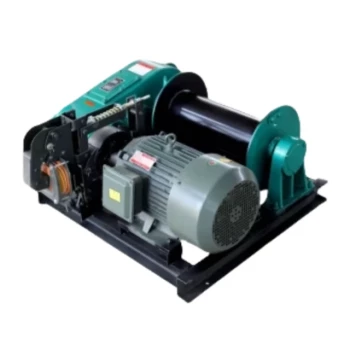
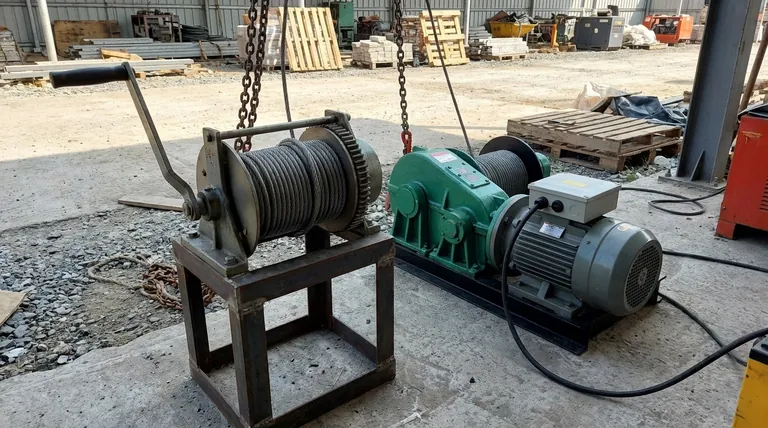
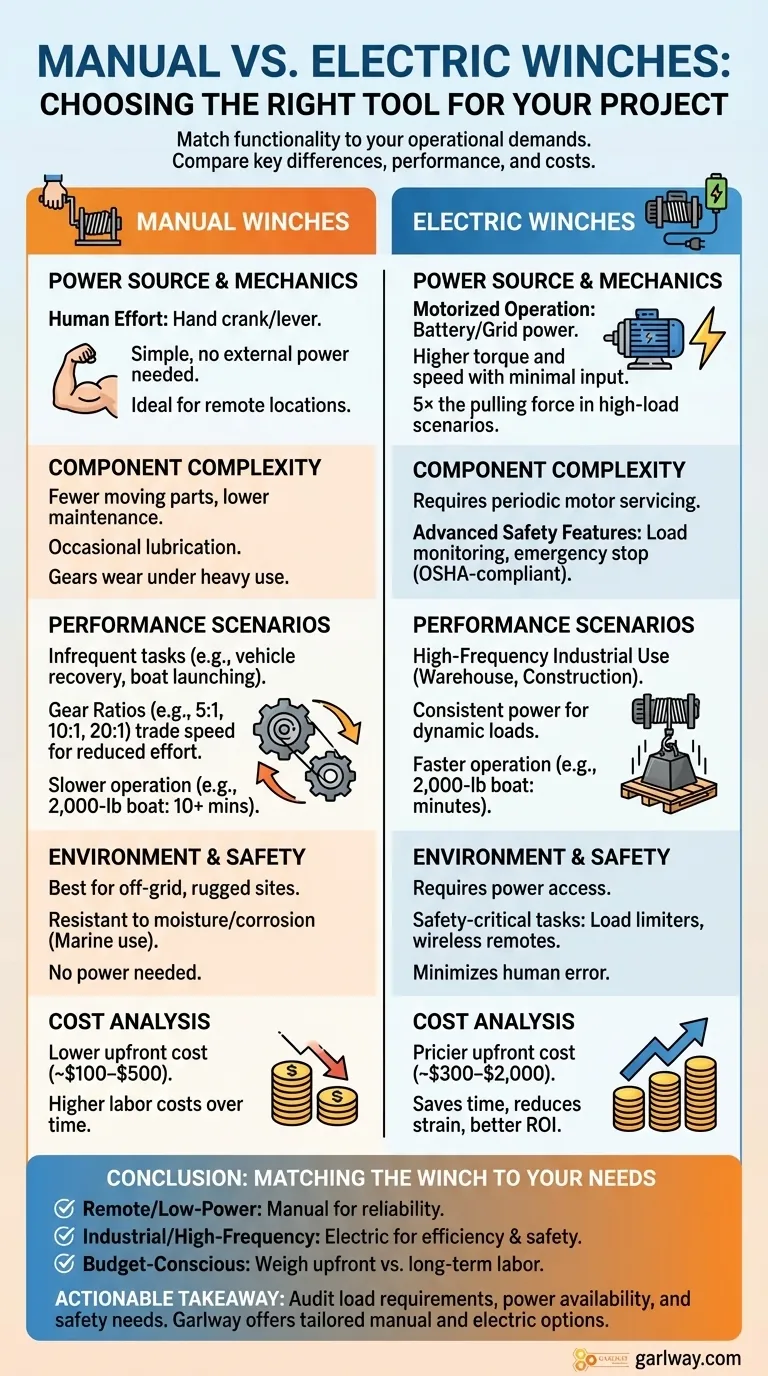
Manual winches rely on human effort, using a hand crank or lever to wind cables. They’re simple, with no need for external power, making them ideal for remote locations. Electric winches, on the other hand, use motors for automated operation, delivering higher torque and speed with minimal physical input.
Did you know? Electric winches can generate up to 5× the pulling force of manual models in high-load scenarios, thanks to their motorized systems.
Component Complexity and Maintenance Demands
- Manual winches: Fewer moving parts mean lower maintenance (e.g., occasional lubrication). However, gear mechanisms wear out faster under heavy use.
- Electric winches: Require battery or grid power and periodic motor servicing but excel in high-frequency applications. Safety features like load monitoring (OSHA-compliant in industrial models) reduce accident risks.
Pro Tip: For corrosive environments (e.g., marine use), manual winches often outperform electric ones due to their resistance to moisture damage.
Performance in Real-World Applications
High-Frequency Industrial Use vs. Occasional Repairs
- Electric winches shine in warehouses or construction sites, where repetitive lifting demands speed and consistency. Garlway’s industrial-grade models, for instance, include emergency stop functions for OSHA compliance.
- Manual winches suit infrequent tasks (e.g., vehicle recovery or boat launching). Their gear ratios (e.g., 5:1 for heavy loads) let operators trade speed for reduced effort.
Ever wondered how gear ratios affect your work? A 10:1 manual winch pulls faster but needs more muscle, while a 20:1 model eases effort at the cost of speed.
Load Dynamics and Torque Requirements
Electric winches handle dynamic loads (e.g., shifting cargo) better due to consistent power output. Manual models struggle with sudden weight changes unless equipped with dual-speed gears.
Example: For a 2,000-lb boat, an electric winch retrieves it in minutes, while a manual winch might require 10+ minutes of cranking.
Decision Factors for Your Project
Cost Analysis: Initial Investment vs. Long-Term ROI
- Manual winches: Lower upfront cost (~$100–$500) but higher labor costs over time.
- Electric winches: Pricier (~$300–$2,000) but save time and reduce physical strain, offering better ROI for frequent use.
Question: Will your project’s power access justify the electric model’s higher price?
Environmental and Safety Implications
- Off-grid/rugged sites: Manual winches win—no power needed, and they withstand extreme weather.
- Safety-critical tasks: Electric winches with load limiters and wireless remotes minimize human error.
Metaphor Alert: Choosing a winch is like picking a hiking backpack—manual for lightweight agility, electric for heavy-duty endurance.
Conclusion: Matching the Winch to Your Needs
- For remote, low-power scenarios: Manual winches offer reliability and simplicity.
- For industrial or high-frequency use: Electric winches deliver efficiency and safety.
- Budget-conscious projects: Weigh upfront savings (manual) against long-term labor savings (electric).
Actionable Takeaway: Audit your project’s load requirements, power availability, and safety needs. Garlway’s range includes both manual and electric options tailored to these variables—ensuring you invest in the right tool for the job.
Visual Guide
Related Products
- Electric 120V Boat Winch by Badlands
- Electric and Hydraulic Winch for Heavy Duty Applications
- Small Electric Winch 120V and 240V for Compact Applications
- 12000 lb Electric Boat Trailer Winch with Windlass Anchor Warn
- Electric Hoist Winch Boat Anchor Windlass for Marine Applications
Related Articles
- How to Choose Between Reversible and Friction Electric Winches: A Transmission Guide
- The Unseen System: How an Electric Winch Manages Force and Eliminates Fear
- When Automation Fails: The Critical Role of Manual Override in Electric Winches
- Beyond Brute Force: The Calculated Power of the Electric Winch
- How Electric Winches’ Engineering Enhances Efficiency and Safety in Heavy-Duty Applications