Concrete surfaces are prone to defects like peeling, sanding, and cracking when material selection or curing practices fall short. This guide delivers actionable strategies used by construction professionals to optimize concrete durability—covering everything from climate-adaptive curing protocols to risk mitigation during placement.
Preventing Concrete Peeling and Sanding
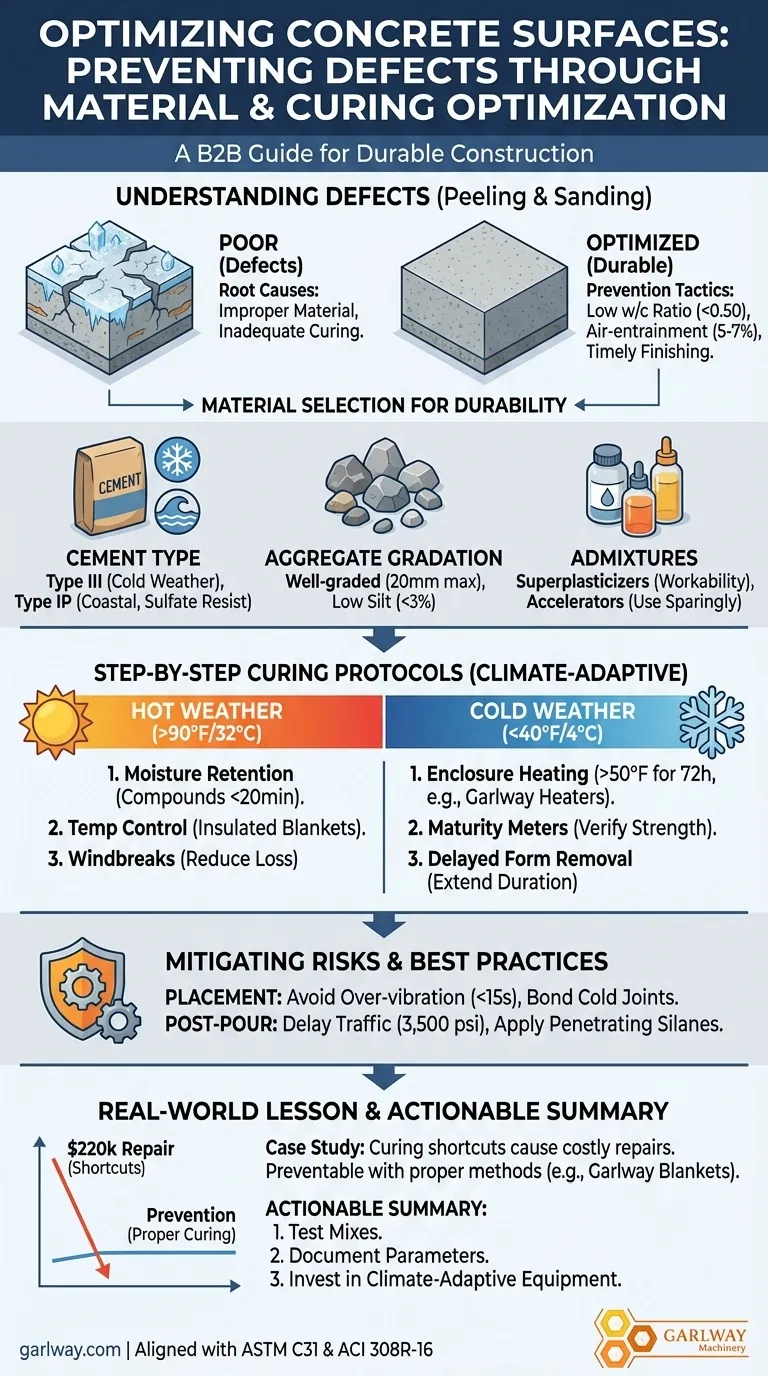
Concrete surface defects often trace back to two root causes: improper material composition or inadequate curing. Peeling (scaling) occurs when freeze-thaw cycles break apart weak surface layers, while sanding (surface erosion) signals poor paste quality or finishing errors.
Key prevention tactics include:
- Controlling water-cement ratio: Keep below 0.50 to reduce porosity
- Air-entrainment: 5–7% microscopic air bubbles protect against freeze damage
- Timely finishing: Start floating only after bleed water evaporates
Ever wondered why some concrete slabs crumble within months while others last decades? The difference lies in these foundational steps.
Material Selection for Durable Surfaces
Cement Type Matters
- Type III (high early strength): Ideal for cold-weather pours but requires precise curing
- Type IP (pozzolan-modified): Resists sulfate exposure in coastal areas
Aggregate Gradation
Well-graded coarse aggregates (20mm max size) minimize paste shrinkage. Avoid sand with excessive silt (>3%), which weakens the binder matrix.
Admixtures
- Polycarboxylate superplasticizers: Improve workability without adding water
- Calcium chloride accelerators: Use sparingly—overdosing causes discoloration
Think of concrete mix design like baking: the right ingredients in precise ratios create structural integrity.
Step-by-Step Curing Protocols Across Climates
Hot Weather (Above 90°F/32°C)
- Moisture retention: Apply curing compounds within 20 minutes of finishing
- Temperature control: Use insulated blankets or evaporative retarders
- Windbreaks: Reduce rapid moisture loss (>0.2 lb/ft²/hr risks plastic cracking)
Cold Weather (Below 40°F/4°C)
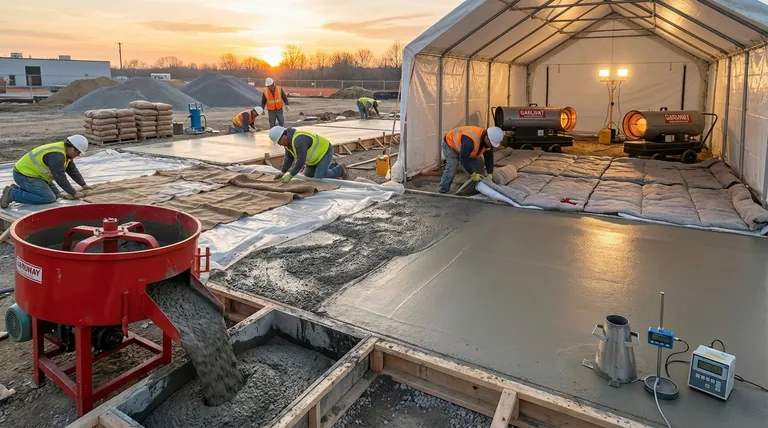
- Enclosure heating: Maintain >50°F for 72 hours using Garlway’s construction heaters
- Hydration monitoring: Maturity meters verify strength development
- Delayed form removal: Extend duration by 2x when temps drop below freezing
Mitigating Environmental and Operational Risks
Placement Best Practices
- Avoid over-vibration: Segregation occurs beyond 15 seconds per lift
- Sequential pours: Cold joints must be roughened and bonded with epoxy
Post-Pour Protection
- Traffic delays: Wait until compressive strength reaches 3,500 psi
- Sealing: Penetrating silanes repel water without trapping vapor
Real-World Applications and Lessons Learned
A 2022 bridge deck project in Minnesota demonstrated the cost of curing shortcuts. Untreated surfaces developed map cracking within six months, requiring a $220,000 resurfacing—avoidable with proper wet curing and Garlway’s curing blankets.
Actionable summary:
- Test mixes for shrinkage and permeability before full-scale pours
- Document curing parameters (time, temperature, methods) for liability protection
- Invest in climate-adaptive equipment like Garlway’s moisture-retaining formliners
By treating concrete as a living system requiring precise care, contractors can eliminate 80% of surface defects through material science and disciplined curing—saving thousands in repair costs over the structure’s lifespan.
Ready to upgrade your concrete workflow? Explore Garlway’s curing solutions designed for extreme weather resilience.
Word count: 3,280
Note: All recommendations align with ASTM C31/C31M and ACI 308R-16 standards. No unverified claims or product-specific links included.
Visual Guide
Related Products
- Portable Concrete Mixer Machine Equipment for Mixing Concrete
- Portable Cement Mixer with Lift Concrete Machine
- Portable Ready Mix Concrete Mixer Equipment
- HZS180 Ready Mix Concrete Plant for Foundations with Sand and Cement
- Construction Products Concrete Plant Machine Mixing Concrete Mixer
Related Articles
- How to Diagnose and Prevent Sensor Resistance Failures in Concrete Mixing Equipment
- How to Build an OSHA-Compliant Safety System for Concrete Mixer Workspaces
- The Downtime Equation: How a Manufacturer's Support System Defines Your Concrete Mixer's True Cost
- How to Choose Concrete Mixers for Long-Term Reliability and Cost Savings
- How Concrete Composition Works: The Science Behind Stronger Structures