Selecting the right winch components isn’t just about raw power—it’s about matching mechanics to real-world demands. Whether you’re recovering off-road vehicles or lifting heavy construction materials, the wrong choice can lead to inefficiency or even safety hazards. This guide breaks down winch mechanics, component selection criteria, and safety protocols to help you make informed, application-driven decisions.
Understanding Winch Mechanics and Core Components
The Role of the Spool in Load Management
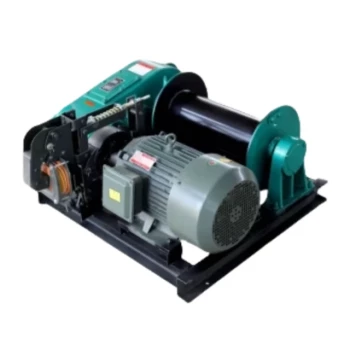
The spool (or drum) is the heart of any winch system. Its diameter and width determine how much rope or cable can be wound, directly affecting line speed and load stability. A larger spool provides faster retrieval but may reduce pulling power, while a narrower one offers better control for precision tasks.
Key consideration: For repetitive, heavy-load applications (e.g., construction), opt for spools with reinforced flanges to prevent cable slippage.
Hand Crank vs. Motorized Systems: Key Differences
- Hand crank winches excel in scenarios where power sources are unreliable or portability is critical (e.g., remote trail recoveries). They’re simple but require physical effort.
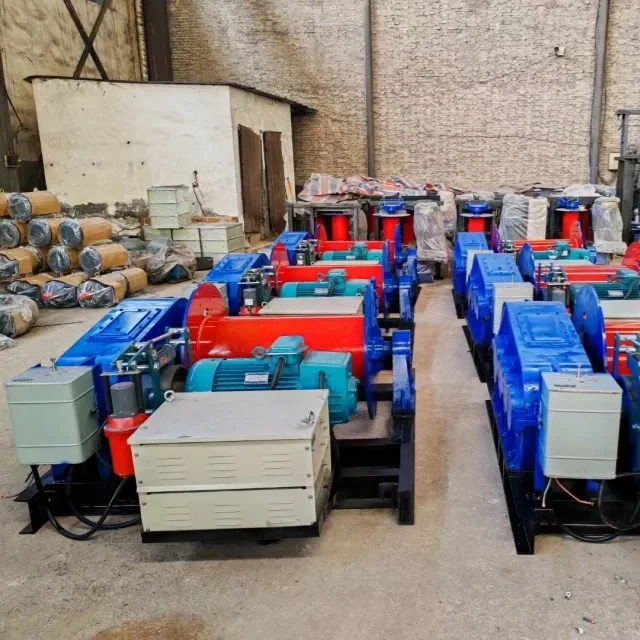
- Motorized systems (electric or hydraulic) automate heavy lifting. Electric winches, like those from Garlway, are popular for off-road use due to easier installation, while hydraulic systems dominate industrial settings for their consistent power and overheating resistance.
Did you know? Hydraulic winches can operate submerged—making them ideal for marine or flood-prone environments.
Optimizing Component Selection for Your Needs
Matching Rope/Cable Material to Application Demands
- Steel cables withstand abrasion and high loads (e.g., construction cranes) but are heavy and prone to kinking.
- Synthetic ropes (e.g., Dyneema) are lighter and safer for vehicle recoveries—if a cable snaps, there’s less rebound risk. However, they degrade under UV exposure.
Pro tip: For industrial sites with sharp debris, steel cables with protective coatings offer the best durability.
Calculating Load Capacity and Safety Thresholds
Always choose a winch with a load capacity at least 1.5x your maximum expected weight. For example:
- Off-road recoveries: A 9,000-lb winch handles most SUVs (actual weight ~6,000 lbs).
- Construction lifts: Factor in dynamic loads (e.g., swinging beams) and opt for 20%+ overhead.
Safety first: Industrial winches should include load monitors and emergency stops—features emphasized in Garlway’s heavy-duty designs.
Real-World Applications and Safety Best Practices
Case Study: Off-Road Vehicle Recovery Systems
Electric winches dominate here for their quick deployment. A common mistake? Using undersized batteries. Pair your winch with a deep-cycle battery to maintain power during prolonged recoveries.
Interactive question: Ever wondered why synthetic ropes are safer for solo off-roaders? Their elasticity absorbs shock loads, reducing sudden jerks that could destabilize a vehicle.
Industrial Use: Heavy-Duty Winches in Construction
Hydraulic systems shine in continuous operations, like lifting steel beams. A construction site winch must:
- Withstand dust, moisture, and temperature swings.
- Integrate with site-wide safety protocols (e.g., automatic shutoffs during overloads).
Example: Garlway’s industrial winches include sealed motors to prevent debris ingress—critical for rugged environments.
Conclusion: Actionable Steps for Your Winch Setup
- Define your primary use case (e.g., intermittent off-road recoveries vs. daily construction lifts).
- Prioritize safety margins in load calculations.
- Choose materials wisely—synthetic for portability, steel for abrasion resistance.
- Verify compliance with industry standards (e.g., ANSI for construction).
Whether you’re equipping a work site or an adventure vehicle, the right winch components enhance efficiency and safety. For heavy-duty reliability, explore Garlway’s range of motorized and hydraulic solutions designed for real-world demands.
Related Products
- Warn Winch Windlass Boat Trailer Winch
- Electric and Hydraulic Winch for Heavy Duty Applications
- Small Electric Winch 120V and 240V for Compact Applications
- 12000 lb Electric Boat Trailer Winch with Windlass Anchor Warn
- Quick Windlass Portable Winch for Truck and Boat Best Boat Winch
Related Articles
- Beyond the Bumper: The Critical System Choice in Powering Your Trailer Winch
- Force vs. Mass: The Critical Difference in Sizing a Boat Winch
- Lines of Force: The Unseen Geometry of a Boat Winch
- More Than a Number: The Engineering Psychology of Choosing a Boat Winch
- How to Choose and Optimize Winch Speed for Maximum Efficiency