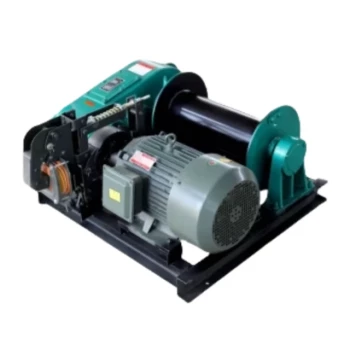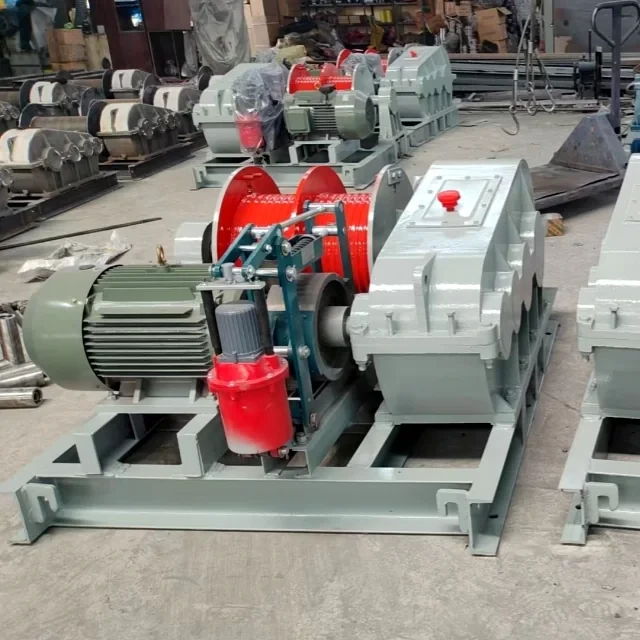
When space and weight matter but power can’t be compromised, coaxial winches redefine performance. Unlike traditional winches with separate motor and drum assemblies, coaxial designs integrate components into a singular compact unit—delivering unmatched efficiency in tight spaces. This article explores their engineering advantages and real-world applications where they excel, from robotic arms to underwater ROVs.
Advantages of Coaxial Winch Design
Space Efficiency in Confined Environments
Coaxial winches eliminate bulky external motors by aligning the drum and motor on the same axis. This streamlined design is ideal for:
- Robotic arms where joint articulation requires minimal obstruction.
- Urban construction sites with limited equipment footprint.
- Aerospace applications, such as drone recovery systems.
Ever wondered how underwater ROVs maneuver in narrow underwater caves? Coaxial winches’ compactness allows seamless integration into ROV frames without sacrificing pulling power.
Weight Reduction for Dynamic Systems
By consolidating components, coaxial models cut weight by up to 30% compared to traditional winches. This is critical for:
- Offshore cranes, where reduced weight lowers fuel consumption.
- Rescue drones requiring agile payload adjustments mid-flight.
Power-to-Size Ratio Enhancements
The direct-drive mechanism minimizes energy loss. For example, Garlway’s coaxial winches leverage high-torque electric motors to maintain lifting capacity despite smaller dimensions. According to industry data, this design improves energy efficiency by 15–20% in underwater ROVs, reducing operational costs during prolonged missions.
Critical Applications of Coaxial Winches
Precision Robotics and Automation
In assembly lines, coaxial winches enable:
- Micro-adjustments for delicate part placement.
- Continuous operation without overheating, thanks to efficient heat dissipation.
Marine and Offshore Equipment
From anchor handling to subsea cable laying, coaxial winches excel in:
- Saltwater environments, where corrosion-resistant materials extend lifespan.
- High-pressure conditions, with sealed units protecting internal components.
Did you know? Offshore rigs using coaxial winches report 25% faster deployment times for safety equipment due to reduced mechanical complexity.
Emergency Rescue Operations
Lightweight yet powerful, these winches are vital for:
- Mountain rescues, where portability is non-negotiable.
- Floodwater operations, enabling rapid deployment from helicopters or boats.
Conclusion: Matching Innovation to Real Needs
Coaxial winches aren’t just smaller—they’re smarter. By prioritizing space and weight savings without compromising power, they solve critical challenges in robotics, marine tech, and rescue scenarios. For industries where efficiency and reliability are paramount, Garlway’s coaxial solutions offer a proven upgrade over traditional models.
Actionable Takeaway:
- Evaluate your equipment’s spatial constraints. If maneuverability or weight limits hinder performance, consider coaxial integration.
- Prioritize energy-efficient models for long-duration tasks (e.g., underwater missions).
Related Products
- Small Electric Winch 120V and 240V for Compact Applications
- Electric and Hydraulic Winch for Heavy Duty Applications
- Hydraulic Winding Engine Harbor Freight Winch
- Electric 120V Boat Winch by Badlands
- Electric Hoist Winch Boat Anchor Windlass for Marine Applications
Related Articles
- How to Maximize Electrical Winch Performance in Challenging Environments
- How Electric Winch Safety Features Prevent Catastrophic Industrial Accidents
- How to Choose Between Manual and Electric Winches for Your Project
- How Electric Winches Solve Industrial Safety and Cost Challenges
- How Electric Winches’ Engineering Enhances Efficiency and Safety in Heavy-Duty Applications