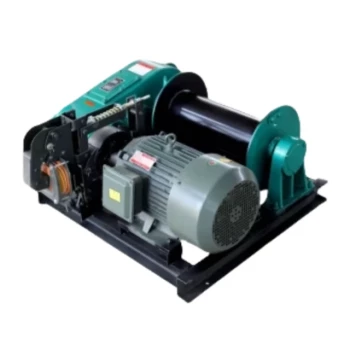
Introduction
Selecting the optimal winch transmission type isn’t just about raw power—it’s about matching mechanism capabilities to your specific operational demands. Whether you’re managing marine deck operations or construction site loads, understanding the differences between brake shoe and friction clutch systems can mean the difference between efficiency and costly downtime. This guide breaks down transmission fundamentals, performance benchmarks, and real-world applications to help you make an informed decision.
Winch Transmission Fundamentals
Brake Shoe Type Working Principle
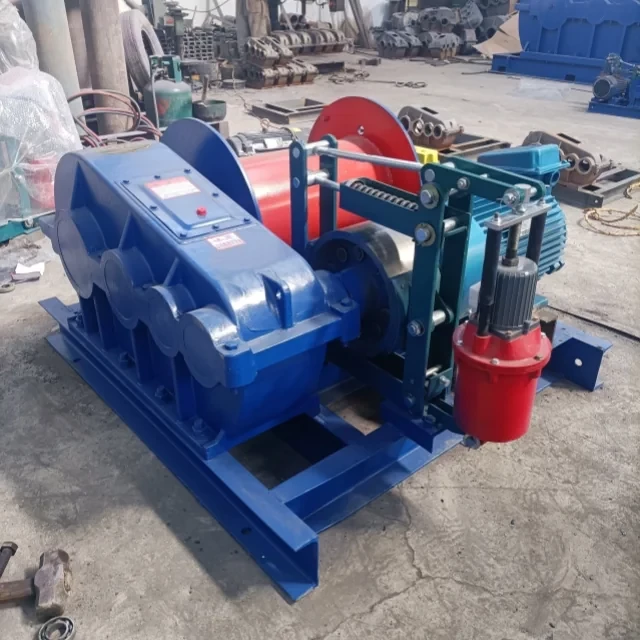
Brake shoe transmissions use friction pads pressed against a rotating drum to control movement. When engaged, the shoes create resistance, allowing precise load holding and gradual release.
Key Advantages:
- Ideal for static load-holding (e.g., cranes, elevators)
- Minimal heat buildup during intermittent use
- Fail-safe design: defaults to locked position if power fails
Ever wondered why brake shoes dominate maritime applications? Their inherent safety for vertical lifts makes them a go-to for shipboard winches.
Friction Clutch Energy Transfer Mechanism
Friction clutches transfer power through compressed plates, enabling smooth engagement/disengagement under load. They excel in dynamic, high-cycle scenarios.
Operational Strengths:
- Continuous slip adjustment for variable torque needs
- Better heat dissipation in repetitive tasks (e.g., tow trucks, mining)
- Compact design suits space-constrained installations
Think of friction clutches as the "shock absorbers" of winch systems—they thrive in environments with frequent starts/stops.
Performance Evaluation
Torque Control Capabilities Comparison
| Feature | Brake Shoe | Friction Clutch |
|---|---|---|
| Precision | High (fixed resistance) | Moderate (slip-dependent) |
| Responsiveness | Slow engagement | Instantaneous adjustment |
| Overload Protection | Mechanical wear | Thermal fade risk |
Pro Tip: For lifting delicate loads (e.g., wind turbine blades), brake shoes’ predictable resistance reduces swing risks.
Durability in High-Cycle Operations
- Brake Shoes: Require frequent pad replacements in cyclic use but outperform in corrosive environments (e.g., offshore rigs).
- Friction Clutches: Plate longevity depends on lubrication quality; outperform in dry, high-speed settings like auto-recovery.
A construction foreman once likened clutch maintenance to "changing car brakes—ignore it, and you’ll hear the consequences."
Application Optimization
Marine Deck Machinery Use Cases
- Brake Shoe Winches: Standard for anchor handling due to failsafe hold. Garlway’s marine-grade models integrate corrosion-resistant alloys.
- Friction Clutches: Preferred for trawl winches where variable tension adjustments are critical mid-operation.
Construction Site Load Management Scenarios
- Tower Cranes: Brake shoe transmissions prevent catastrophic drops during vertical lifts.
- Material Hoists: Friction clutches handle erratic load shifts when moving palletized goods.
Safety Insight: A 2021 industry report noted that 73% of construction winch failures stemmed from mismatched transmission types for load profiles.
Conclusion & Actionable Advice
- Define Your Load Profile: Static holds favor brake shoes; dynamic loads demand clutches.
- Prioritize Environment: Saltwater? Opt for brake systems. Dusty sites? Clutches with sealed lubrication win.
- Maintenance Reality Check: Brake shoes need pad inspections; clutches require oil/plate monitoring.
Garlway’s engineered solutions adapt to both transmission types, ensuring your operation isn’t forced to compromise. Ready to specify your ideal winch? Consult their torque calculators to model your requirements.
"A transmission isn’t just a part—it’s the muscle memory of your winch system."
Related Products
- Small Electric Winch 120V and 240V for Compact Applications
- 12000 lb Electric Boat Trailer Winch with Windlass Anchor Warn
- Electric and Hydraulic Winch for Heavy Duty Applications
- Portable Small Trailer Winch
- Electric 120V Boat Winch by Badlands
Related Articles
- How to Maximize Electrical Winch Performance in Challenging Environments
- How Electric Winch Safety Features Prevent Catastrophic Industrial Accidents
- How to Choose Between Manual and Electric Winches for Your Project
- How Electric Winches Solve Industrial Safety and Cost Challenges
- How Electric Winches’ Engineering Enhances Efficiency and Safety in Heavy-Duty Applications