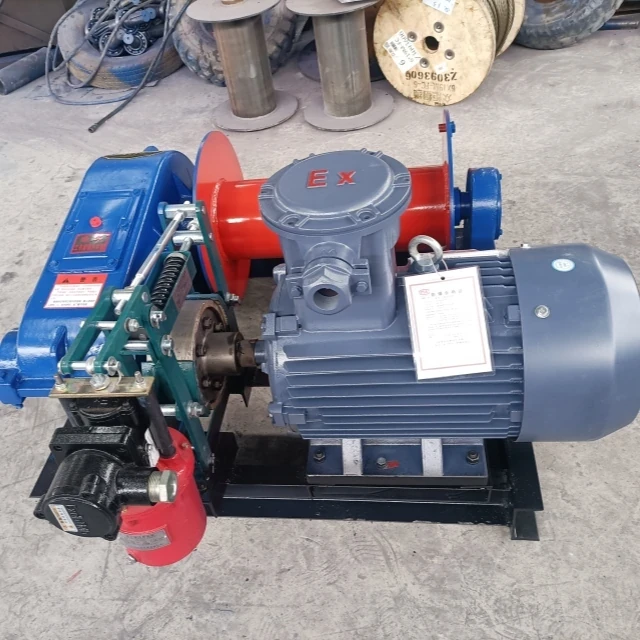
When selecting a winch for industrial applications, understanding how each component impacts performance and safety is crucial. From torque efficiency to load capacity, the right specifications prevent equipment failure and ensure operator safety. This guide breaks down critical winch components, their functional roles, and how to match them to your industry’s demands.
Electric Winch Components and Their Functional Roles
Winches are more than just motors and cables—they’re precision-engineered systems where every part plays a vital role.
The Critical Link Between Reducers and Torque Efficiency
Reducers convert high-speed, low-torque motor output into the slow, powerful rotation needed for heavy lifting. A well-matched reducer:
- Increases usable torque by up to 90%
- Reduces wear on motor bearings
- Maintains consistent speed under variable loads
Ever wondered why some winches struggle with heavy loads despite powerful motors? The reducer’s gear ratio is often the missing piece.
Electromagnetic Brakes: Ensuring Safety Under Load
Unlike mechanical brakes that degrade with friction, electromagnetic brakes:
- Engage automatically during power loss (fail-safe design)
- Withstand 200% overload without slippage
- Require zero manual adjustment over time
A visual metaphor: Think of these brakes as an elevator’s safety clutch—silent but always ready to arrest uncontrolled movement.
How Lifting Capacity is Determined in Industrial Applications
Motor Power vs. Drum Capacity: Balancing Speed and Strength
While motor horsepower (HP) dictates initial force, the drum’s diameter and rope layering define practical capacity:
| Drum Diameter | Rope Layers | Effective Capacity Loss |
|---|---|---|
| 8 inches | 1 | Baseline (100%) |
| 8 inches | 3 | Drops to 70% |
Reference finding: Larger drums maintain rope integrity better, as seen in offshore 10-ton winches where 14-inch drums prevent crushing damage to synthetic ropes.
Case Study: 10-Ton Winches in Offshore Operations
In North Sea rigs, winches combine:
- 15 HP motors with 50:1 reducers
- Double-disc electromagnetic brakes
- 316L stainless steel drums (saltwater-resistant)
Result: 12,000+ lift cycles annually with
Selecting the Right Winch for Your Industry
Construction vs. Marine: Material and Design Variations
Construction Winches
- Drum: Powder-coated carbon steel (abrasion-resistant)
- Rope: 6x19 IWRC wire rope (handles debris impact)
- Typical use: 5-ton vertical lifts with frequent starts/stops
Marine Winches
- Drum: Stainless steel or anodized aluminum
- Rope: Dyneema® synthetic (floats if dropped overboard)
- Typical use: 3-ton horizontal pulls in corrosive environments
Which scenario matches yours? A winch designed for construction sites will corrode rapidly in marine environments.
Compliance with ISO Standards for Load Safety
Look for these certifications:
- ISO 4308: Rates winches for duty cycles (e.g., M4 = moderate intermittent use)
- ISO 9001: Ensures manufacturing quality controls
- CE Marking: Confirms EU safety compliance
Garlway winches meet all three, with third-party testing reports available for spec verification.
Key Takeaways for Informed Winch Selection
- Prioritize the reducer-motor pairing—it’s the linchpin of torque efficiency.
- Drum diameter directly affects capacity—oversize it for critical lifts.
- Match materials to your environment—marine-grade components cost more but prevent failures.
For heavy-duty applications, explore Garlway’s range of ISO-certified winches with customizable motor-reducer combinations. Their fail-safe braking systems and corrosion-resistant builds address the toughest industrial challenges—from bridge construction to offshore cargo handling.
Final thought: In winch systems, every component is a guardian of both performance and human safety. Choose as if lives depend on it—because they do.
Related Products
- Warn Winch Windlass Boat Trailer Winch
- Electric and Hydraulic Winch for Heavy Duty Applications
- Small Electric Winch 120V and 240V for Compact Applications
- 12000 lb Electric Boat Trailer Winch with Windlass Anchor Warn
- Quick Windlass Portable Winch for Truck and Boat Best Boat Winch
Related Articles
- Beyond the Bumper: The Critical System Choice in Powering Your Trailer Winch
- Force vs. Mass: The Critical Difference in Sizing a Boat Winch
- Lines of Force: The Unseen Geometry of a Boat Winch
- More Than a Number: The Engineering Psychology of Choosing a Boat Winch
- How to Choose and Optimize Winch Speed for Maximum Efficiency





