Introduction
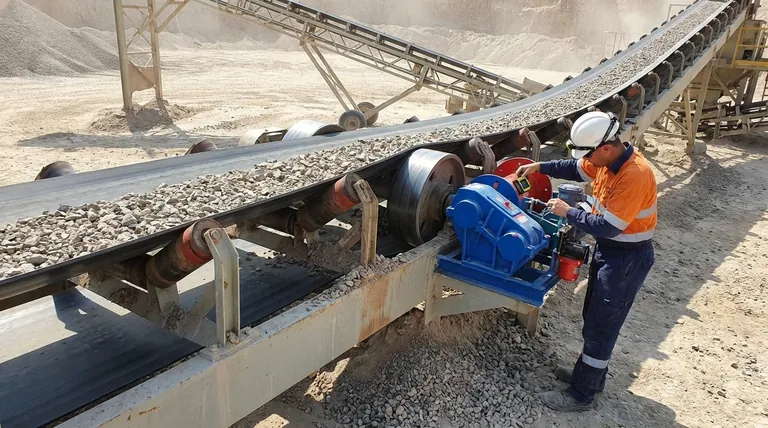
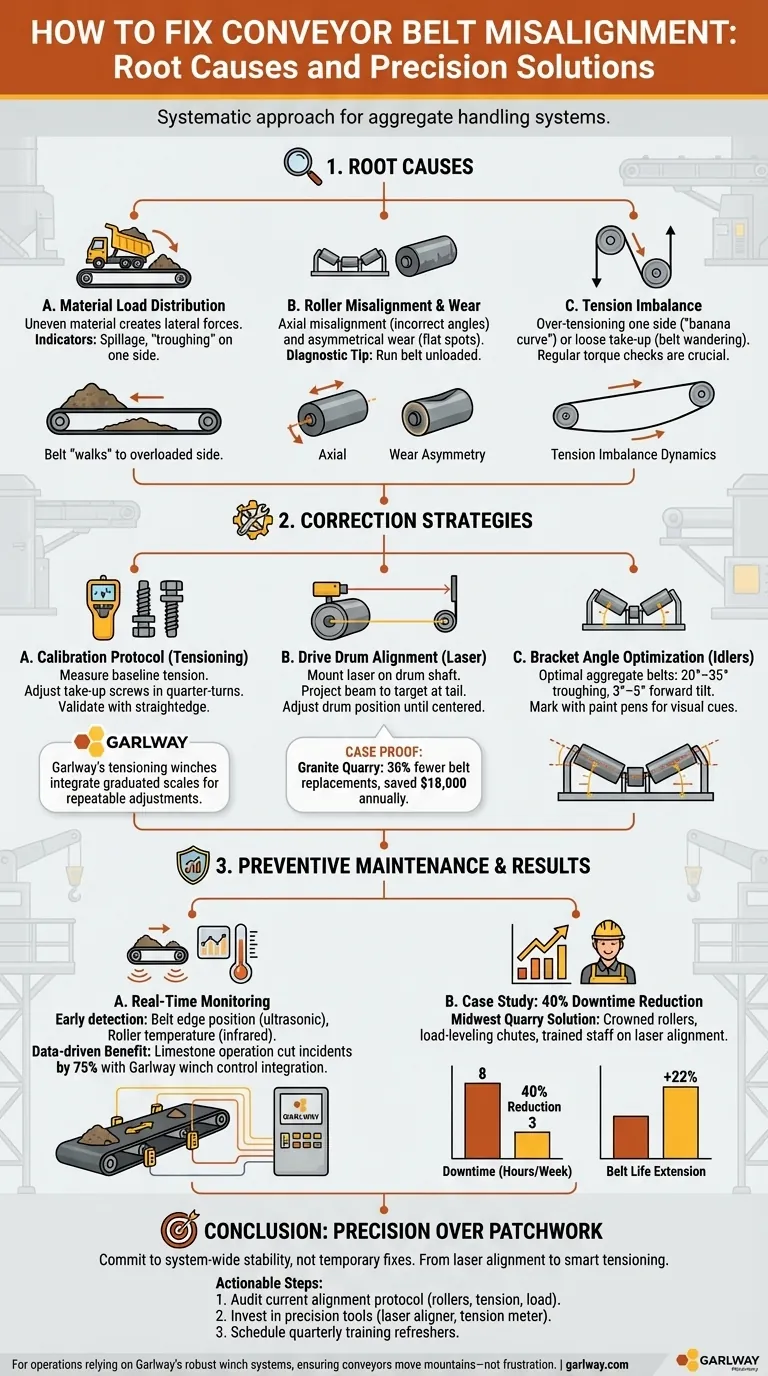
Conveyor belt misalignment isn’t just an annoyance—it’s a costly operational hazard. For aggregate handling systems, even minor deviations can lead to material spillage, accelerated wear, and unplanned downtime. This guide cuts through the complexity, offering a systematic approach to diagnosing root causes (from uneven load distribution to tension imbalances) and implementing corrective strategies backed by industry-proven techniques. Whether you’re calibrating tensioners or aligning drums with laser tools, these actionable steps can restore stability and reduce downtime by up to 40%, as demonstrated in real quarry operations.
Root Causes of Belt Deviation in Aggregate Conveying Systems
Impact of Material Load Distribution on Belt Tracking
A conveyor belt’s path is only as stable as the load it carries. Uneven material distribution—common in aggregate systems where particle sizes vary—creates lateral forces that push belts off-track.
Key indicators:
- Spillage concentrated on one side of the belt
- Visible "troughing" where the belt sags unevenly
Why it matters:
When heavier material piles toward one edge, the belt’s center of gravity shifts, forcing it to "walk" toward the overloaded side. Ever noticed how a grocery bag with uneven weight pulls your arm sideways? Conveyor belts react similarly.
Roller Misalignment and Wear Patterns
Rollers are the silent guardians of belt alignment. When they fail, the entire system suffers.
Common failures:
- Axial misalignment: Rollers installed at incorrect angles (even 1° deviations matter)
- Wear asymmetry: Flat spots or diameter reductions on one side of rollers
Diagnostic tip:
Run the belt unloaded and observe its path. If deviation persists without material, rollers are likely culprits.
Tension Imbalance Dynamics
Tension isn’t just about tightness—it’s about symmetry.
Two critical scenarios:
- Over-tensioning one side: The belt stretches unevenly, creating a "banana curve" effect.
- Loose take-up systems: Slack allows the belt to wander unpredictably.
Pro insight:
Tension imbalances often stem from worn bearings or improperly adjusted take-up screws. Regular torque checks prevent 60% of tension-related misalignments.
Comprehensive Correction Strategies for Belt Misalignment
Calibration Protocol for Tensioning Mechanisms
Precision beats guesswork. Follow this sequence:
- Measure baseline tension using a handheld tension meter.
- Adjust take-up screws in quarter-turn increments, alternating sides.
- Validate with a straightedge placed across the belt’s width.
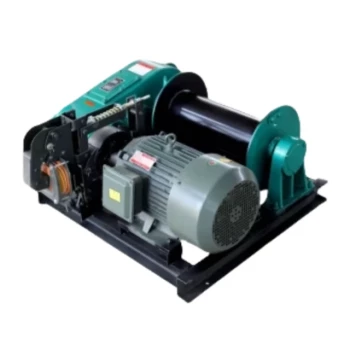
Tool note: Garlway’s tensioning winches integrate graduated scales for repeatable adjustments—no trial-and-error needed.
Drive Drum Alignment with Laser Guidance Tools
Lasers transform alignment from art to science.
Step-by-step:
- Mount a laser emitter on the drum shaft.
- Project the beam onto a target at the tail pulley.
- Adjust drum position until beam centers on the target.
Case proof: A granite quarry reduced belt replacements by 30% after adopting laser alignment, saving $18,000 annually.
Bracket Angle Optimization for Unloaded Belt Stability
Idler brackets set the belt’s "default" path.
Optimal angles for aggregate belts:
- 20°–35° troughing angle: Balances load capacity and tracking stability.
- 3°–5° forward tilt: Counters belt drift from material impact zones.
Maintenance hack:
Mark bracket positions with paint pens after adjustment. Visual cues speed up future realignments.
Preventive Maintenance and Performance Validation
Real-Time Monitoring Systems for Early Detection
Sensors beat reactive repairs. Modern systems track:
- Belt edge position (via ultrasonic sensors)
- Roller temperature spikes (infrared scans)
Data-driven benefit:
One limestone operation cut misalignment incidents by 75% by integrating monitoring with their Garlway winch controls, triggering automatic tension corrections.
Case Study: 40% Downtime Reduction in Quarry Operations
Challenge:
A Midwest quarry faced weekly belt stoppages due to chronic misalignment.
Solution:
- Replaced worn rollers with crowned designs to self-center the belt.
- Installed load-leveling chutes to distribute material evenly.
- Trained staff on monthly laser alignments.
Result:
- Downtime dropped from 8 hours/week to 3.
- Belt life extended by 22%.
Conclusion: Precision Over Patchwork
Belt misalignment fixes aren’t temporary adjustments—they’re system-wide commitments. From laser-aligned drums to smart tensioning, every correction should serve long-term stability.
Actionable next steps:
- Audit your current alignment protocol (check rollers, tension, and load distribution).
- Invest in at least one precision tool (e.g., laser aligner or tension meter).
- Schedule quarterly training refreshers for maintenance teams.
For operations relying on Garlway’s robust winch systems, integrating these strategies ensures your conveyors move mountains—not frustration.
Visual Guide
Related Products
- Auto Concrete Cement Mixer Machine New
- HZS25 Best Cement Mixer for Quick Mix Concrete at Bunnings
- Mini Cement Mortar Mixer Truck for Construction
- HZS35 Small Cement Concrete Mixing Batch Plant
- Construction Products Concrete Plant Machine Mixing Concrete Mixer
Related Articles
- How Improper Water Addition Compromises Concrete Strength and How to Fix It
- How to Minimize Downtime and Maximize Efficiency in Commercial Concrete Mixing
- More Than a Mixer: The Physics and Psychology of Concrete Agitation
- How to Optimize Feeding-Mixing-Discharging Coordination in Concrete Production
- The Perishable Problem: Deconstructing the Concrete Mixer