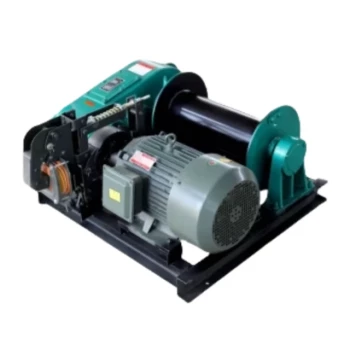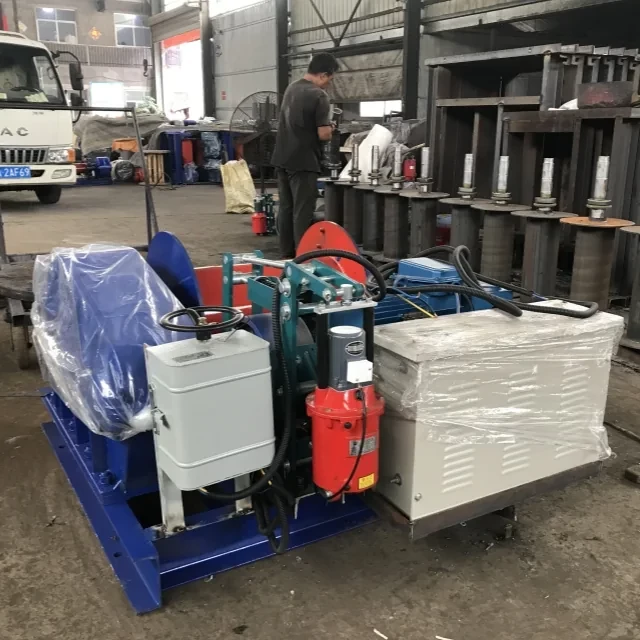
Hydraulic winches are the backbone of heavy-duty operations in industries like marine, mining, and construction. Yet, their performance hinges on one often-overlooked factor: hydraulic oil management. Poor oil maintenance leads to costly downtime, accelerated wear, and even catastrophic failures. This guide delivers actionable strategies to optimize your winch’s hydraulic oil system—covering viscosity selection, contamination control, and cutting-edge monitoring technologies—so you can maximize equipment lifespan and operational efficiency.
Hydraulic Oil Fundamentals for Winch Systems
The Role of Viscosity and Additives in Performance
Hydraulic oil isn’t just a lubricant; it’s the lifeblood of your winch system. Viscosity—the oil’s resistance to flow—dictates how well it protects components under load. Too thin, and metal-to-metal contact increases; too thick, and energy efficiency drops.
- Cold Climates: Opt for lower viscosity grades (e.g., ISO VG 32) to ensure smooth startup.
- High-Temperature Operations: Higher viscosity oils (e.g., ISO VG 68) maintain film strength.
Additives further enhance performance:
- Anti-wear agents (e.g., zinc dialkyldithiophosphate) shield gears and bearings.
- Demulsifiers prevent water-induced sludge in humid environments.
Ever wondered why some winches fail prematurely despite regular oil changes? The culprit is often incompatible viscosity or degraded additives.
Compatibility with Winch Components and Operating Environments
Winches face unique stresses:
- Marine environments demand oils with rust inhibitors to combat saltwater exposure.
- Mining winches require extreme-pressure additives to handle shock loads.
Always consult your winch manufacturer’s specifications. For instance, Garlway winches are engineered to work optimally with oils meeting DIN 51524 standards, ensuring seal compatibility and thermal stability.
Proactive Maintenance Strategies
Step-by-Step Contamination Detection and Elimination
Contaminants like dirt, water, and metal particles account for 75% of hydraulic system failures. Here’s how to catch them early:
- Visual Inspection: Cloudy or milky oil signals water ingress.
- Patch Testing: Filter oil through a white membrane; dark streaks indicate particulate buildup.
- Lab Analysis: Send samples to detect sub-10-micron particles invisible to the naked eye.
Actionable Tip: Install a desiccant breather on the reservoir to block moisture entry—a simple fix that extends oil life by 30%.
Oil Replacement Intervals Based on Usage Scenarios
Don’t rely on generic schedules. Tailor replacements to operational intensity:
| Scenario | Interval |
|---|---|
| Moderate use (e.g., construction winches) | 1,000 hours |
| Severe duty (e.g., offshore towing) | 500 hours |
| High-contamination risk (e.g., mining) | 250 hours |
Pro Tip: Use oil analysis kits to track viscosity and additive depletion, replacing oil only when necessary—saving up to 20% in annual maintenance costs.
Case Studies of Winch Failures Linked to Oil Management
Offshore Marine Winch Corrosion from Moisture Contamination
A North Sea vessel’s winch seized mid-operation, stranding equipment. Investigation revealed:
- Cause: Saltwater seepage through a damaged breather, forming corrosive acids.
- Solution: Switching to a water-resistant synthetic oil (ISO VG 46 with enhanced demulsifiers) and quarterly oil testing.
Mining Winch Overheating Due to Incorrect Viscosity Selection
A copper mine’s winch motor burned out after 6 months. Root cause:
- Mistake: Using ISO VG 68 oil in freezing pit temperatures, causing sluggish flow and overheating.
- Fix: Adopting a multigrade oil (VG 46/22) that adapts to temperature swings.
Future-Proofing Your System
Implementing IoT-Based Oil Monitoring Sensors
Real-time sensors track:
- Particle counts (alerting to filter failures).
- Viscosity changes (flagging oxidation).
For example, Garlway’s SmartWinch system integrates wireless oil-quality sensors, slashing unplanned downtime by 40%.
Transitioning to Eco-Friendly Biodegradable Oils
Regulations are tightening, especially in marine and forestry sectors. Plant-based esters offer:
- Lower toxicity: Safe for accidental spills in sensitive ecosystems.
- High biodegradability: Meets EPA VGP standards.
Conclusion: Turn Oil Management into a Competitive Edge
Hydraulic oil isn’t a maintenance afterthought—it’s the difference between a winch that lasts decades and one that fails mid-project. To recap:
- Match viscosity and additives to your operating conditions.
- Adopt predictive maintenance with contamination checks and oil analysis.
- Leverage technology like IoT sensors for real-time insights.
For winches in extreme environments, explore Garlway’s range of high-performance hydraulic solutions, designed to withstand the toughest conditions while minimizing lifecycle costs.
Final Thought: Could your current oil management plan pass an audit? If not, start with a simple viscosity check today.
Related Products
- Warn Winch Windlass Boat Trailer Winch
- Electric and Hydraulic Winch for Heavy Duty Applications
- Small Electric Winch 120V and 240V for Compact Applications
- 12000 lb Electric Boat Trailer Winch with Windlass Anchor Warn
- Quick Windlass Portable Winch for Truck and Boat Best Boat Winch
Related Articles
- Beyond the Bumper: The Critical System Choice in Powering Your Trailer Winch
- Force vs. Mass: The Critical Difference in Sizing a Boat Winch
- Lines of Force: The Unseen Geometry of a Boat Winch
- More Than a Number: The Engineering Psychology of Choosing a Boat Winch
- How to Choose and Optimize Winch Speed for Maximum Efficiency