The Illusion of Power
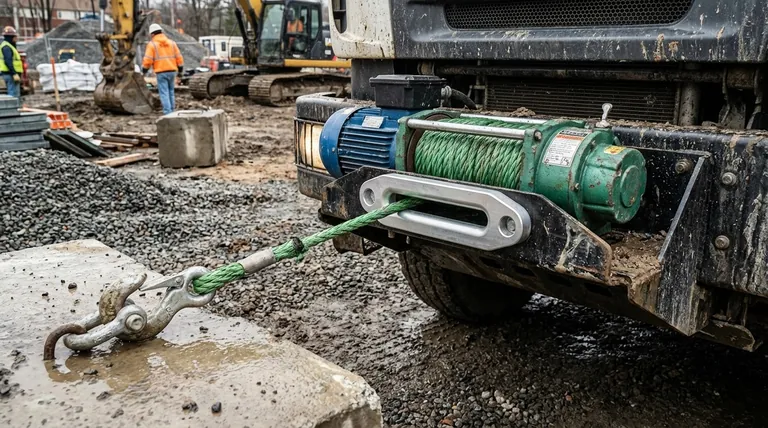
Imagine the scene: a heavy piece of equipment is mired in mud on a construction site. The winch motor on the recovery vehicle hums with immense power—a 12,000-pound capacity promising an easy solution. The line goes taut, the motor strains, and then, with a sharp crack, the hook fails. The entire operation grinds to a halt.
This scenario isn't a failure of power. It's a failure of the system.
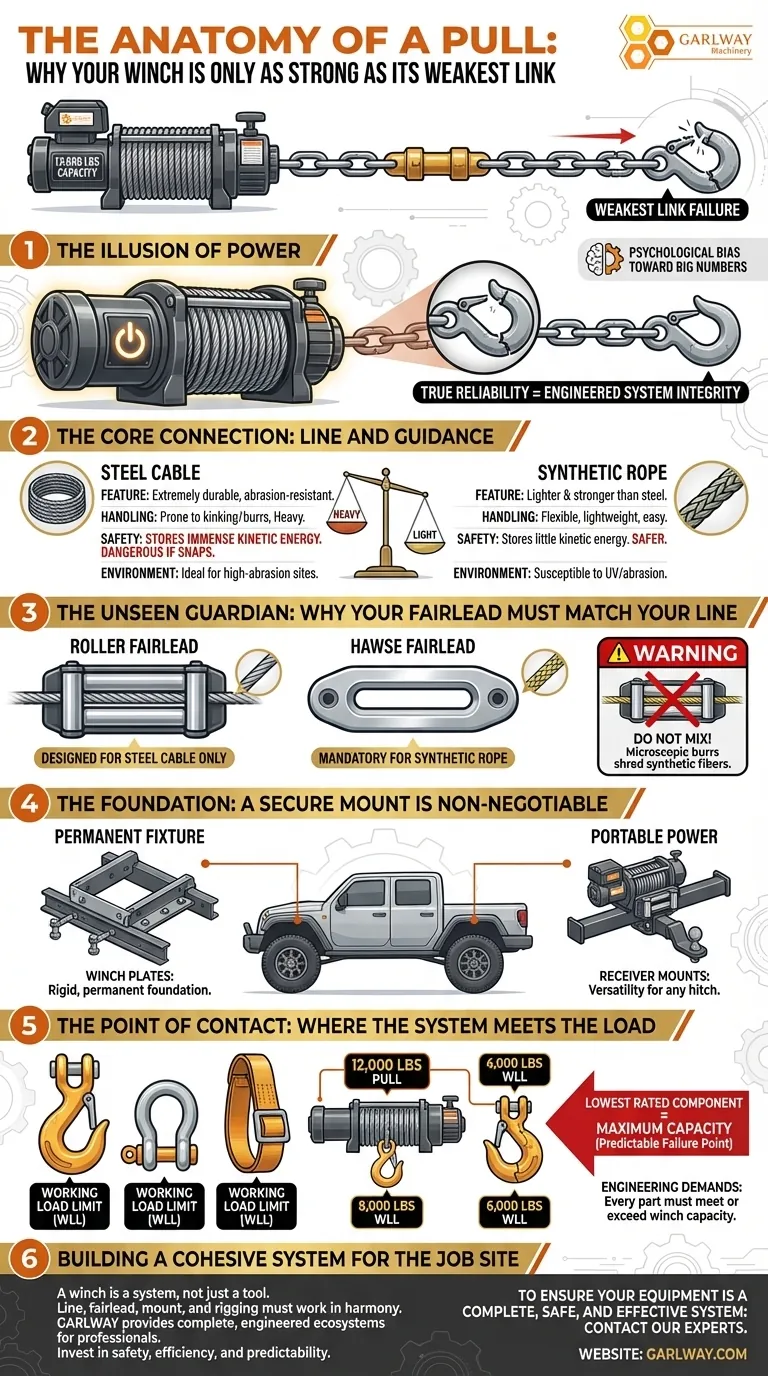
We have a psychological bias toward big numbers. We see the winch's rated capacity and feel a sense of security. But that force is not generated in a vacuum. It is channeled through a chain of components: the mount, the drum, the line, the fairlead, and the hook. True reliability isn't in the motor alone; it's in the engineered integrity of this entire system.
The Core Connection: Line and Guidance
The winch line is the most visible—and most frequently replaced—part of the system. The choice of material is the first critical decision, dictating both performance and the hardware required to support it.
Steel vs. Synthetic: A Trade-off Between Durability and Safety
There is no single "best" option; there is only the best option for the task at hand.
| Feature | Steel Cable | Synthetic Rope |
|---|---|---|
| Strength | Extremely durable and abrasion-resistant. | Lighter and stronger than steel of the same diameter. |
| Handling | Prone to kinking and sharp burrs. Heavy. | Lightweight, flexible, and easy to handle. |
| Safety | Stores immense kinetic energy; dangerous if it snaps. | Stores very little kinetic energy; safer if it breaks. |
| Environment | Ideal for high-abrasion worksites (e.g., gravel, rock). | Susceptible to UV degradation and abrasion without care. |
The choice reflects an engineering philosophy. Steel is a testament to raw, traditional durability. Synthetic rope is a modern solution prioritizing safety and ease of use.
The Unseen Guardian: Why Your Fairlead Must Match Your Line
A fairlead guides the line onto the winch drum, preventing it from binding. This simple component is one of the most common points of catastrophic system failure due to a simple mismatch.
- Roller Fairlead: Designed exclusively for steel cable. Its steel rollers can handle the abrasion.
- Hawse Fairlead: A smooth, rounded aluminum guide. It is mandatory for synthetic rope.
Using a synthetic rope with a roller fairlead—especially one previously used with steel—is like running a climbing rope over a file. Microscopic burrs on the rollers will shred the synthetic fibers, silently compromising the line until it fails under load.
The Foundation: A Secure Mount is Non-Negotiable
A powerful winch attached to a weak mounting point is just a heavy, dangerous object. The mount is the foundation of the entire pulling operation, transferring the force from the winch to the vehicle or structure's frame.
Permanent Fixtures vs. Portable Power
-
Winch Plates: These heavy-duty steel platforms bolt directly to a vehicle's frame. They provide a permanent, rigid foundation for winches that are in constant use on a dedicated piece of machinery.
-
Receiver Mounts: For contractors needing versatility, a receiver mount is a game-changer. It allows a single winch to be attached to any vehicle with a standard trailer hitch, whether it's on the front of a truck or the back of a utility vehicle.
The Point of Contact: Where the System Meets the Load
The rigging gear—hooks, shackles, and straps—is the final link in the chain. It's also where the "weakest link" principle becomes painfully obvious.
The Psychology of Component Ratings
It's easy to scrutinize the winch's 12,000-pound rating but forget to check the shackle connecting it to the load. Every single component in the system has a working load limit. A winch can only pull as much as the lowest-rated component connected to it.
Using an underrated shackle, hook, or strap doesn't just reduce your winch's capability; it creates a predictable point of failure. Disciplined engineering demands that every part of the system meets or exceeds the winch's maximum pulling capacity.
Building a Cohesive System for the Job Site
A winch is not a tool; it's a system. The line, fairlead, mount, and rigging must work in harmony.
For construction companies and contractors, this systems-thinking approach isn't academic—it's essential for project timelines and crew safety. A component failure means downtime, and downtime costs money and creates risk. This is why leading suppliers like GARLWAY provide not just powerful winches, but a complete ecosystem of engineered accessories. They understand that professionals need a reliable, cohesive system where every component is properly rated and matched for demanding industrial tasks.
Equipping your winch correctly is an investment in safety, efficiency, and predictability on the job site. It's about transforming raw power into controlled, reliable work.
To ensure your equipment is a complete, safe, and effective system, Contact Our Experts
Visual Guide
Related Products
- Warn Winch Windlass Boat Trailer Winch
- Electric and Hydraulic Winch for Heavy Duty Applications
- Small Electric Winch 120V and 240V for Compact Applications
- 12000 lb Electric Boat Trailer Winch with Windlass Anchor Warn
- Quick Windlass Portable Winch for Truck and Boat Best Boat Winch
Related Articles
- Beyond the Bumper: The Critical System Choice in Powering Your Trailer Winch
- Force vs. Mass: The Critical Difference in Sizing a Boat Winch
- Lines of Force: The Unseen Geometry of a Boat Winch
- More Than a Number: The Engineering Psychology of Choosing a Boat Winch
- How to Choose and Optimize Winch Speed for Maximum Efficiency