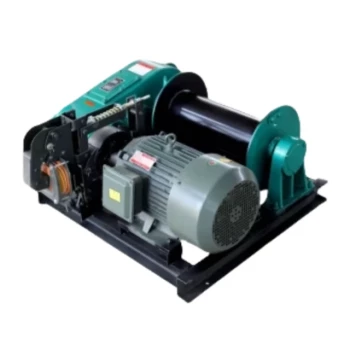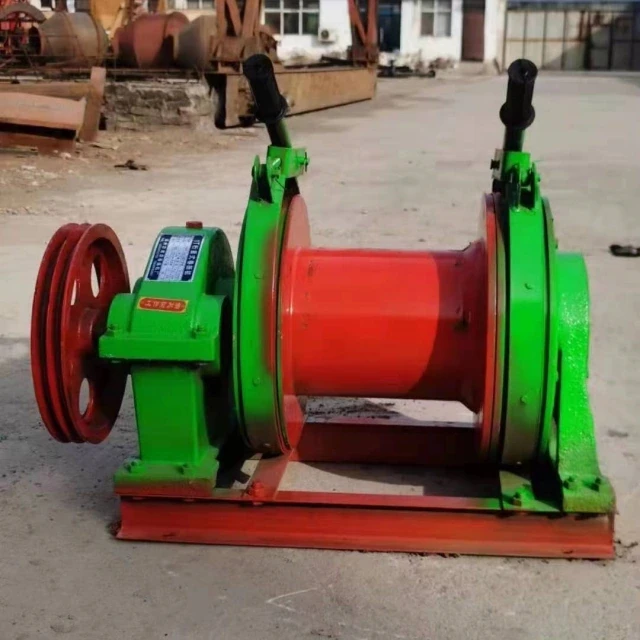
Manual winches remain indispensable tools in environments where electricity is unreliable or unavailable. Whether you're hauling heavy loads on a remote construction site or securing vessels offshore, these hand-operated systems offer reliability without power dependencies. This guide explores their mechanics, strategic applications, and optimization techniques—helping you make informed decisions for power-scarce scenarios.
Manual Winch Fundamentals
Key Components and Operational Mechanics
Manual winches convert rotational force into linear motion through gears, drums, and cables. The core components include:
- Drum: Spools the cable under tension
- Gear Train: Multiplies input force (hand cranking)
- Braking System: Prevents uncontrolled unwinding (ratchet stops or friction brakes)
Ever wondered how a simple crank can lift tons? The secret lies in gear ratios. For instance, a 20:1 ratio means 20 crank rotations move the load 1 foot—reducing effort but increasing time.
Load Capacity vs. Labor Tradeoffs
Higher gear ratios (e.g., 216:1) enable faster operations but demand more physical exertion. Conversely, lower ratios (10:1) ease effort but slow progress. Consider:
- High-Ratio Winches: Ideal for time-sensitive recoveries (e.g., marine emergencies)
- Low-Ratio Winches: Suited for precision tasks like agricultural hoisting
OSHA mandates safety factors—winch housings must withstand 4x the rated load, and cables 3x the working limit—ensuring resilience against unexpected stresses.
Strategic Applications of Manual Winches
Marine and Offshore Use Cases
In saltwater environments, corrosion-resistant manual winches (like those from Garlway) excel for:
- Anchoring small boats
- Adjusting sailboat rigging
- Emergency cargo lifts during power outages
Their simplicity avoids electrical failures, a critical advantage when storms disrupt power.
Remote Construction and Agricultural Deployments
Manual winches shine where generators are impractical:
- Construction: Hoisting materials in off-grid sites
- Farming: Tensioning fences or relocating heavy equipment
Did you know? A dual-speed winch can switch between high-speed light loads and low-speed heavy pulls, adapting to dynamic needs.
Optimizing Manual Winch Performance
Safety Protocols for Hand-Driven Systems
- Inspect Cables: Frayed wires reduce the safety factor below OSHA’s 3x requirement.
- Engage Brakes: Always lock ratchet stops before load adjustments.
- Distribute Force: Use pulley systems to avoid exceeding winch limits.
Maintenance Best Practices
- Lubricate Gears: Prevent seizing in dusty or wet conditions.
- Store Cables Dry: Moisture accelerates corrosion.
- Test Load Limits: Periodically verify the winch meets rated capacity.
Conclusion: Leveraging Manual Power Where It Matters Most
Manual winches bridge gaps in power-scarce environments, offering reliability where electric alternatives falter. By selecting the right gear ratio, adhering to safety standards, and maintaining equipment, you can harness their full potential—whether pulling a stranded vehicle or securing a fishing net.
Actionable Tip: For heavy-duty needs, explore Garlway’s manual winches, engineered for durability in harsh conditions. Their dual-speed options provide flexibility, while OSHA-compliant designs prioritize safety.
Next time you face a power dilemma, ask: Could a manual winch solve this without cords or fuel? The answer might save your project.
Related Products
- Quick Windlass Portable Winch for Truck and Boat Best Boat Winch
- Portable Small Trailer Winch
- Electric and Hydraulic Winch for Heavy Duty Applications
- Small Electric Winch 120V and 240V for Compact Applications
- Hydraulic Winding Engine Harbor Freight Winch
Related Articles
- How the JK Quick Winch’s Portability Transforms Work in Tight Spaces
- How JK Quick Winches Solve 3 Critical Industrial Automation Challenges
- How to Choose a Quick Winch with the Right Traction Force for Your Job
- More Than a Number: The Engineering Psychology of Choosing a Boat Winch
- Force vs. Mass: The Critical Difference in Sizing a Boat Winch