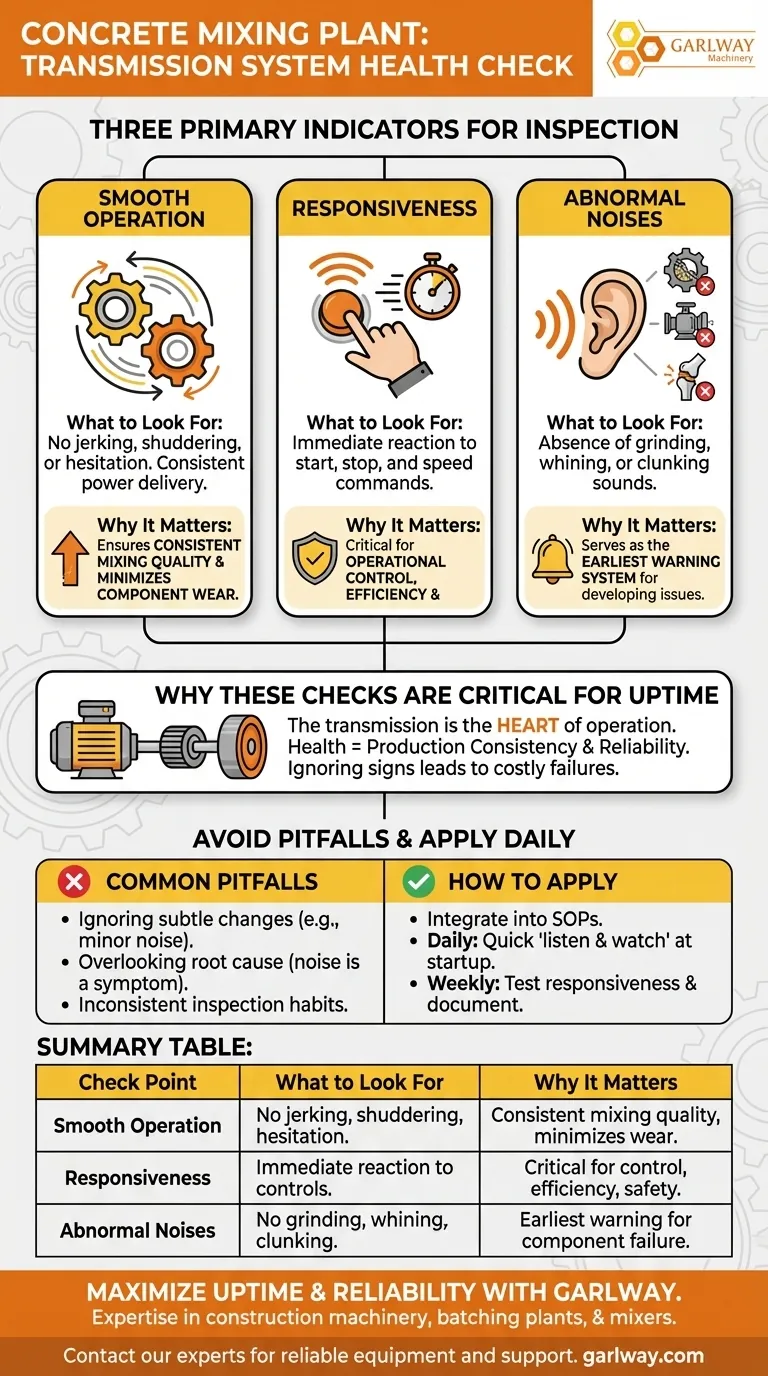
To properly inspect a concrete mixing plant's transmission system, you must check for three primary indicators: smooth and consistent operation, immediate responsiveness to controls, and the complete absence of any abnormal noises. These checks serve as the fundamental health assessment for the entire mechanical powertrain.
The core principle is that sensory checks—what you see, feel, and hear—are your most effective early warning system. They allow you to identify developing mechanical issues long before they escalate into costly failures and operational downtime.
Why These Checks Are Critical for Plant Uptime
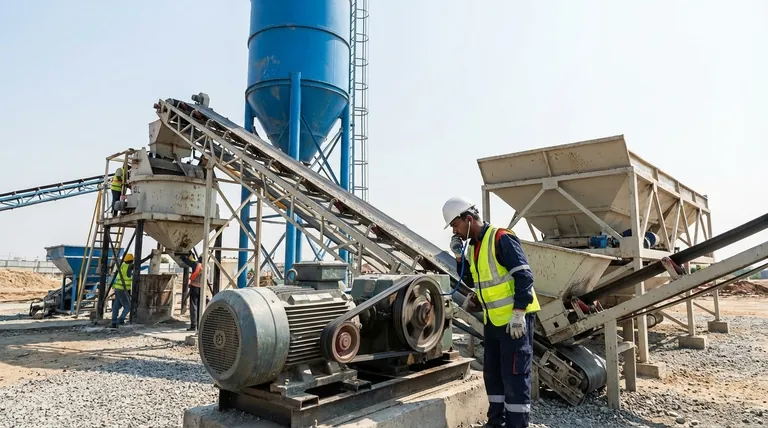
The transmission system, encompassing everything from the motor to the mixing drum, is the heart of your plant's operation. Its health directly dictates production consistency and reliability. Ignoring subtle signs of trouble is a direct path to unplanned and expensive repairs.
Smooth Operation: The Sign of a Healthy System
A properly functioning transmission operates without jerking, shuddering, or hesitation. Smooth power delivery ensures consistent mixing quality and minimizes stress on mechanical components like gears, bearings, and shafts.
Any deviation from this smoothness indicates a problem, such as insufficient lubrication, component wear, or misalignment, which can accelerate damage to the entire system.
Responsiveness: The Key to Control and Safety
When an operator issues a command to start, stop, or change speed, the system should react instantly. Delays or sluggishness point to potential issues like slipping belts, failing clutches, or hydraulic pressure problems.
This responsiveness is not just about efficiency; it is a critical safety factor. A system that doesn't respond immediately to a stop command is a significant hazard on the plant floor.
Abnormal Noises: Your Earliest Warning System
Your ears are one of the most effective diagnostic tools you have. A healthy transmission operates with a consistent, familiar hum. New or unusual sounds are direct indicators of specific problems.
Listen for distinct noises like grinding (potential gear or bearing failure), whining (often related to hydraulic or lubrication issues), or clunking (indicating loose components or excessive backlash in the gears).
Common Pitfalls in Transmission System Checks
Simply performing the checks is not enough. To be effective, you must avoid common oversights that can lead to a false sense of security.
Ignoring Subtle Changes
The most common mistake is dismissing a small new noise or a minor hesitation as "normal." Mechanical failures rarely happen suddenly; they develop over time. Documenting and investigating even minor changes is the key to preventative maintenance.
Overlooking the Root Cause
A noise is a symptom, not the problem itself. For example, a squealing belt might be tightened, but the root cause could be a misaligned pulley that will cause the new belt to fail prematurely. Always seek the underlying reason for any observed issue.
Inconsistent Inspection Habits
These sensory checks lose their value if they are not performed regularly. Making them a mandatory part of the pre-operational routine for every shift ensures that developing problems are caught at the earliest possible stage.
How to Apply This to Your Daily Routine
A consistent inspection process turns these principles into a powerful tool for reliability. Integrate these checks into your standard operating procedures.
- If your primary focus is daily operational readiness: Perform a quick "listen and watch" check during startup for any new noises or jerky movements.
- If your primary focus is long-term preventative maintenance: Schedule weekly checks where an operator specifically tests for system responsiveness and formally documents any changes in sound or operation.
Ultimately, treating the transmission system with this level of mechanical empathy is the most effective way to ensure your plant runs reliably day after day.
Summary Table:
| Check Point | What to Look For | Why It Matters |
|---|---|---|
| Smooth Operation | No jerking, shuddering, or hesitation during startup and running. | Ensures consistent mixing quality and minimizes component wear. |
| Responsiveness | Immediate reaction to start, stop, and speed change commands. | Critical for operational control, efficiency, and safety. |
| Abnormal Noises | Absence of grinding, whining, or clunking sounds. | Serves as the earliest warning for issues like bearing or gear failure. |
Maximize the uptime and reliability of your concrete mixing plant with GARLWAY. Our expertise in construction machinery, including high-performance concrete batching plants and mixers, ensures your operations run smoothly. Don't let transmission system failures cause costly downtime. Contact our experts today for reliable equipment and expert maintenance support tailored for construction companies and contractors globally.
Visual Guide
Related Products
- Commercial Electric Concrete Mixer Machine HZS 50 Small Batch Plant for Sale
- Construction Products Concrete Plant Machine Mixing Concrete Mixer
- HZS90 Large Multiquip Concrete Mixers for Construction
- HZS180 Ready Mix Concrete Plant for Foundations with Sand and Cement
- HZS35 Small Cement Concrete Mixing Batch Plant
People Also Ask
- What are the types of concrete mixers used in batching plants? Choose the Right Mixer for Your Project
- What is the core component of a concrete batching plant? The Mixer Unit Defines Your Concrete Quality
- Why is proper maintenance important for a concrete batch mix plant? Maximize Uptime & Profitability
- Why buy concrete batch plant parts only from the manufacturer? Protect Your Investment and Maximize Uptime
- What are the two main types of concrete batch mixers? Choose the Right Mixer for Your Project