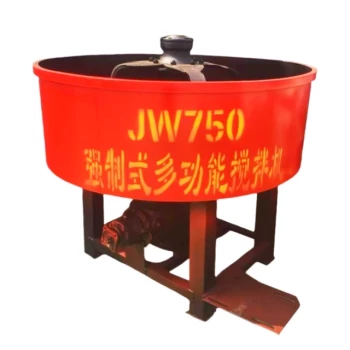
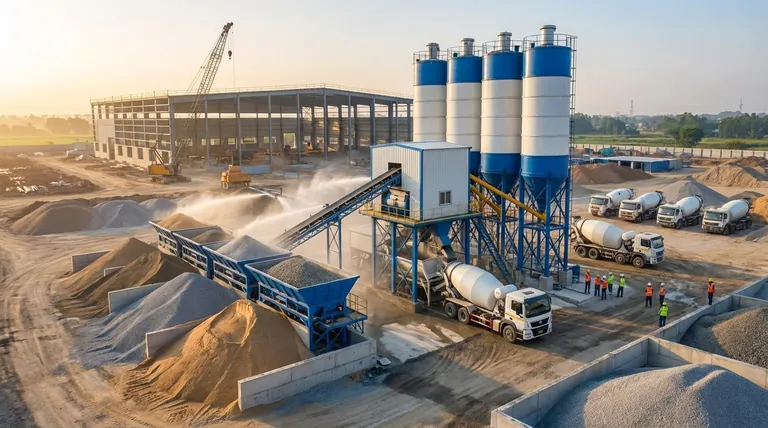
A concrete batching plant directly contributes to cost savings by transforming concrete production from an external variable into a controlled, internal process. This shift allows for precise material management, which drastically reduces waste, and streamlines the entire construction timeline, which lowers labor and equipment overhead.
The true financial value of a batching plant is not just in mixing ingredients; it is in gaining direct control over your project's most critical resource, thereby minimizing waste, accelerating timelines, and reducing dependency on third-party suppliers.
The Core Mechanisms of Cost Savings
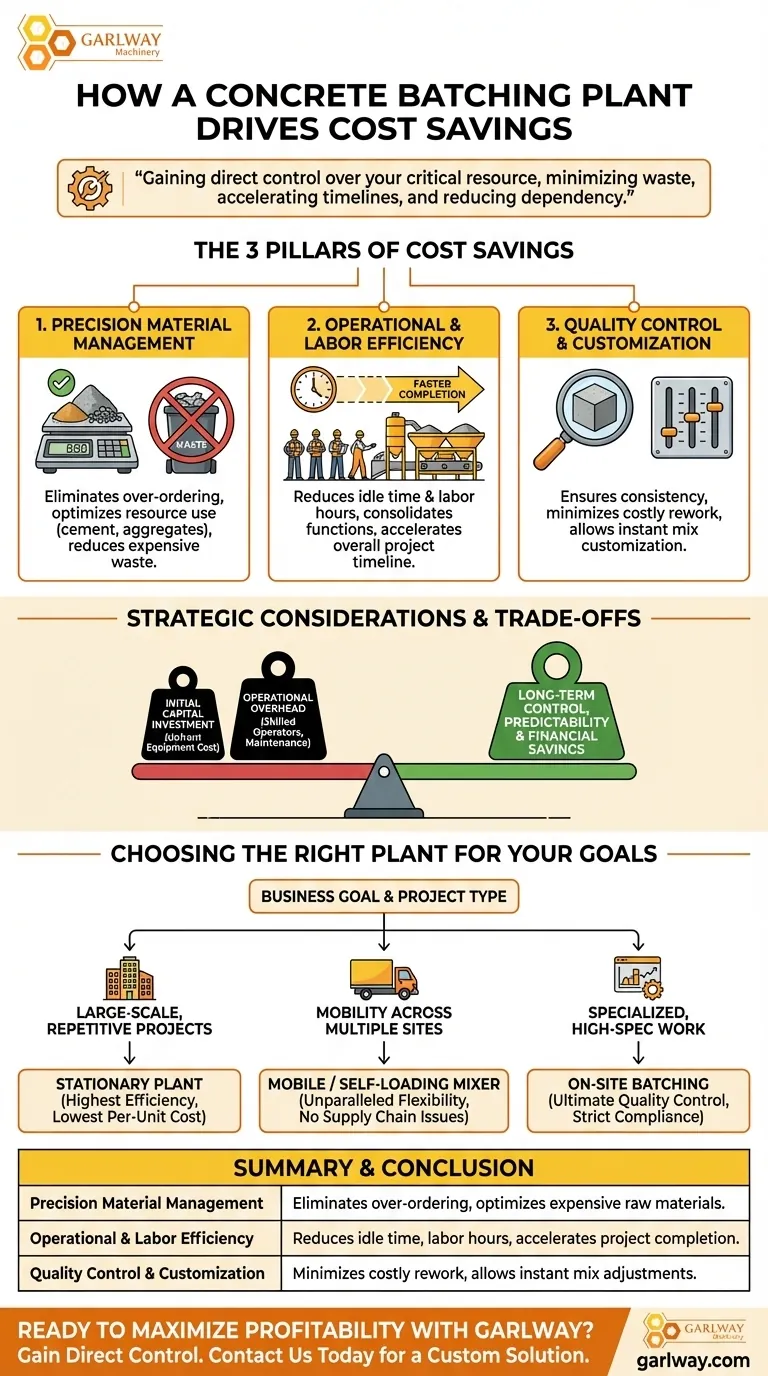
To understand the financial impact, it's essential to look at how a batching plant fundamentally changes project operations. The savings emerge from three key areas: resource management, operational speed, and quality control.
Pillar 1: Precision in Material Management
A primary source of cost overrun is material waste. Batching plants address this head-on.
By producing concrete on-demand and to exact specifications, you eliminate the over-ordering common with third-party ready-mix suppliers. This ensures you use only the raw materials you need for the job.
This precise control optimizes the use of expensive resources like cement, aggregates, and admixtures, preventing the financial loss associated with discarded or unused concrete.
Pillar 2: Operational and Labor Efficiency
Time is a direct component of cost in any construction project.
Batching plants consolidate multiple functions—mixing, transporting, and pouring—into a single, streamlined operation. This integration significantly reduces idle time spent waiting for ready-mix trucks.
This efficiency means fewer labor hours are wasted. Self-loading models, in particular, can eliminate the need for separate loading equipment and the operators required to run it.
By accelerating the concrete preparation process, you enable faster overall project completion, which reduces general condition costs and allows you to move on to the next project sooner.
Pillar 3: Quality Control and Customization
Poor quality concrete leads to expensive and time-consuming rework.
An on-site plant provides absolute consistency in concrete quality from one batch to the next. This reliability minimizes the risk of structural defects that could require costly repairs.
It also allows for immediate customization of concrete mixtures. If site conditions change, you can adjust the mix design instantly without project delays or placing a new order.
Understanding the Trade-offs
While the benefits are substantial, a batching plant is a strategic asset, not a universal solution. An objective analysis requires acknowledging the associated considerations.
Initial Capital Investment
The most significant factor is the upfront cost of the equipment. A batching plant is a major capital expenditure, and the return on investment must be carefully calculated based on your project volume.
Operational Overhead
The plant does not run itself. You must account for the costs of skilled operators, routine maintenance, and energy consumption. These are ongoing operational expenses.
Environmental and Regulatory Compliance
Modern plants are designed to be efficient and minimize emissions, which helps with compliance. However, setting up a plant may still require permits and adherence to local environmental regulations, which can add complexity and cost.
Making the Right Choice for Your Operation
The decision to integrate a concrete batching plant should be aligned with your specific business goals and project types.
- If your primary focus is large-scale, repetitive projects: A stationary batching plant offers the highest efficiency and lowest per-unit cost of concrete, maximizing your profit margins.
- If your primary focus is mobility across multiple job sites: A mobile or self-loading mixer provides unparalleled flexibility, eliminating supply chain issues in varied or remote locations.
- If your primary focus is specialized, high-specification work: On-site batching gives you the ultimate control over mix designs and quality, preventing costly failures and ensuring compliance with strict engineering standards.
Ultimately, investing in a batching plant is an investment in your project's predictability, efficiency, and financial control.
Summary Table:
| Cost-Saving Mechanism | Key Benefit |
|---|---|
| Precision Material Management | Eliminates over-ordering and optimizes use of expensive raw materials. |
| Operational & Labor Efficiency | Reduces idle time, labor hours, and accelerates overall project completion. |
| Quality Control & Customization | Minimizes risk of costly rework and allows instant mix adjustments on-site. |
Ready to maximize your project's profitability with a GARLWAY concrete batching plant?
GARLWAY specializes in providing robust construction machinery, including stationary and mobile concrete batching plants, designed for construction companies and contractors globally. By bringing production in-house, you gain direct control over your concrete supply, leading to significant cost savings, enhanced efficiency, and superior quality control.
Contact us today to discuss your specific project needs and discover how a GARLWAY solution can deliver a faster return on investment for your business.
Visual Guide
Related Products
- HZS120 Ready Mix Concrete Batching Plant Commercial Mud Cement Mixer
- HZS35 Small Cement Concrete Mixing Batch Plant
- HZS75 Concrete Batching Plant Cement Mixer Price Concrete Mixer Bunnings Mixing Plant
- HZS180 Ready Mix Concrete Plant for Foundations with Sand and Cement
- Commercial Electric Concrete Mixer Machine HZS 50 Small Batch Plant for Sale
People Also Ask
- What is a ready mix concrete batching plant? The Engine of Modern Construction
- What is the name of the machine used in ready mix? Unpacking the Complete Concrete System
- What is the core component of a concrete batching plant? The Mixer Unit Defines Your Concrete Quality
- What are the types of concrete mixers used in batching plants? Choose the Right Mixer for Your Project
- What are the advantages and disadvantages of concrete batching plants? Maximize Quality & Efficiency