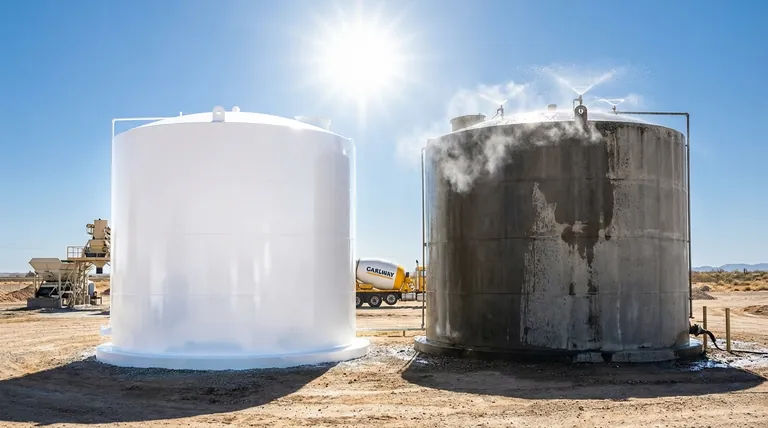
One of the most effective methods to reduce the impact of heat radiation on a cement tank is to paint its exterior surface with a light-colored, reflective paint. This simple, passive technique works by reflecting a significant portion of incoming solar radiation before it can be absorbed by the cement, thereby keeping the tank and its contents cooler.
The core challenge with a cement tank is its natural tendency to absorb and store solar heat. The most efficient solution is not to actively remove heat after it's been absorbed, but to prevent its absorption in the first place by increasing the tank's surface reflectivity.
The Core Problem: Solar Radiation and Heat Absorption
How a Cement Tank Gains Heat
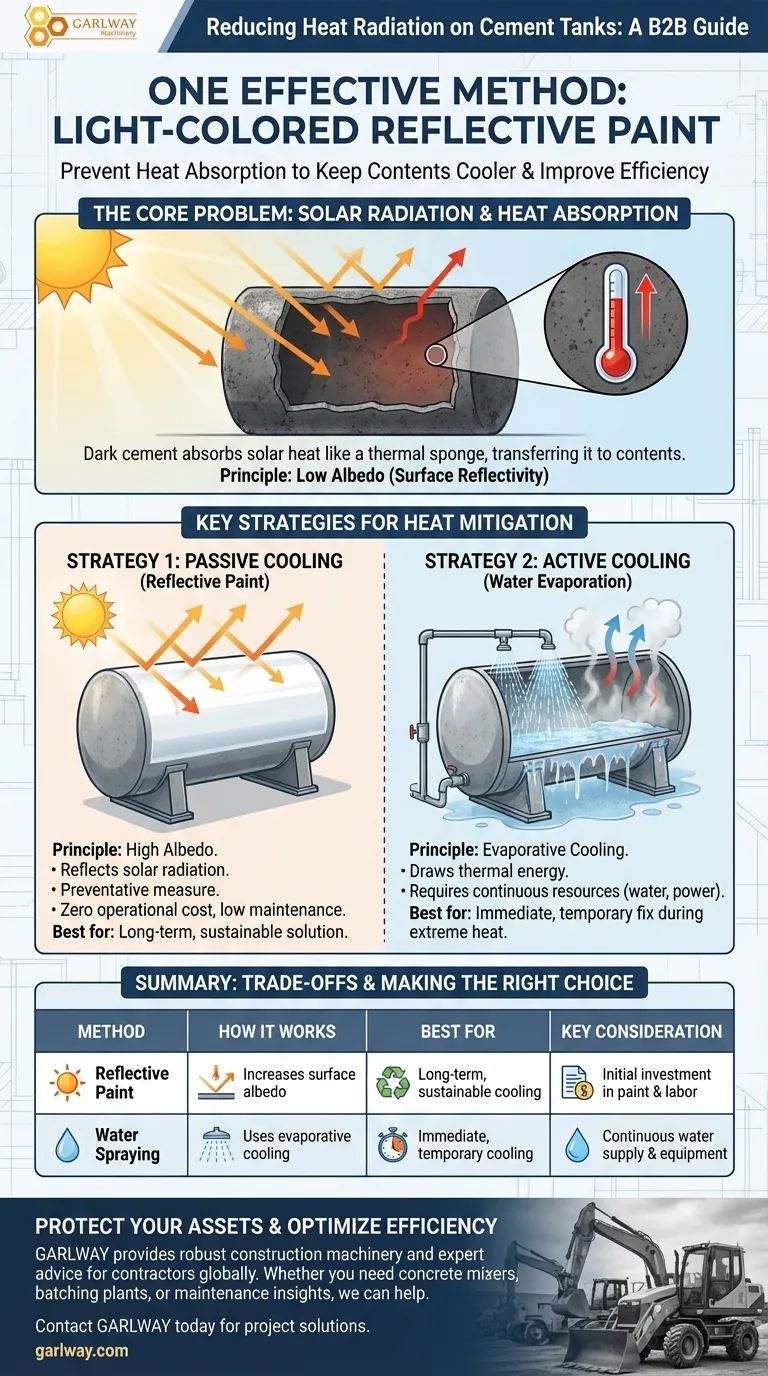
A cement tank, especially one with a dark, rough, or unpainted surface, acts like a thermal sponge when exposed to direct sunlight. It readily absorbs the sun's radiant energy throughout the day.
This absorbed energy heats the cement structure, which then transfers that heat to the contents inside the tank, raising their temperature.
The Principle of Reflectivity
The key to mitigating this heat gain lies in a property called albedo, or surface reflectivity.
Dark-colored surfaces have low albedo, meaning they absorb most of the light energy that hits them and convert it into heat.
Light-colored surfaces, especially white, have high albedo. They reflect most of the solar radiation, dramatically reducing the amount of energy absorbed and minimizing heat gain.
Key Strategies for Heat Mitigation
Strategy 1: Passive Cooling with Reflective Coatings
Painting the tank is a passive cooling strategy. By applying a light-colored coating, you fundamentally change the tank's thermal properties.
This is a preventative measure. It stops the heat from entering the system, making it a highly efficient and low-maintenance solution once implemented.
Strategy 2: Active Cooling with Water Evaporation
Continuously spraying the tank with water is an active cooling method. This technique relies on the principle of evaporative cooling.
As the water evaporates from the hot cement surface, it draws a significant amount of thermal energy away from the tank, effectively lowering its temperature. However, this method requires a constant input of resources (water and potentially power) to function.
Understanding the Trade-offs
Reflective Paint: Pros and Cons
This is often the superior long-term strategy. Its primary benefit is its zero operational cost and low maintenance.
The main drawback is the initial investment in labor and high-quality, durable paint. The effectiveness is also dependent on keeping the surface relatively clean.
Water Spraying: Pros and Cons
Water cooling can be very effective for rapid, temporary temperature reduction during extreme heat events.
However, it is resource-intensive, requiring a continuous water supply, which can be costly and wasteful. It may also lead to mineral deposits on the tank and requires equipment like pumps and sprayers that need maintenance.
Making the Right Choice for Your Goal
Choosing the correct method depends on balancing long-term efficiency with immediate needs.
- If your primary focus is a sustainable, long-term solution: Painting the tank with a high-quality, white or light-colored reflective coating is the most effective and economical choice.
- If your primary focus is an emergency fix for an extreme heatwave: A temporary water spraying system can provide immediate cooling, but it should not be considered a permanent solution.
Ultimately, preventing heat absorption is far more efficient than trying to remove it after the fact.
Summary Table:
| Method | How It Works | Best For | Key Consideration |
|---|---|---|---|
| Reflective Paint | Increases surface albedo to reflect solar radiation away. | Long-term, sustainable cooling with zero operational cost. | Initial investment in high-quality, durable paint. |
| Water Spraying | Uses evaporative cooling to draw heat away from the surface. | Immediate, temporary cooling during extreme heat events. | Requires continuous water supply and equipment maintenance. |
Protect your cement tank's contents and improve operational efficiency with the right cooling solution. GARLWAY specializes in providing robust construction machinery and expert advice for construction companies and contractors globally. Whether you need durable equipment like concrete mixers and batching plants or insights on infrastructure maintenance, our team can help. Contact GARLWAY today to discuss your specific project needs and find the most effective solution.
Visual Guide
Related Products
- Mini Cement Mortar Mixer Truck for Construction
- HZS35 Small Cement Concrete Mixing Batch Plant
- HZS120 Ready Mix Concrete Batching Plant Commercial Mud Cement Mixer
- Portable Cement Mixer with Lift Concrete Machine
- HZS75 Concrete Batching Plant Cement Mixer Price Concrete Mixer Bunnings Mixing Plant
People Also Ask
- Why might mixing mortar in a cement truck be problematic? Avoid Costly Mixing Mistakes
- What are the main types of construction cement mixers available? Choose the Right Mixer for Your Project
- What are the two primary methods for filling a cement mixer truck? Central vs. Transit Mix Explained
- What are the common uses of cement mixer trucks? Boosting Construction Efficiency and Quality
- What are the primary methods to fill a cement mixer truck? Central Mix vs. Transit Mix Explained