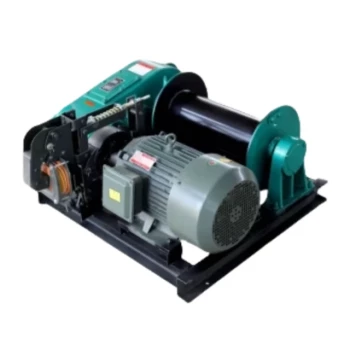
Proper winch installation is not a final step; it is the absolute foundation of its safety and reliability. An incorrectly installed winch will concentrate immense pulling forces on components not designed to handle them, leading to catastrophic failure of the winch, its mount, or even the vehicle's frame.
A winch is a force multiplier, and a proper installation is the system that safely channels that force. The core principle is to ensure the pulling load is distributed directly and evenly onto the vehicle's structural frame, preventing component failure and ensuring the winch can perform as designed.
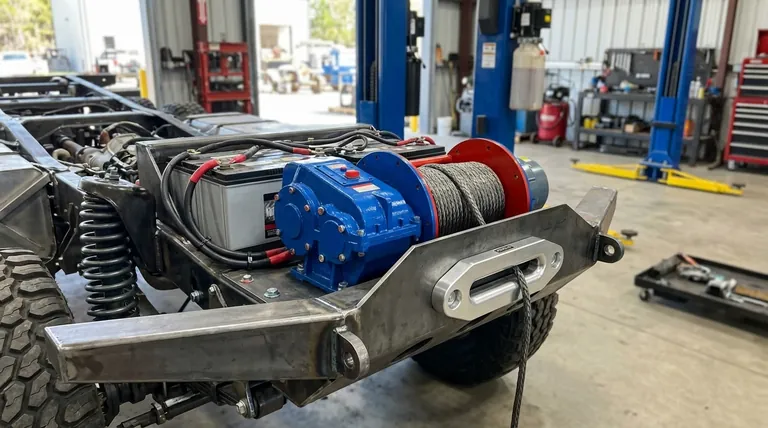
The Physics of a Failed Installation
A winch's pulling capacity, often measured in thousands of pounds, must be respected. When the installation is compromised, this force works against your vehicle instead of for it.
The Danger of Uneven Load Distribution
A winch must be mounted to a surface that can transfer the load directly to the strongest parts of your vehicle—the frame rails. If it's bolted to a thin bumper or an unreinforced body panel, the force will twist, bend, or tear the metal, causing severe vehicle damage and winch failure.
The Critical Role of the Mount
The winch mount or winch-ready bumper is the bridge between the winch and the frame. It must be rated for the winch's capacity. The connection must be firm and level, as specified by the manufacturer, to prevent flexing under load, which can shear mounting bolts or warp the winch drum.
Compromising the Winch Itself
Improper mounting can misalign the winch drum with the fairlead. This causes the winch line to stack unevenly, which can damage the line, bind the drum, and place extreme stress on the winch's internal components, leading to premature failure.
Key Pillars of a Proper Installation
"Proper installation" goes beyond simply bolting the unit on. It involves creating a complete, integrated system where every component is correctly selected and secured.
The Foundation: Mounting and Fasteners
The single most critical step is ensuring the winch is mounted on a solid foundation. This means using a purpose-built winch plate or bumper that bolts directly to the vehicle's frame. Always use the high-grade hardware supplied by the manufacturer and adhere strictly to the specified torque settings.
The Power Source: Electrical Connections
A winch places an enormous demand on the vehicle's electrical system. Using undersized wiring or having poor connections will cause a significant voltage drop, reducing winch performance and creating a serious fire hazard. Connections must be clean, tight, and protected from the elements.
The Load Path: Line, Drum, and Fairlead
Properly winding the winch line (or "rode") onto the drum under tension is essential to prevent the line from binding or crushing itself during a real recovery. Furthermore, you must match the fairlead to the line type—a smooth hawse fairlead for synthetic rope and a roller fairlead for steel cable—to prevent damage and ensure a long service life.
Common Pitfalls to Avoid
Mistakes during installation are common and can completely undermine the capability of your equipment. Being aware of them is the first step to getting it right.
Pitfall: Ignoring the Manufacturer's Manual
The instruction manual is not a suggestion. It contains critical information about the required mounting orientation, bolt torque specifications, and electrical requirements specific to your winch model. Ignoring it is the most common path to failure.
Pitfall: Assuming a Bumper is "Winch-Ready"
A standard factory bumper is not designed to handle winching forces. You must use a bumper or mounting plate that is explicitly engineered and rated for the pulling capacity of your winch.
Pitfall: Neglecting the Final Setup
Simply installing the winch is not enough. The line must be spooled onto the drum correctly under light tension to ensure it winds tightly and evenly. Skipping this step can cause the line to tangle and fail when you need it most.
How to Apply This to Your Project
Your installation strategy should be guided by your primary goal for the equipment.
- If your primary focus is maximum safety: Prioritize a high-quality winch mount that bolts directly to the vehicle's frame and follow the manufacturer's torque specifications without compromise.
- If your primary focus is reliable performance: Ensure your electrical system uses the correct gauge wiring with clean, solid connections to the battery to prevent power loss during heavy pulls.
- If your primary focus is equipment longevity: Correctly spool the winch line under tension and match your fairlead to the line type to prevent premature wear and failure.
Investing the time to install your winch correctly from the start is the single most important step in ensuring it works when you need it most.
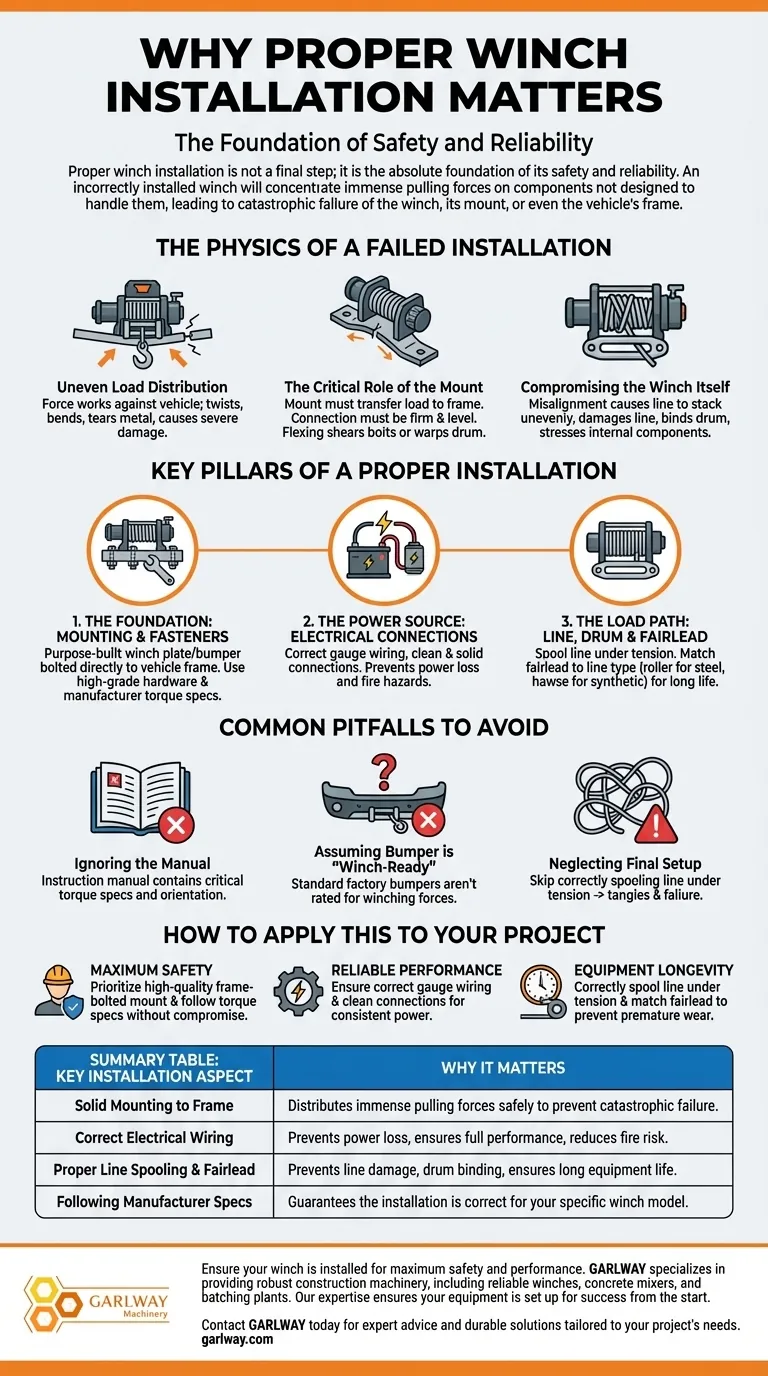
Summary Table:
| Key Installation Aspect | Why It Matters |
|---|---|
| Solid Mounting to Frame | Distributes immense pulling forces safely to prevent catastrophic failure. |
| Correct Electrical Wiring | Prevents power loss, ensures full performance, and reduces fire risk. |
| Proper Line Spooling & Fairlead | Prevents line damage, drum binding, and ensures long equipment life. |
| Following Manufacturer Specs | Guarantees the installation is correct for your specific winch model. |
Ensure your winch is installed for maximum safety and performance.
GARLWAY specializes in providing robust construction machinery, including reliable winches, concrete mixers, and batching plants for construction companies and contractors globally. Our expertise ensures your equipment is set up for success from the start.
Contact GARLWAY today for expert advice and durable solutions tailored to your project's needs.
Visual Guide
Related Products
- Warn Winch Windlass Boat Trailer Winch
- Electric and Hydraulic Winch for Heavy Duty Applications
- Small Electric Winch 120V and 240V for Compact Applications
- Quick Windlass Portable Winch for Truck and Boat Best Boat Winch
- Hydraulic Winding Engine Harbor Freight Winch
People Also Ask
- What are the main components of a boat trailer winch? A Guide to Safe & Efficient Boat Loading
- What factors should be considered when choosing a boat trailer winch? Ensure Safe and Effortless Boat Loading
- What is the purpose of boat trailer winches? Safely and Efficiently Load Your Boat
- What are the two main types of boat trailer winches? Manual vs. Electric Explained
- How often should a boat trailer winch be replaced? Your Guide to Safety and Longevity