
Choosing the right winch is a critical decision for both safety and performance. The primary factors that determine the size of winch you need are your vehicle's Gross Vehicle Weight Rating (GVWR) and a safety multiplier that accounts for the real-world resistance you'll face during a recovery.
Your vehicle's weight is only the starting point. The correct winch size must also account for the significant additional force required to pull a vehicle that is stuck in mud, on an incline, or otherwise disabled. This is why a simple weight match is never enough.
The Core Sizing Formula
The universally accepted starting point for selecting a winch is a straightforward calculation. This formula establishes the minimum power required for a safe recovery under ideal conditions.
What is Gross Vehicle Weight Rating (GVWR)?
The Gross Vehicle Weight Rating (GVWR) is the maximum operating weight of your vehicle as specified by the manufacturer. This includes the vehicle itself, fuel, passengers, and all cargo.
You can typically find the GVWR on a sticker inside the driver's side door jamb. It is crucial to use this number, not the lighter "curb weight," as it represents the vehicle's potential maximum load.
The 1.5x Multiplier Explained
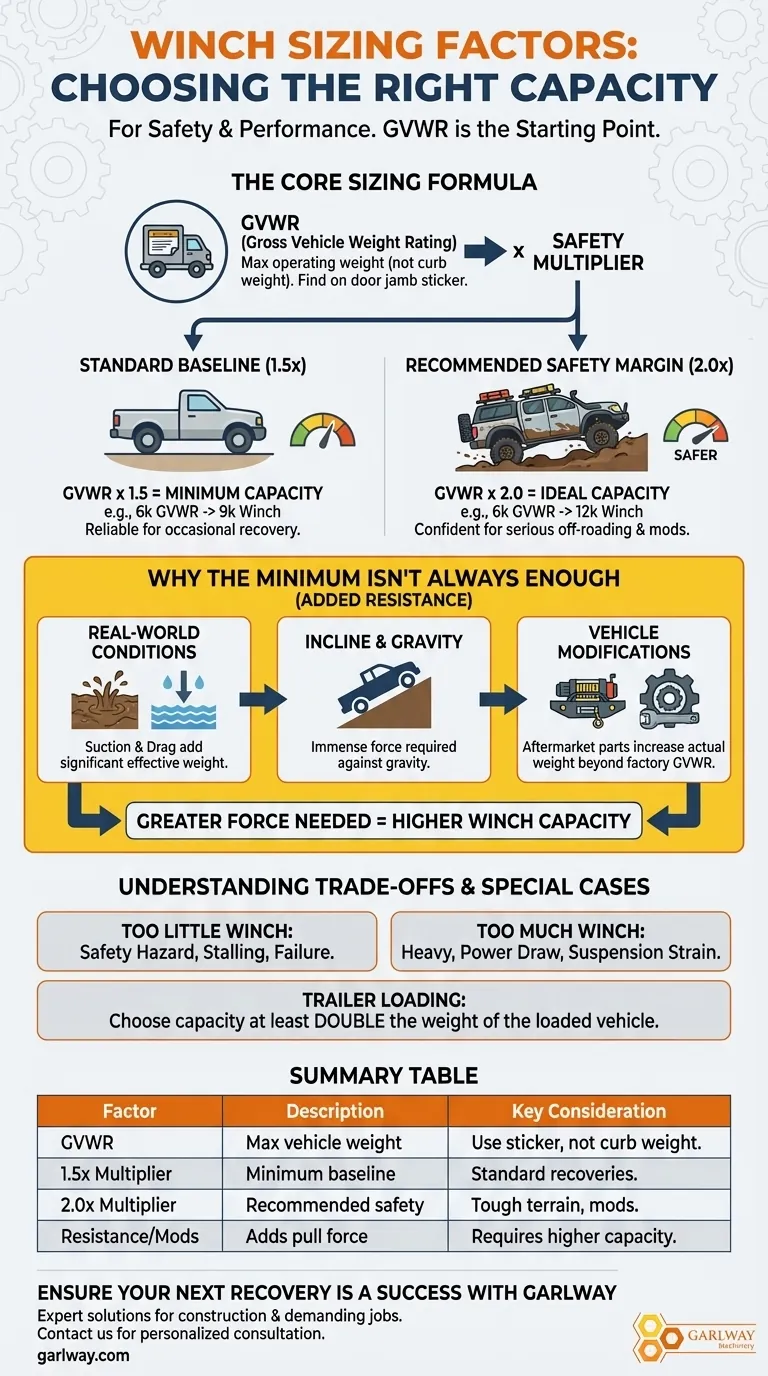
The standard industry rule is to multiply your vehicle's GVWR by 1.5. This result is the minimum rated capacity you should consider for your winch.
For example, if your truck has a GVWR of 6,000 pounds, the minimum winch capacity you should look for is 9,000 pounds (6,000 x 1.5 = 9,000).
Why the Minimum Isn't Always Enough
While the 1.5x rule provides a baseline, real-world recovery situations are rarely ideal. Several factors can dramatically increase the amount of force needed, making a stronger winch a wiser investment.
The Impact of Resistance
A simple calculation doesn't account for the suction of deep mud, the drag of pulling through water, or the immense force required to pull a vehicle up a steep incline. Each of these scenarios adds "effective weight" to the pull.
This additional resistance can easily exceed the capacity of a minimally-sized winch, causing it to stall, overheat, or fail.
Accounting for Vehicle Modifications
If your vehicle is modified with heavy aftermarket parts like steel bumpers, a roof rack with gear, or larger tires, its actual weight can exceed the factory GVWR.
You must factor in this additional weight before applying the multiplier to ensure you are not under-sizing your winch from the start.
The "2x Rule" for a Greater Safety Margin
For these reasons, many experienced off-roaders and recovery professionals advocate for a 2x multiplier. Using this higher factor provides a crucial safety margin.
A winch rated for twice your vehicle's GVWR will operate with less strain, run cooler, and have the reserve power needed to handle unexpectedly difficult recoveries with confidence. A 6,000-pound GVWR vehicle would ideally be paired with a 12,000-pound winch.
Understanding the Trade-offs
Choosing a winch isn't just about picking the highest number. You must balance capacity with practical considerations.
The Downside of "Too Much" Winch
A significantly oversized winch is heavier, putting more strain on your vehicle's suspension. It also draws more power, which may require an upgrade to your vehicle's battery and alternator to support it.
The Danger of "Too Little" Winch
An undersized winch is a serious safety hazard. It can lead to a snapped line or a burned-out motor during a critical recovery, leaving you stranded and potentially causing damage or injury.
Sizing for Trailer Loading
Loading a vehicle with rolling wheels onto a trailer requires less force than a dead-weight recovery from mud. However, for safe and efficient operation, it is still advisable to choose a winch with a capacity of at least double the weight of the vehicle being loaded.
Making the Right Choice for Your Goal
Use your vehicle's GVWR and your primary use case to determine the right capacity.
- If your primary focus is occasional recovery for a stock vehicle: The standard 1.5x GVWR formula provides a reliable minimum capacity.
- If your primary focus is serious off-roading or recovering modified vehicles: Aim for a winch rated for 2x your vehicle's GVWR to ensure a confident safety margin.
- If your primary focus is loading rolling vehicles onto a trailer: Select a winch with a capacity of at least double the weight of the heaviest vehicle you plan to load.
By evaluating your needs beyond a simple formula, you can select a winch that provides reliable power and safety when you need it most.
Summary Table:
| Factor | Description | Key Consideration |
|---|---|---|
| GVWR (Gross Vehicle Weight Rating) | Maximum operating weight of the vehicle. | Use the GVWR sticker, not curb weight. |
| 1.5x Multiplier (Minimum) | GVWR x 1.5. Baseline for standard recoveries. | 6,000 lb GVWR = 9,000 lb minimum winch. |
| 2.0x Multiplier (Recommended) | GVWR x 2.0. Provides a crucial safety margin. | Ideal for difficult terrain or modified vehicles. |
| Real-World Resistance | Mud, inclines, and water add significant pull force. | A higher capacity winch handles unexpected resistance. |
| Vehicle Modifications | Aftermarket parts (bumpers, gear) increase weight. | Recalculate GVWR before applying the multiplier. |
Ensure Your Next Recovery is a Success with GARLWAY
Choosing the right winch is critical for the safety of your crew and equipment. GARLWAY specializes in high-performance construction machinery, offering durable and powerful winches, concrete mixers, and batching plants trusted by construction companies and contractors globally.
Let our experts help you select the perfect winch for your specific vehicle and operational needs. We provide solutions that deliver the reliability and power required for demanding jobs.
Contact GARLWAY today for a personalized consultation and discover how our equipment can enhance your project's efficiency and safety.
Visual Guide
Related Products
- Warn Winch Windlass Boat Trailer Winch
- Portable Small Trailer Winch
- Quick Windlass Portable Winch for Truck and Boat Best Boat Winch
- Electric and Hydraulic Winch for Heavy Duty Applications
- Electric 120V Boat Winch by Badlands
People Also Ask
- What are the main components of a boat trailer winch? A Guide to Safe & Efficient Boat Loading
- What factors should be considered when choosing a boat trailer winch? Ensure Safe and Effortless Boat Loading
- What is the purpose of boat trailer winches? Safely and Efficiently Load Your Boat
- What are the two main types of boat trailer winches? Manual vs. Electric Explained
- How often should a boat trailer winch be replaced? Your Guide to Safety and Longevity





