
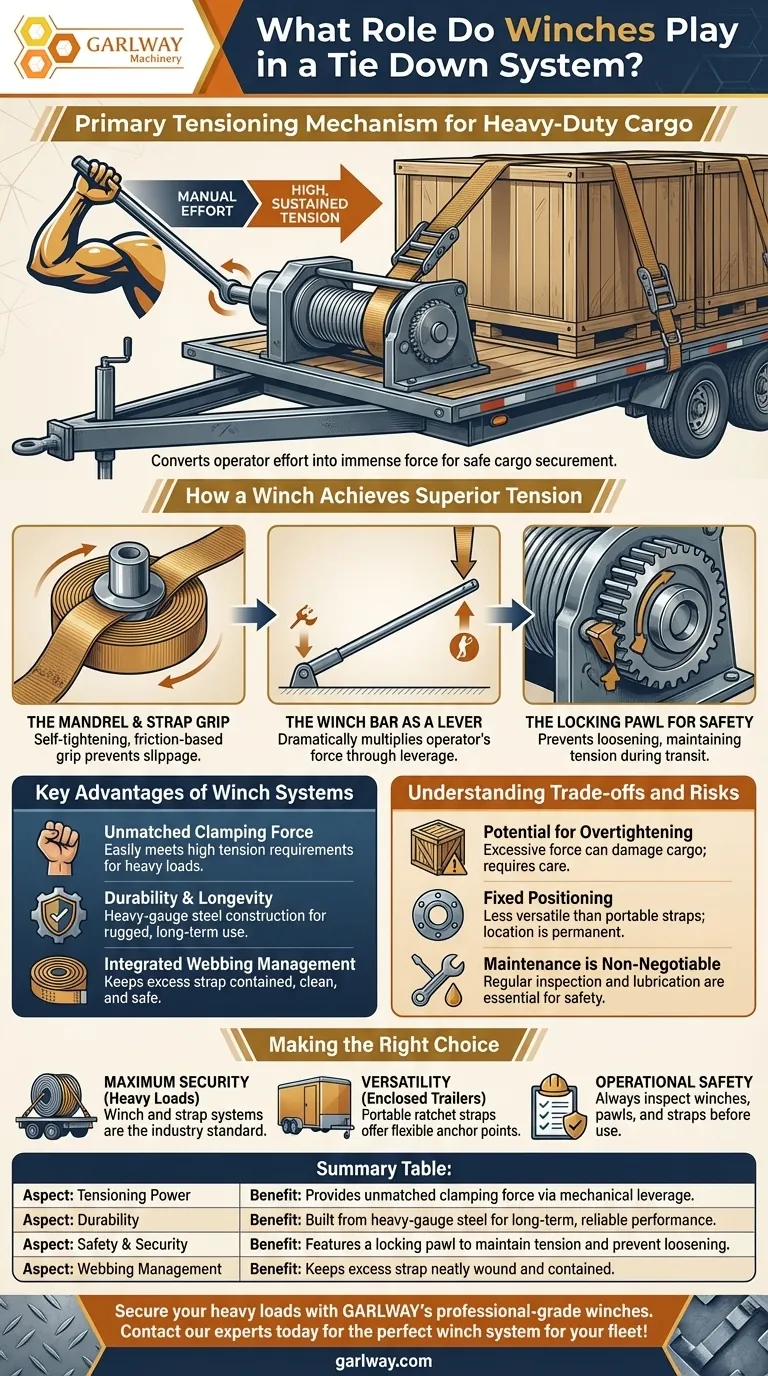
At its core, a winch is the primary tensioning mechanism in a heavy-duty cargo tie-down system. It is a durable, frame-mounted component designed to secure cargo on flatbed trailers and straight trucks. By using a winch bar, an operator can apply significant mechanical advantage to a web strap, achieving a level of tightness and security that is difficult to replicate with other methods.
A winch's fundamental role is to convert an operator's manual effort into the high, sustained tension required for safe cargo securement. It achieves this through mechanical leverage and a reliable locking mechanism, making it the industry standard for preventing cargo from shifting during transit.

How a Winch Achieves Superior Tension
A winch is more than just a spool; it's a simple but powerful machine. Understanding its core components reveals why it is so effective for securing heavy loads.
The Mandrel and Strap Grip
The heart of the winch is the mandrel, which is the rotating axle in the center. The strap is fed through a slot in this mandrel.
By pulling a few inches of strap through and folding it over, you create a friction-based, self-tightening grip. As tension is applied, the strap cinches down on itself, preventing any slippage.
The Winch Bar as a Lever
The real power comes from the winch bar. This long steel bar acts as a lever, inserted into the holes on the winch cap.
This leverage dramatically multiplies the force an operator can apply. A small amount of effort on the end of the bar translates into immense tensioning force on the strap itself.
The Locking Pawl for Safety
Once tightened, the winch is secured by a ratcheting pawl. This mechanism engages with the gear teeth on the winch, preventing it from rotating backward and loosening the strap.
This locking feature is critical for maintaining consistent tension throughout a journey, absorbing vibrations and forces without releasing the load.
The Key Advantages of Winch Systems
Using a permanently mounted winch system provides several distinct benefits over portable tensioning devices, especially in the flatbed industry.
Unmatched Clamping Force
The mechanical advantage provided by a winch bar is the primary reason for its use. It allows operators to easily and consistently meet the high tension requirements needed for securing heavy materials like steel coils, lumber, and machinery.
Durability and Longevity
Winches are constructed from heavy-gauge steel and are designed to be a permanent part of the trailer. They are built to withstand constant exposure to weather, road debris, and the rigors of daily loading and unloading.
Integrated Webbing Management
The design of the winch allows excess strap webbing to be wound neatly around the mandrel. This keeps the strap contained, clean, and prevents it from flapping in the wind, which could cause damage or become a safety hazard.
Understanding the Trade-offs and Risks
While highly effective, winch systems require proper use and awareness of their limitations to ensure safety and prevent damage.
Potential for Overtightening
The same power that makes winches effective can also lead to cargo damage. Applying too much force can crush softer materials or damage sensitive equipment if not done with care and proper edge protection.
Fixed Positioning
Because winches are welded or bolted to the trailer's frame, their position is fixed. This makes them less versatile than portable ratchet straps, which can be placed anywhere along the cargo.
Maintenance is Non-Negotiable
As mechanical components exposed to the elements, winches require regular inspection and lubrication. A rusted or seized pawl can fail to lock properly, creating a significant safety risk.
Making the Right Choice for Your Goal
Selecting the correct securement tool depends entirely on the application and the priority.
- If your primary focus is maximum security for heavy loads on a flatbed: Winch and strap systems are the industry standard for their strength and unwavering reliability.
- If your primary focus is versatility for securing varied cargo inside an enclosed trailer: Portable ratchet straps offer more flexible anchor points and are better suited for these environments.
- If your primary focus is operational safety and compliance: Always use a properly rated winch bar and inspect your winch, pawl, and strap for wear before every single use.
Mastering your equipment is the first step toward safe and secure transport.
Summary Table:
| Aspect | Benefit |
|---|---|
| Tensioning Power | Provides unmatched clamping force via mechanical leverage. |
| Durability | Built from heavy-gauge steel for long-term, reliable performance. |
| Safety & Security | Features a locking pawl to maintain tension and prevent loosening. |
| Webbing Management | Keeps excess strap neatly wound and contained. |
Secure your heavy loads with GARLWAY's professional-grade winches. As a specialist in construction machinery, we provide durable and powerful winches designed for the demanding needs of construction companies and contractors. Ensure your cargo arrives safely and your operations remain compliant. Contact our experts today to find the perfect winch system for your fleet!
Visual Guide
Related Products
- Small Electric Winch 120V and 240V for Compact Applications
- Electric and Hydraulic Winch for Heavy Duty Applications
- Portable Small Trailer Winch
- Quick Windlass Portable Winch for Truck and Boat Best Boat Winch
- Heavy Duty Electric Boat Winch Windlass Anchor
People Also Ask
- What makes electric winches suitable for off-road use? Key Features for Reliable Vehicle Recovery
- What are the common applications of electric winches? Power Your Lifting & Pulling Tasks
- What are the common uses of an electric winch? A Guide to Safe and Efficient Heavy Lifting
- What are the uses of electric winches in mining and tunneling? Enhance Safety and Efficiency Underground
- How do electric winches contribute to energy savings? Maximize Efficiency and Lower Costs



