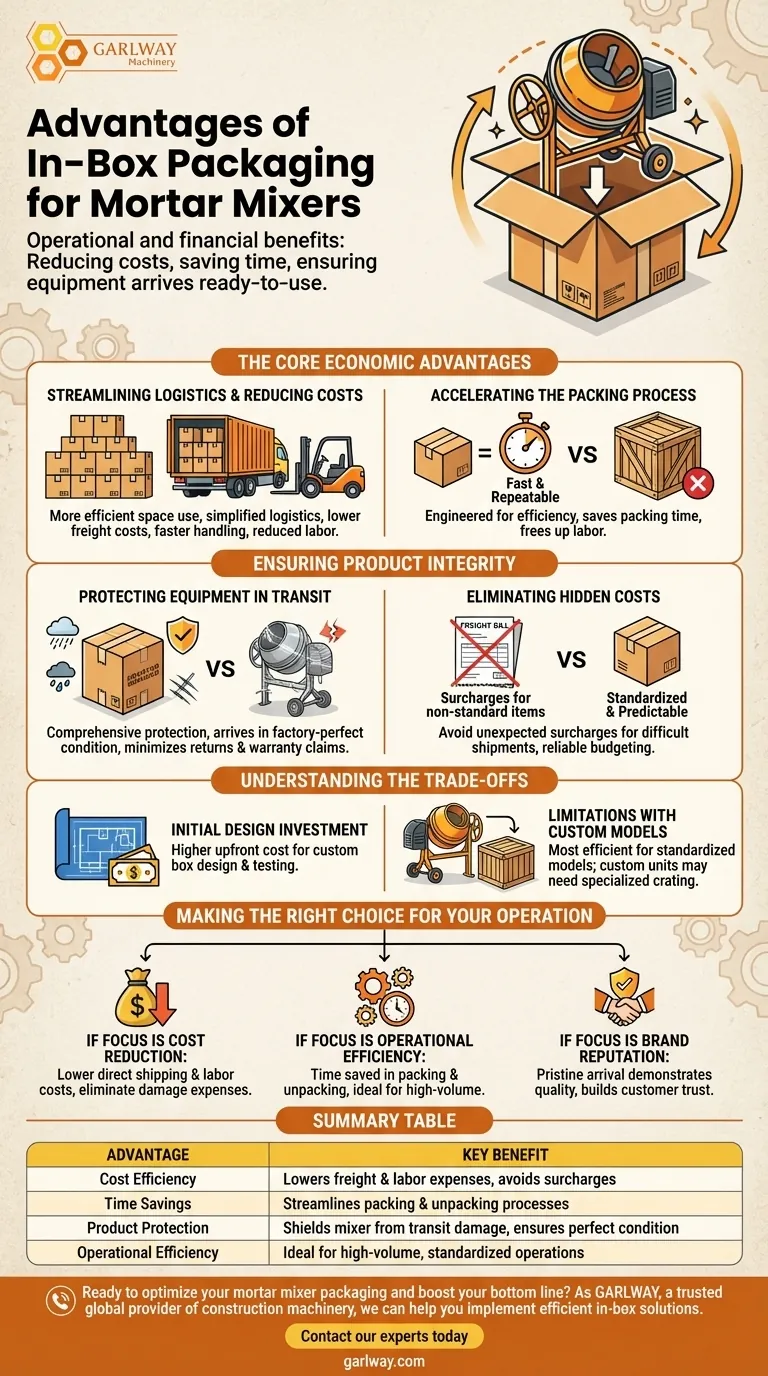
For mortar mixers, in-box packaging offers significant operational and financial benefits. This packaging method is a strategic choice designed to reduce logistics costs, save valuable packing time, and ensure the equipment arrives at its destination in perfect, ready-to-use condition without incurring additional surcharges.
The core advantage of in-box packaging extends beyond simple protection. It is a system that optimizes the entire supply chain by reducing labor, lowering shipping expenses, and guaranteeing the integrity of the asset upon arrival.
The Core Economic Advantages
Choosing a packaging method is an economic decision as much as a logistical one. In-box solutions are designed specifically to deliver a clear return on investment by optimizing two key areas: cost and time.
Streamlining Logistics and Reducing Costs
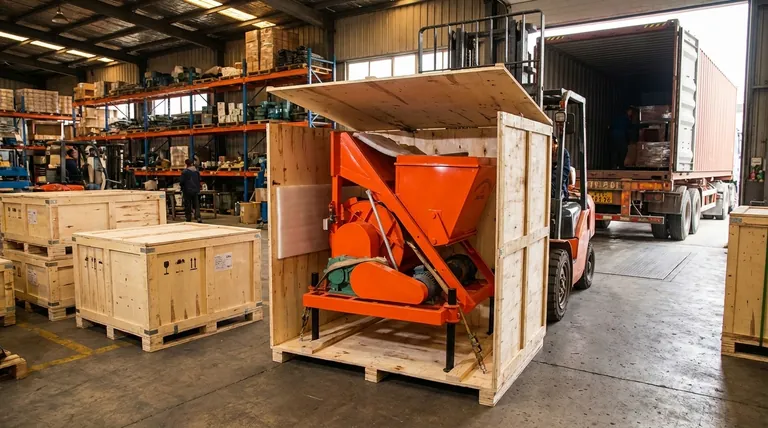
Standardized in-box packaging allows for more efficient use of space in trucks and shipping containers. This predictable size and shape simplify logistics planning and can significantly lower freight costs compared to irregularly shaped, palletized items.
Furthermore, consistent dimensions make handling with forklifts and other equipment faster and safer, reducing labor costs at every stage of the supply chain.
Accelerating the Packing Process
In-box packaging is engineered for a repeatable, efficient process. This saves considerable time compared to building custom wooden crates or using complex wrapping techniques, freeing up labor to focus on more productive tasks.
Ensuring Product Integrity
The primary function of any packaging is to protect the asset inside. For valuable equipment like a mortar mixer, ensuring it arrives without damage is critical to avoiding project delays and costly repairs.
Protecting the Equipment in Transit
A well-designed box provides comprehensive protection from dents, scratches, and environmental factors during shipping. Unlike simple shrink-wrapping, it shields the mixer from all sides, ensuring it reaches the end-user in factory-perfect condition.
This level of protection minimizes the rate of returns and warranty claims related to shipping damage, which directly impacts profitability.
Eliminating Hidden Costs
Many freight carriers apply surcharges for non-standard or difficult-to-handle shipments. Because in-box packaging is uniform and easy to manage, it helps businesses avoid these unexpected additional costs, leading to more predictable and reliable budgeting.
Understanding the Trade-offs
While highly effective, in-box packaging is not a universal solution. An objective evaluation requires acknowledging its potential limitations.
Initial Design Investment
Developing a custom box that perfectly fits and protects a specific mortar mixer model requires an initial investment in design and testing. This upfront cost can be higher than using generic crating for very low-volume items.
Limitations with Custom Models
This packaging method is most efficient for standardized, mass-produced mixer models. Extremely large, heavy, or irregularly shaped custom units may still necessitate specialized wooden crating to ensure adequate protection and structural integrity.
Making the Right Choice for Your Operation
The decision to use in-box packaging should be aligned with your specific business goals.
- If your primary focus is cost reduction: In-box packaging provides a clear advantage by lowering direct shipping expenses, reducing labor time, and eliminating damage-related costs.
- If your primary focus is operational efficiency: The time saved in both packing at the factory and unpacking at the job site makes this an ideal choice for high-volume operations.
- If your primary focus is brand reputation and customer satisfaction: Ensuring your equipment arrives in pristine condition demonstrates a commitment to quality that builds customer trust.
Ultimately, adopting in-box packaging is a strategic decision that enhances efficiency and protects your bottom line.
Summary Table:
| Advantage | Key Benefit |
|---|---|
| Cost Efficiency | Lowers freight & labor expenses, avoids surcharges |
| Time Savings | Streamlines packing & unpacking processes |
| Product Protection | Shields mixer from transit damage, ensures perfect condition |
| Operational Efficiency | Ideal for high-volume, standardized operations |
Ready to optimize your mortar mixer packaging and boost your bottom line? As GARLWAY, a trusted provider of construction machinery including concrete mixers and batching plants for contractors worldwide, we can help you implement efficient in-box solutions that save time, reduce costs, and protect your equipment. Contact our experts today to discuss your specific needs!
Visual Guide
Related Products
- JDY350 Electric Hydraulic Mortar Mud Concrete Mixer
- JDC350 Small Cement Concrete Mortar Mixer
- Mini Cement Mortar Mixer Truck for Construction
- Belle Mixer Drum Self Loading Mortar Mixers JS3000
- JS1000 Volumetric Concrete Mortar Mixer for Sale Skid Steer Cement Mixer
People Also Ask
- When are electric mortar mixers typically used? Find the Perfect Tool for Small to Medium-Sized Jobs
- What are hydraulic concrete mixers used for? Powering Large-Scale Construction Projects
- How are mortar mixers utilized in concrete and grout projects? Maximize Your Mixing Efficiency
- What are the benefits of electric concrete mixers? Quiet, Clean, and Low-Maintenance Mixing
- What is a mortar mixer and what is its primary use? Master Masonry with the Right Equipment