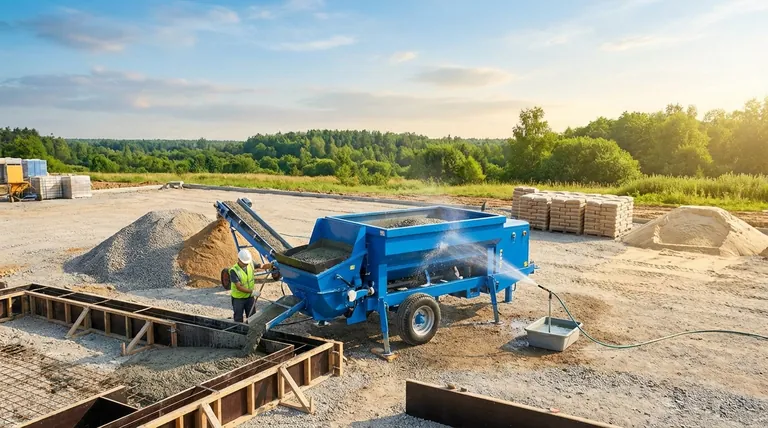
At its core, a modern concrete mixer benefits the environment by transforming concrete production into a precise, on-demand process. This shift dramatically reduces material waste, conserves water, and lowers carbon emissions compared to traditional methods that rely on delivering pre-mixed batches. The result is a more efficient use of resources at every stage of a construction project.
The primary environmental advantage of using an on-site concrete mixer stems from its ability to eliminate waste. By producing the exact amount of concrete needed, precisely when and where it is required, it minimizes the over-ordering and disposal that plague conventional concrete delivery.
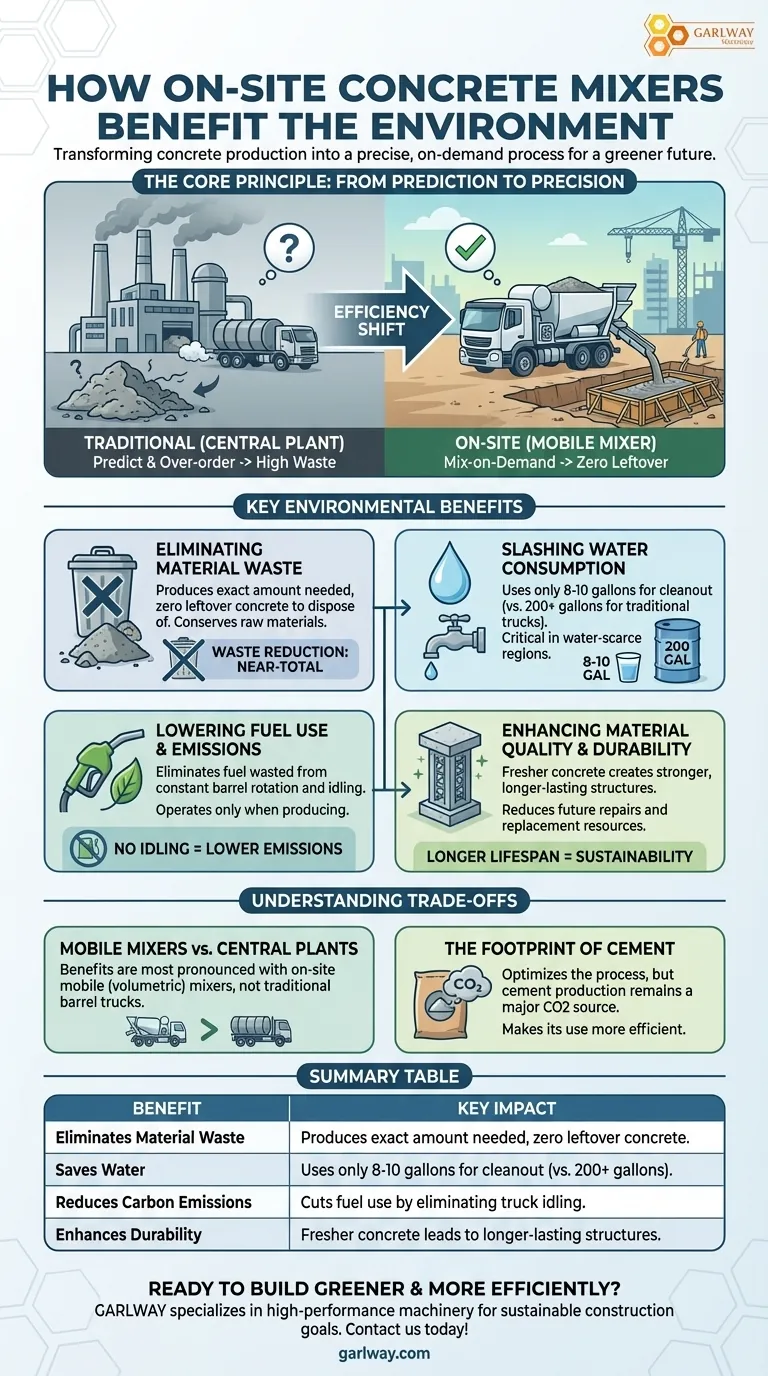
The Core Principle: From Prediction to Precision
Traditional concrete delivery involves a central plant mixing a large batch, which is then transported in a barrel truck. This process forces contractors to predict their exact needs, often leading to significant waste.
Eliminating Material Waste
The most significant environmental benefit is the near-total elimination of leftover concrete. Contractors using traditional barrel trucks must often order more than they need to avoid running short, and any unused material becomes waste.
On-site mixers produce the exact volume required for the job. This "mix-on-demand" capability means there is no leftover concrete to dispose of, conserving raw materials.
Enhancing Material Quality and Durability
Concrete mixed on-site is exceptionally fresh, which leads to a stronger, more durable final product. This increased quality is a long-term environmental benefit.
Structures built with higher-quality concrete require fewer repairs and have a longer lifespan. This reduces the future consumption of resources needed for maintenance, demolition, and replacement.
Reducing Carbon Emissions and Resource Consumption
Beyond preventing wasted concrete, the on-site mixing process is inherently more efficient, directly cutting down on a project's carbon footprint and resource use.
Slashing Water Consumption
Cleaning a traditional barrel truck requires a massive amount of water, often around 200 gallons.
In contrast, an on-site volumetric mixer can be cleaned with as little as 8 to 10 gallons of water. This drastic reduction in water consumption is a critical benefit, especially in water-scarce regions.
Lowering Fuel Use and Emissions
Barrel trucks must constantly rotate their drums to keep the concrete from setting, consuming fuel from the moment they leave the plant until the pour is complete. This includes significant idling time on-site.
An on-site mixer only operates when producing concrete. This eliminates wasted fuel from idling and reduces the overall transportation emissions associated with delivering heavy, pre-mixed material.
Understanding the Trade-offs
While the benefits are clear, it's important to recognize the context. The most significant advantages are associated with a specific type of technology.
Mobile Mixers vs. Central Plants
The environmental benefits discussed—waste elimination, reduced water use, and lower emissions—are most pronounced with mobile, or volumetric, concrete mixers.
These are the trucks that carry raw materials and mix concrete on-site. Traditional barrel trucks, filled at a central plant, do not offer the same on-demand advantages.
The Footprint of Cement
Using a mixer optimizes the process of making concrete, but it doesn't change the nature of the materials.
The production of cement, a key ingredient in concrete, remains one of the largest industrial sources of CO2 emissions globally. A mixer makes the use of that cement more efficient, but it doesn't erase its inherent environmental impact.
Making the Right Choice for Your Goal
Adopting an on-site mixing strategy provides a clear path to reducing the environmental impact of construction work.
- If your primary focus is minimizing project waste: A mobile, on-site mixer is the definitive choice, as it produces the exact amount of concrete required with zero surplus.
- If your primary focus is resource conservation: The on-demand model saves vast amounts of water during cleanout and prevents the waste of raw materials like cement, sand, and aggregate.
- If your primary focus is reducing your carbon footprint: An on-site mixer cuts emissions by eliminating truck idling and optimizing the transportation of materials.
By shifting concrete production directly to the job site, you gain a powerful tool for building more efficiently and sustainably.
Summary Table:
| Environmental Benefit | Key Impact |
|---|---|
| Eliminates Material Waste | Produces exact amount needed, zero leftover concrete. |
| Saves Water | Uses only 8-10 gallons for cleanout vs. 200+ gallons for traditional trucks. |
| Reduces Carbon Emissions | Cuts fuel use by eliminating truck idling and optimizing transport. |
| Enhances Durability | Fresher concrete leads to longer-lasting structures, reducing future resource use. |
Ready to build greener and more efficiently? GARLWAY specializes in high-performance construction machinery, including advanced concrete mixers and batching plants designed for contractors and construction companies worldwide. Our solutions help you minimize waste, conserve resources, and reduce your carbon footprint—all while improving project outcomes. Contact us today to learn how GARLWAY can support your sustainable construction goals!
Visual Guide
Related Products
- Portable Concrete Mixer Machine Equipment for Mixing Concrete
- Construction Products Concrete Plant Machine Mixing Concrete Mixer
- Portable Electric Concrete Mixer Machine for Cement Mixing
- Concrete Cement Mixer Machine Drum Mixer for Construction
- HZS90 Large Multiquip Concrete Mixers for Construction
People Also Ask
- Why is it necessary to use a portable concrete mixer? Gain Total Control & Efficiency
- How much concrete can you pour with a portable mixer? Find the Perfect Fit for Your Project
- What types of projects are portable concrete mixers suitable for? Ideal for DIY & Small-Scale Construction
- How much does a portable concrete mixer hold? A Guide to Choosing the Right Capacity
- What types of portable concrete mixers exist? Find the Perfect Mixer for Your Project