Beyond simple transportation, the critical additional function of a transit concrete mixer truck is its ability to actively mix the concrete ingredients within its rotating drum. This mobile mixing capability ensures the material remains in a perfectly blended, workable state from the batching plant all the way to the construction site.
The transit mixer is not merely a transport vehicle; it is an active and essential component of the concrete manufacturing process, responsible for maintaining material quality and consistency during delivery.
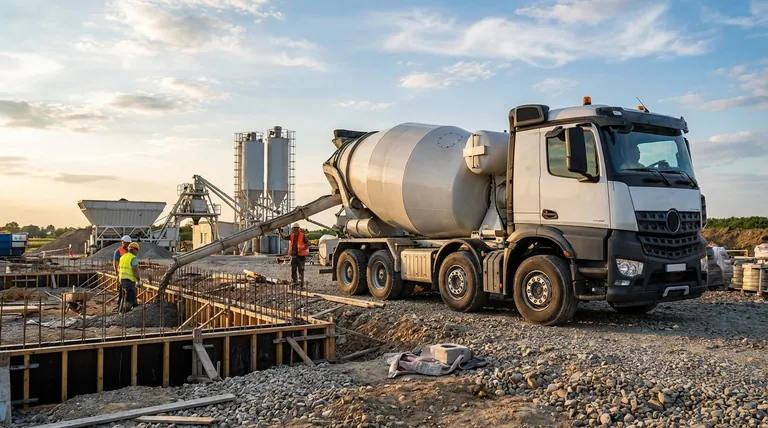
The Dual Role of a Transit Mixer
A transit concrete mixer truck is designed to solve a fundamental challenge in construction: getting a perishable, time-sensitive material to a job site without it degrading. It achieves this by seamlessly integrating two distinct functions.
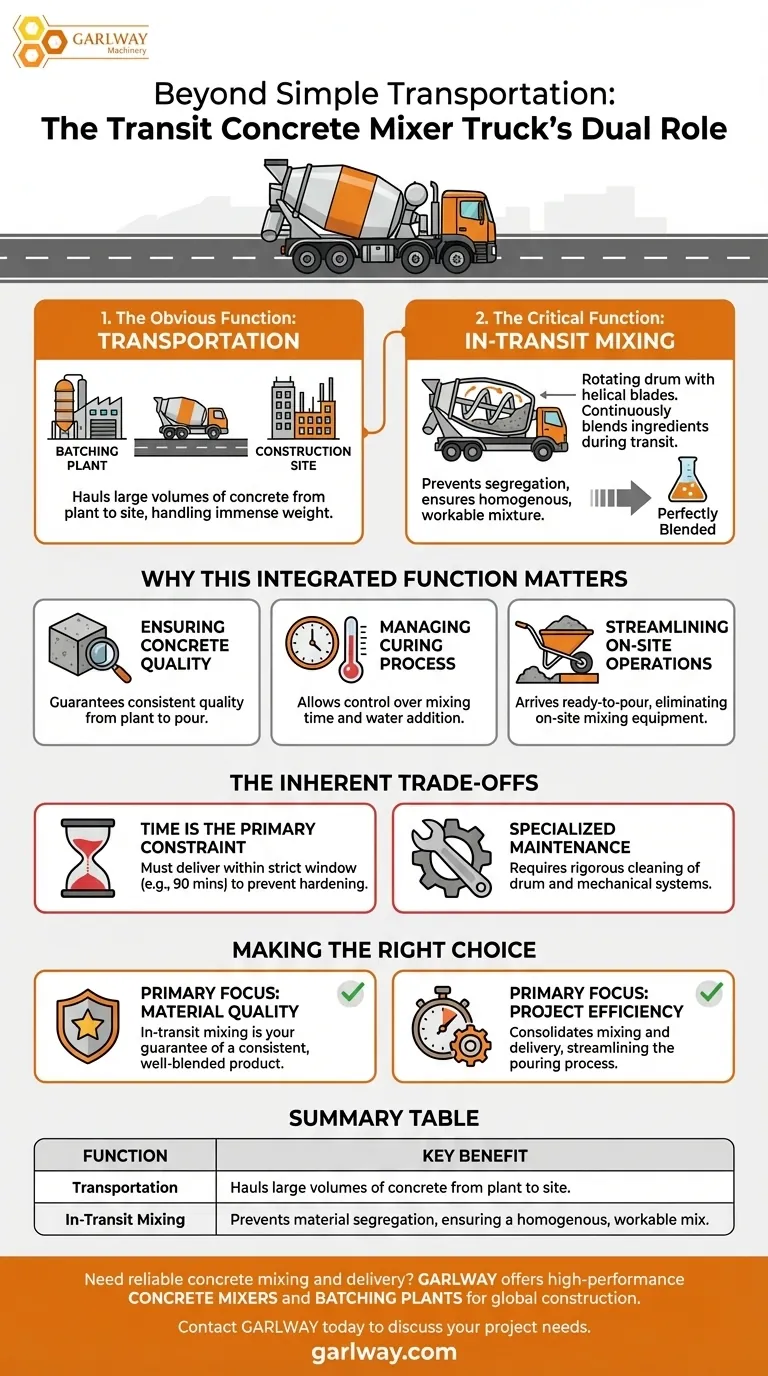
The Obvious Function: Transportation
At its core, the truck is a heavy-duty vehicle designed to haul a large volume of concrete. Its chassis is built to handle the immense weight of the aggregates, cement, and water.
This transport function connects the concrete batching plant, where ingredients are measured and loaded, to the point of use on the construction site.
The Critical Function: In-Transit Mixing
The truck's defining feature is the large, rotating drum. This drum contains helical blades or fins that continuously fold and blend the concrete as it turns.
This constant agitation is not optional; it is essential. It prevents the segregation of materials—where heavy aggregates sink and water rises—and ensures a homogenous, consistent mixture upon arrival.
Why This Integrated Function Matters
Combining transportation with mixing is what makes the modern concrete industry possible. This integration directly impacts quality, timing, and efficiency on a construction project.
Ensuring Concrete Quality
Without continuous mixing, the carefully proportioned ingredients would separate during the bumps and vibrations of transit. The truck's rotating drum guarantees that the concrete poured at the site is the same quality as the concrete designed at the plant.
Managing the Curing Process
The mixing process can be controlled. Often, all ingredients are loaded at the plant and mixed during the drive. In other cases, the dry ingredients are loaded first, with water added just minutes before arriving at the site to maximize the concrete's working time before it begins to harden.
Streamlining On-Site Operations
The truck arrives with a ready-to-pour product. It can discharge the concrete directly into forms, pumps, or wheelbarrows, eliminating the need for bulky and less efficient mixing equipment on the job site itself.
The Inherent Trade-offs
While indispensable, this dual-function design comes with specific operational constraints that must be managed.
Time is the Primary Constraint
Concrete is a perishable product. A transit mixer must typically deliver and discharge its load within 90 minutes or before the drum has completed 300 revolutions. This creates a strict logistical window dictated by travel time and site readiness.
Specialized Maintenance
The drum, motor, and discharge chutes are specialized mechanical systems that require more rigorous maintenance than a standard transport truck. Keeping the drum clean of hardened concrete is a constant and critical task.
Making the Right Choice for Your Goal
Understanding the truck's dual role is key to managing construction logistics effectively.
- If your primary focus is material quality: The key takeaway is that the truck's in-transit mixing is your primary guarantee of receiving a consistent, well-blended product ready for placement.
- If your primary focus is project efficiency: The key takeaway is that this single vehicle consolidates mixing and delivery, reducing on-site equipment needs and streamlining the entire pouring process.
Ultimately, the transit concrete mixer's design transforms it from a simple truck into a mobile, time-sensitive batching plant that is fundamental to modern construction.
Summary Table:
| Function | Key Benefit |
|---|---|
| Transportation | Hauls large volumes of concrete from plant to site. |
| In-Transit Mixing | Prevents material segregation, ensuring a homogenous, workable mix upon arrival. |
Need reliable concrete mixing and delivery for your project?
GARLWAY specializes in construction machinery, offering high-performance concrete mixers and concrete batching plants for construction companies and contractors globally. Our equipment ensures consistent material quality and maximizes on-site efficiency.
Contact GARLWAY today to discuss your project needs and discover how our solutions can deliver superior results for you.
Visual Guide
Related Products
- Ready Mixer Machine for Construction Ready Mix Machinery
- JW1000 Mobile Cement Mixer Concrete Mixer Truck and Batching Plant
- Mini Cement Mortar Mixer Truck for Construction
- Portable Concrete Mixer Machine Equipment for Mixing Concrete
- Portable Cement Mixer with Lift Concrete Machine
People Also Ask
- What are the purposes of low-speed agitation in truck mixers? Preserve Concrete Quality During Transit
- How is ready-mixed concrete transported from a commercial concrete batching plant? Ensuring Quality & Timely Delivery
- What are the main ingredients mixed in a concrete mixer truck? Master the Formula for Strong Concrete
- In what ways does a mobile concrete mixer improve quality control and consistency? Achieve Superior On-Site Concrete Quality
- What types of construction projects typically use concrete mixer trucks? From Highways to Home Foundations