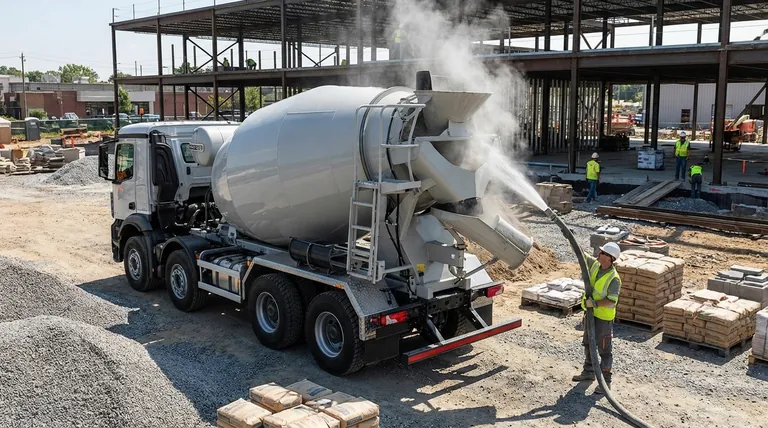
In a cement truck, the preparation of dry concrete mix is a precisely timed process where the dry ingredients—cement, sand, and aggregates—are loaded into the drum first. Water is then added at one of two key moments: either just before the truck departs for the job or upon its arrival, using an on-board water tank.
The core function of a modern concrete truck is not merely transportation; it is a mobile mixing station designed to control the exact moment the concrete's chemical hardening process begins, ensuring peak workability right at the point of delivery.
The "Transit-Mixed" Method Explained
The process you're asking about is known in the industry as the "transit-mixed" or "dry batch" method. It treats the truck as the final mixing vessel, giving significant control over the final product.
Loading the Core Components
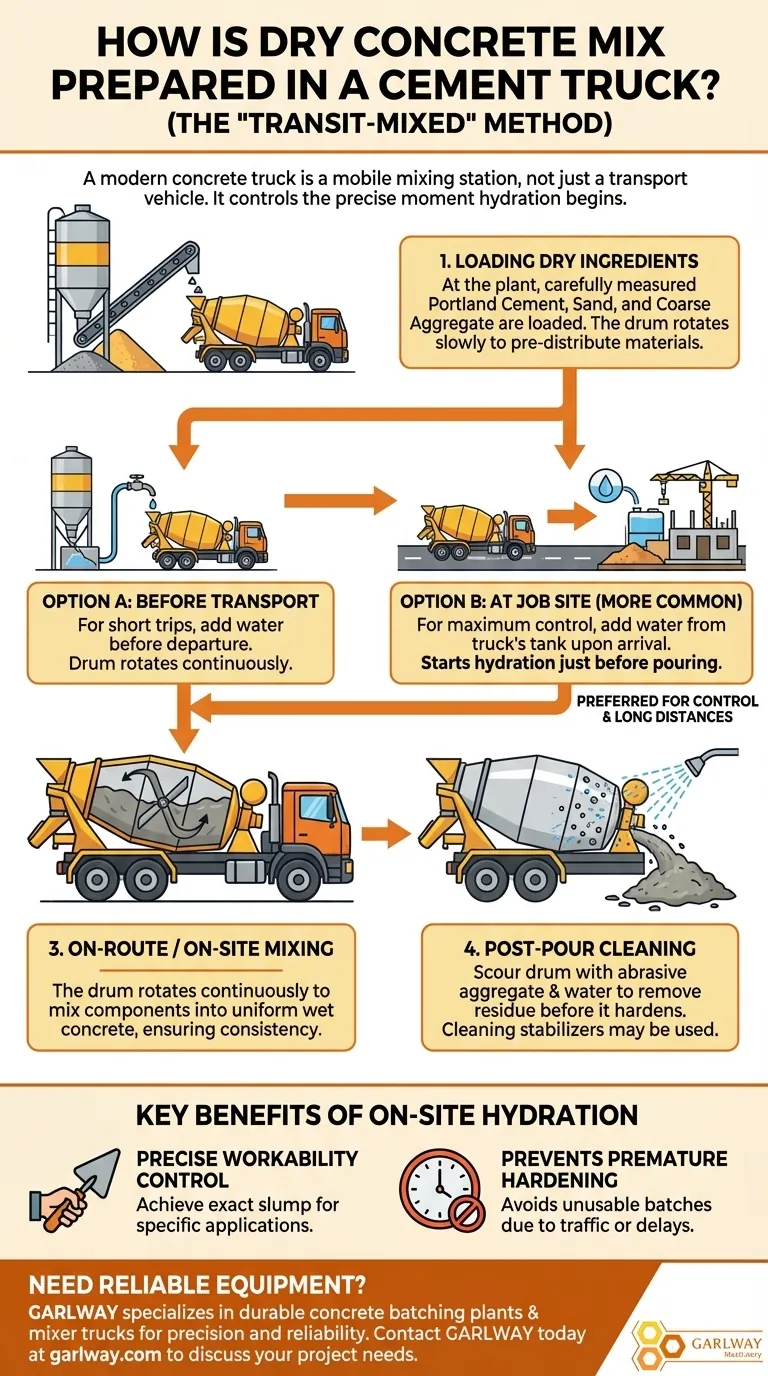
First, the carefully measured dry ingredients are loaded into the truck's drum at the concrete plant. This includes portland cement, sand (fine aggregate), and gravel or crushed stone (coarse aggregate). The drum is often rotated slowly during loading to help pre-distribute the materials.
The Two Points of Hydration
With the dry mix loaded, the critical ingredient—water—is introduced. The timing of this step defines the entire process.
- Mixing Before Transport: For jobs very close to the plant, all the necessary water can be added to the drum just before departure. The drum then rotates continuously in transit to mix the components and prevent the concrete from setting.
- Mixing at the Job Site: More commonly, the truck travels to the site with the mix still dry. The truck is equipped with its own water tank, and the driver or a site manager will direct the addition of a precise amount of water, mixing the concrete just minutes before it is poured.
Why the Timing of Water is Critical
The moment water is added to cement, a chemical reaction called hydration begins. This is the process that causes concrete to harden and gain strength. Controlling this timing is essential for quality.
Maximum Control Over Consistency
By waiting to add water until the truck is at the job site, the crew has maximum control. They can achieve the exact "slump," or workability, required for the specific application, whether it's for a foundation, a wall, or a flat slab.
Preventing Premature Hardening
The primary reason for on-site mixing is to prevent the concrete from hardening too early. Traffic, job site delays, or long travel distances could cause a pre-mixed batch to become unusable by the time it arrives. Keeping the mix dry eliminates this risk entirely.
Maintaining the Equipment After the Pour
The process doesn't end when the concrete is delivered. A clean drum is essential for the quality of the next batch.
The Abrasive Scrub
Any leftover concrete must be removed before it hardens. As the references note, one effective method is to use a coarse, abrasive aggregate along with water to scour the inside of the drum, grinding away the residual material.
Removing Residual Cement
For a more thorough cleaning, cleaning stabilizers may also be used. These chemicals help break down and remove any lingering cement paste that the abrasive aggregate might have missed, ensuring the drum is completely clean.
Key Takeaways for the Process
- If the primary concern is preventing premature hardening on long journeys: Transporting the mix dry and adding water on-site from the truck's tank is the standard, most reliable method.
- If the primary concern is consistency controlled by the plant for a nearby job: Water can be added right before departure, turning the truck into a simple agitator during its short trip.
Ultimately, this process transforms the cement truck from a simple delivery vehicle into a critical tool for ensuring the quality and timeliness of concrete on demand.
Summary Table:
| Step | Key Action | Purpose |
|---|---|---|
| 1. Loading | Dry ingredients (cement, sand, aggregate) are loaded at the plant. | Pre-distributes materials for efficient mixing. |
| 2. Hydration | Water is added either before transport or upon arrival at the job site. | Controls the start of the hardening process for optimal workability. |
| 3. Mixing | The truck's drum rotates to mix components into wet concrete. | Ensures a uniform, consistent batch ready for pouring. |
| 4. Cleaning | Drum is scoured with abrasive aggregate and cleaning stabilizers. | Prevents residue buildup, ensuring quality for the next batch. |
Need a reliable concrete batching plant or mixer truck to optimize your dry mix process?
GARLWAY specializes in construction machinery, providing durable and efficient concrete batching plants, mixers, and winches for construction companies and contractors worldwide. Our equipment is engineered for precision and reliability, ensuring you deliver high-quality concrete on time, every time.
Contact GARLWAY today to discuss your project needs and discover how our solutions can enhance your operational control and profitability.
Visual Guide
Related Products
- Mini Cement Mortar Mixer Truck for Construction
- JW1000 Mobile Cement Mixer Concrete Mixer Truck and Batching Plant
- Ready Mixer Machine for Construction Ready Mix Machinery
- Portable Cement Mixer with Lift Concrete Machine
- Harbor Freight JS1500 On Site Concrete Mixing Volumetric Cement Mixer
People Also Ask
- Why might mixing mortar in a cement truck be problematic? Avoid Costly Mixing Mistakes
- What are the main types of construction cement mixers available? Choose the Right Mixer for Your Project
- What are the two primary methods for filling a cement mixer truck? Central vs. Transit Mix Explained
- What are the common uses of cement mixer trucks? Boosting Construction Efficiency and Quality
- What are the primary methods to fill a cement mixer truck? Central Mix vs. Transit Mix Explained