Proper maintenance of cement tanks during hot summer months is critical because high temperatures introduce significant risks that can compromise the tank's structural integrity and the safety of its contents. Intense heat radiation can cause material degradation, unsafe pressure buildup, and in the most severe cases, lead to catastrophic tank failures or explosions.
The core issue is not merely the ambient heat, but how that thermal energy interacts with the tank and its contents. Ignoring summer maintenance shifts the risk from a manageable operational task to a potential catastrophic safety and financial failure.
The Core Risk: Heat, Pressure, and Structural Integrity
The most severe dangers from high summer heat are those that threaten the physical structure of the tank itself. These risks are driven by fundamental principles of physics and chemistry that are accelerated by elevated temperatures.
Thermal Expansion and Stress
Every material expands when heated, and a large cement tank is no exception. The cement walls, steel reinforcements, and the stored materials all expand at different rates, creating immense internal stress on the tank structure. This repeated cycle of expansion and contraction can lead to micro-fractures that weaken the tank over time.
The Danger of Internal Pressure Buildup
This is the most acute risk, particularly for tanks storing volatile materials. As the external temperature rises, the liquid or gas inside heats up, causing it to expand or vaporize more rapidly. This process can dramatically increase the internal pressure beyond the tank's design limits, turning it into a pressurized vessel on the verge of failure.
Material Degradation and Safety
Heat acts as a catalyst for chemical reactions. For the tank itself, high temperatures can accelerate the degradation of the cement or any protective coatings, making them brittle. For the stored contents, heat can alter their chemical stability, potentially rendering them useless or creating hazardous byproducts.
Common Pitfalls and Oversights
Simply acknowledging the heat is not enough. Effective maintenance requires understanding the potential mistakes that can undermine safety efforts.
Dismissing Surface-Level Warning Signs
It is a serious error to view issues like surface discoloration or minor flaking as purely cosmetic. These are often the first visible indicators of heat-related stress or chemical attack on the cement. They should trigger a more thorough structural inspection, not a simple paint job.
The Risk of Thermal Shock
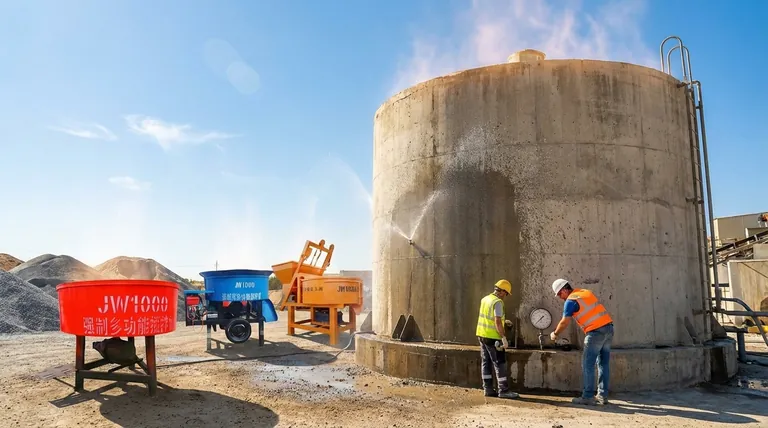
While cooling tanks is essential, doing it improperly can create new problems. Spraying very cold water onto a surface baked by the sun can cause thermal shock, a rapid contraction of the outer layer that can cause severe cracking. Cooling efforts must be gradual and consistent.
Neglecting Relief and Monitoring Systems
Pressure relief valves and temperature sensors are your primary lines of defense. However, these systems can fail if not regularly inspected and tested. Assuming they are functional without verification is a common and dangerous oversight.
Making the Right Choice for Your Goal
A proactive maintenance plan is not about reacting to problems; it's about preventing them. Your specific focus will determine your immediate priorities.
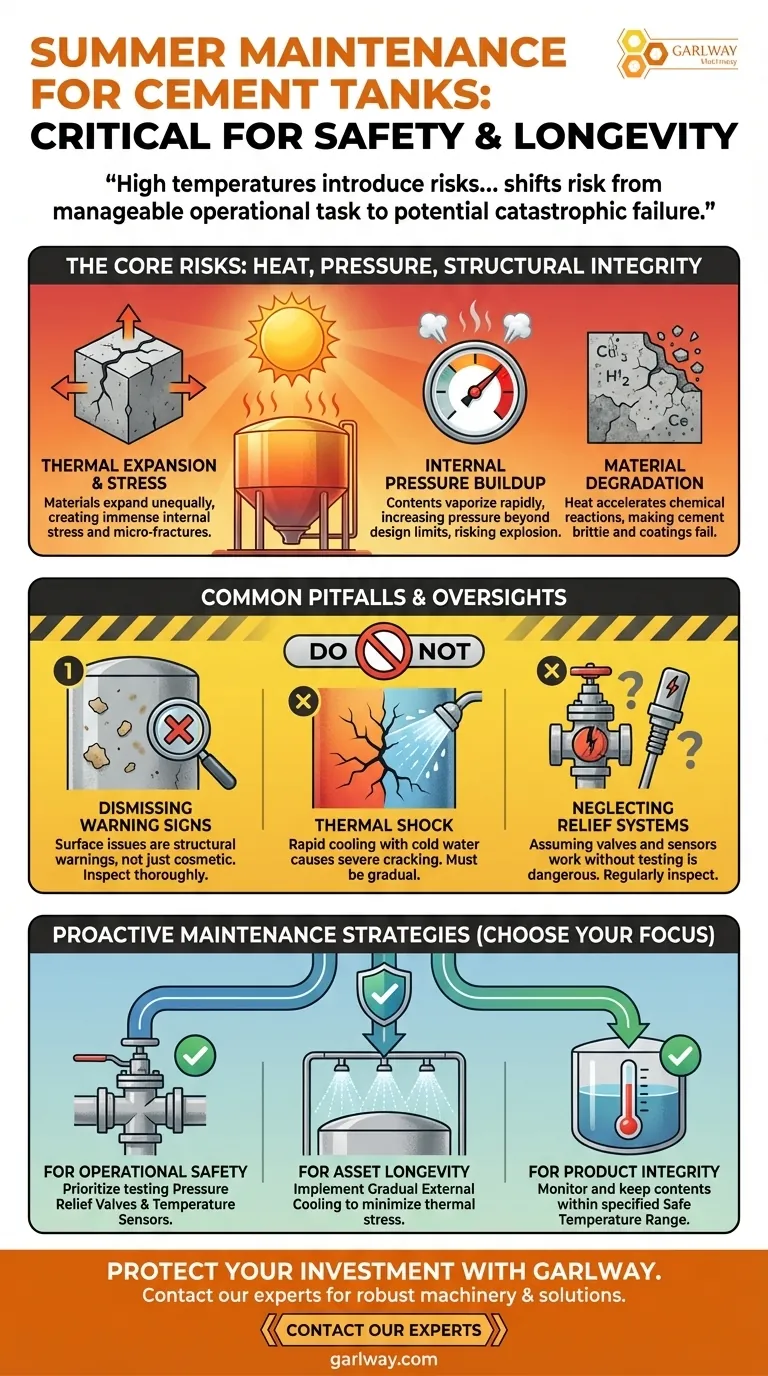
- If your primary focus is operational safety: Prioritize the regular inspection, testing, and maintenance of all pressure relief valves and temperature monitoring systems.
- If your primary focus is asset longevity: Implement a consistent external cooling strategy, such as a water sprinkler system, to minimize thermal stress and conduct regular visual inspections for early signs of cracking.
- If your primary focus is product integrity: Ensure the stored material remains within its specified safe temperature range, using cooling systems and temperature monitoring to prevent degradation.
Ultimately, proactive summer maintenance is a non-negotiable investment in the safety, reliability, and longevity of your critical infrastructure.
Summary Table:
| Key Risk | Impact | Mitigation Strategy |
|---|---|---|
| Internal Pressure Buildup | Risk of explosion or tank failure | Regularly inspect and test pressure relief valves |
| Thermal Expansion & Stress | Structural cracking and weakening | Implement gradual external cooling (e.g., sprinklers) |
| Material Degradation | Brittle cement, loss of protective coatings | Conduct frequent visual inspections for early signs |
| Thermal Shock | Severe cracking from rapid cooling | Avoid spraying cold water on hot surfaces; cool gradually |
Protect your investment and ensure worksite safety with GARLWAY. Don't let summer heat compromise your cement tanks. GARLWAY specializes in providing robust construction machinery and expert solutions for construction companies and contractors globally. Our durable concrete batching plants and mixers are designed for reliability in harsh conditions. Contact our experts today to discuss how we can support your maintenance strategy and operational goals.
Visual Guide
Related Products
- Mini Cement Mortar Mixer Truck for Construction
- HZS35 Small Cement Concrete Mixing Batch Plant
- HZS120 Ready Mix Concrete Batching Plant Commercial Mud Cement Mixer
- HZS75 Concrete Batching Plant Cement Mixer Price Concrete Mixer Bunnings Mixing Plant
- Portable Cement Mixer with Lift Concrete Machine
People Also Ask
- Why might mixing mortar in a cement truck be problematic? Avoid Costly Mixing Mistakes
- What are the main types of construction cement mixers available? Choose the Right Mixer for Your Project
- What are the two primary methods for filling a cement mixer truck? Central vs. Transit Mix Explained
- What are the common uses of cement mixer trucks? Boosting Construction Efficiency and Quality
- What are the primary methods to fill a cement mixer truck? Central Mix vs. Transit Mix Explained