The correct operating temperature for a concrete mixing plant's reducer is not a single, universal figure. It is a specific parameter defined by the equipment manufacturer in the official qualification documentation. This ensures the unit operates safely and effectively within its designed mechanical and lubrication limits.
The core issue is not hitting a specific number, but ensuring the reducer operates within the temperature range specified by its manufacturer. A sudden deviation from its normal baseline temperature is the most critical indicator of a developing problem.
Why Reducer Temperature is a Critical Health Indicator
A reducer, or gearbox, is the heart of the mixer's drive system. Its temperature is a direct reflection of its operational health and the stress it is under.
The Role of the Reducer
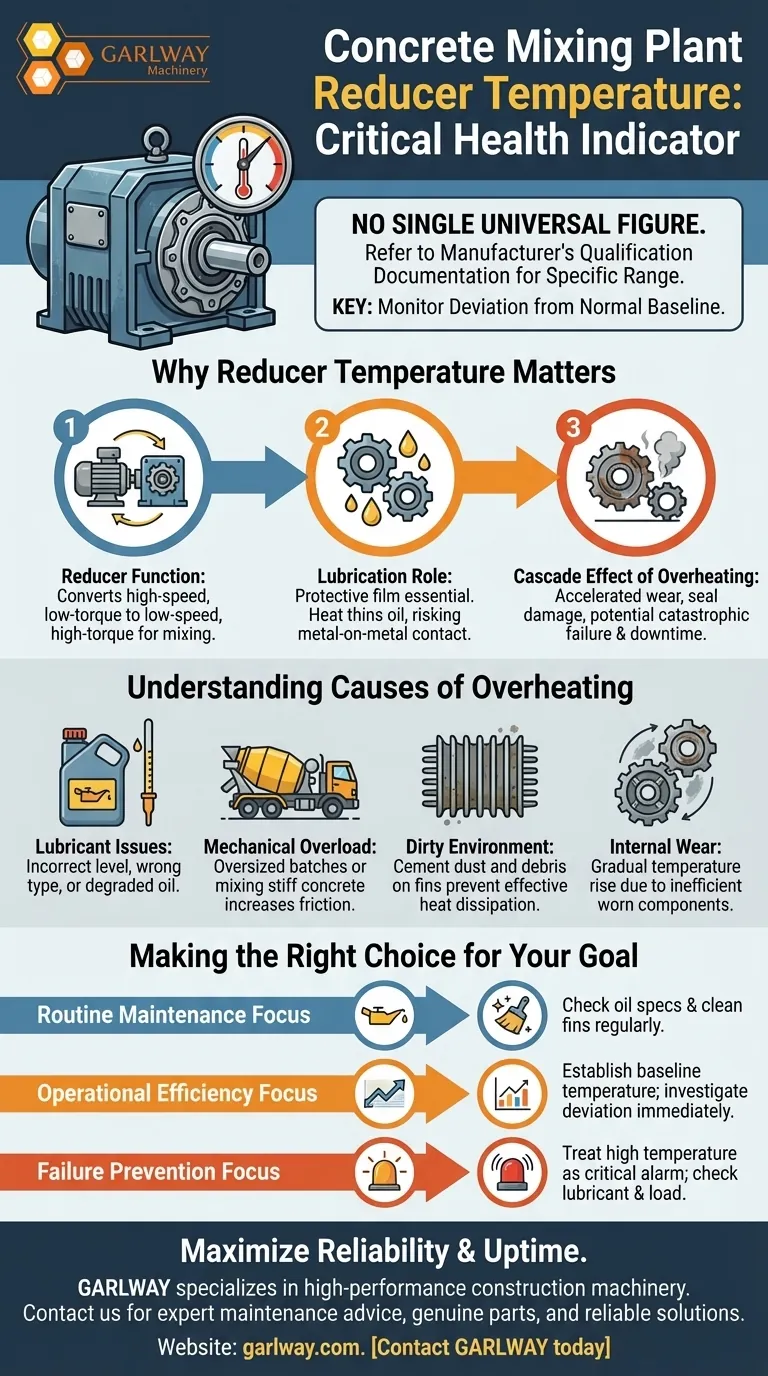
The reducer's primary job is to convert the high-speed, low-torque power from an electric motor into the low-speed, high-torque force needed to turn the mixing blades. This process of gear reduction inherently generates heat through friction.
The Critical Function of Lubrication
The temperature of the reducer casing is directly linked to the temperature of the gear oil inside. This oil is essential for creating a protective film between moving gears and bearings.
If the temperature rises too high, the oil's viscosity thins out. This weakened lubricant film can break down, leading to direct metal-on-metal contact, increased friction, and accelerated wear.
The Cascade Effect of Overheating
Excessive heat is not just a symptom; it's a cause of further damage. Overheating can lead to premature wear of gears and bearings, damage to oil seals (causing leaks), and, in severe cases, catastrophic mechanical failure, resulting in expensive repairs and significant plant downtime.
Understanding the Causes of Overheating
An abnormally high reducer temperature is a clear signal that requires investigation. The cause is almost always linked to lubrication, load, or environmental factors.
The Primary Culprit: Lubricant Issues
The most common cause of overheating is a problem with the lubricant. This includes an insufficient oil level, using the wrong type or viscosity of oil, or using oil that has degraded and lost its properties over time.
The Impact of Mechanical Overload
Continuously overloading the mixer—by using oversized batches or mixing overly stiff concrete—puts immense strain on the reducer. This increased mechanical load directly translates into higher friction and more heat generation.
The Importance of a Clean Environment
The reducer casing is designed with fins to dissipate heat into the surrounding air. If these fins become caked with cement dust, grease, and other debris, they cannot cool effectively. This trapped heat will cause the operating temperature to rise steadily.
The Sign of Internal Wear
As gears and bearings begin to wear out, they operate less efficiently and create more friction. A gradual but consistent rise in the reducer's baseline temperature can be an early warning sign of internal component failure.
Making the Right Choice for Your Goal
Your approach to reducer temperature should be proactive, focusing on prevention and monitoring rather than reacting to a failure.
- If your primary focus is routine maintenance: Regularly check that the oil level and type match the manufacturer's specifications in the qualification documents and ensure the reducer's cooling fins are clean.
- If your primary focus is operational efficiency: Establish a baseline operating temperature for your reducer under normal load and ambient conditions, and investigate any significant deviation from that baseline immediately.
- If your primary focus is preventing failure: Treat an abnormally high temperature reading as a critical alarm. Immediately check the lubricant and investigate potential mechanical overloads or ventilation blockages.
Monitoring your reducer's temperature is one of the most effective and low-cost methods for ensuring the long-term reliability of your entire mixing plant.
Summary Table:
| Key Factor | Impact on Reducer Temperature |
|---|---|
| Lubricant Issues | Incorrect oil level, type, or degraded oil is the most common cause of overheating. |
| Mechanical Overload | Mixing oversized batches or stiff concrete increases friction and heat generation. |
| Dirty Environment | Cement dust and debris on cooling fins trap heat, preventing effective dissipation. |
| Internal Wear | Worn gears and bearings operate less efficiently, causing a gradual temperature rise. |
Ensure your concrete mixing plant's reliability and maximize uptime.
An overheating reducer is a major red flag that can lead to catastrophic failure and expensive repairs. Don't wait for a breakdown.
GARLWAY specializes in high-performance construction machinery, including robust concrete batching plants and mixers designed for durability and efficiency. Our experts can help you implement a proactive maintenance strategy to protect your equipment.
Contact GARLWAY today for expert advice on reducer maintenance, genuine replacement parts, and reliable concrete mixing solutions tailored for construction companies and contractors worldwide.
Visual Guide
Related Products
- Construction Products Concrete Plant Machine Mixing Concrete Mixer
- HZS120 Ready Mix Concrete Batching Plant Commercial Mud Cement Mixer
- Commercial Electric Concrete Mixer Machine HZS 50 Small Batch Plant for Sale
- HZS25 Best Cement Mixer for Quick Mix Concrete at Bunnings
- HZS75 Concrete Batching Plant Cement Mixer Price Concrete Mixer Bunnings Mixing Plant
People Also Ask
- What factors should be considered when choosing between volumetric and traditional mixers? Optimize Your Concrete Project Strategy
- What is the difference between pan and planetary mixers? Choose the Right Mixer for Your Concrete Project
- When was the first concrete mixer developed and by whom? Discover the 1900 Breakthrough
- What is the average lifespan of a concrete mixer? Maximize Your Equipment's Lifespan & ROI
- What are the two broad types of concrete mixers? Choose the Right Mixer for Your Project