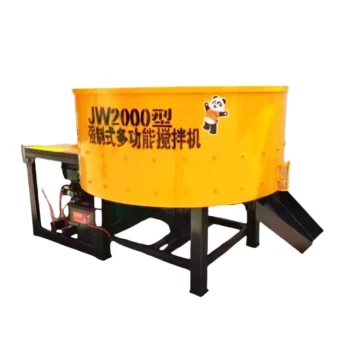
In a concrete batching plant, valves act as gatekeepers controlling the flow of materials and air, pistons provide the linear force needed to open and close gates, and motors supply the rotational power to drive essential machinery like conveyors and mixers. These three components are the fundamental building blocks of mechanical action within the plant, executing the precise commands of a central control system.
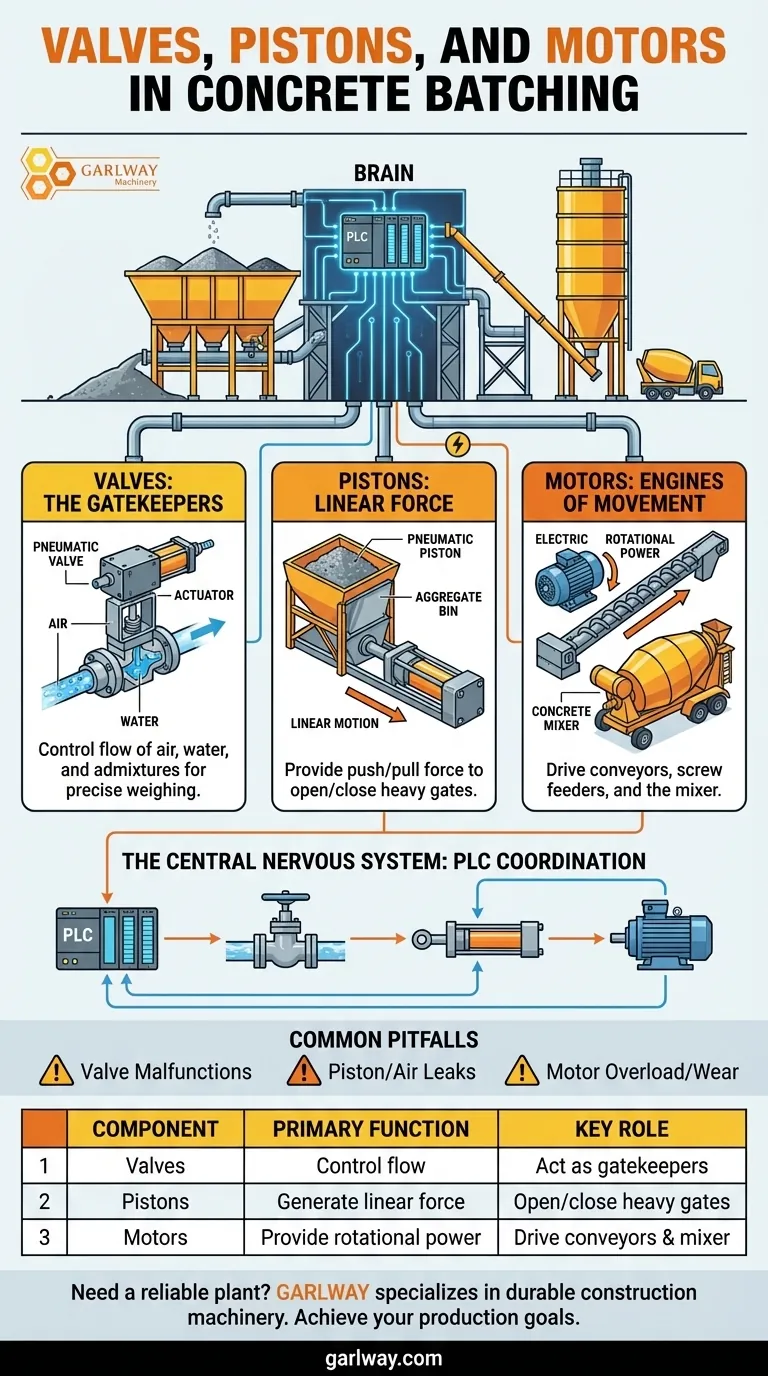
Think of a batching plant as a body. The Programmable Logic Controller (PLC) is the brain, and the valves, pistons, and motors are the coordinated arteries, muscles, and engines that carry out its commands to create the final product.
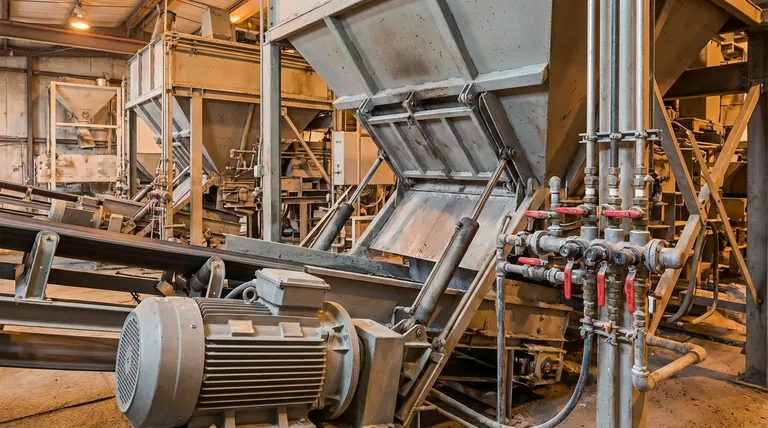
How a Batching Plant Operates
To understand the role of these components, we first need a high-level view of the concrete production process. The operation is a sequence of moving, weighing, and combining materials with absolute precision.
The Five Core Systems
A concrete batching plant is composed of five interconnected systems. Each system relies on valves, pistons, and motors to function.
These systems are material storage (silos and hoppers), material conveyance (conveyors), material weighing, the concrete mixer, and the central control system.
The Critical Functions of Valves, Pistons, and Motors
These components are not isolated; they work together in a tightly choreographed sequence to ensure every batch of concrete meets its exact specifications.
Valves: The Gatekeepers of Flow
Valves are responsible for starting and stopping the flow of any liquid or powdered material.
In a batch plant, their primary role is to control the pneumatic system, which uses compressed air. A valve opens to allow air to flow, which in turn might activate a piston. They also directly control the release of water and chemical admixtures into the weighing hoppers.
Pistons: The Source of Linear Force
Pistons, typically powered by the pneumatic system, convert air pressure into powerful linear motion—a straight push or pull.
Their most common job is to open and close the large clam-shell gates at the bottom of aggregate bins and cement weigh batchers. When the control system determines the correct weight has been reached, it signals a valve to send air to the piston, which then forcefully shuts the gate.
Motors: The Engines of Movement
Motors provide the rotational power that drives nearly all movement in the plant.
Key applications include turning the screw conveyors that pull cement from the main silo, driving the long belt conveyors that carry aggregates to the mixer, and, most importantly, powering the main concrete mixer itself to blend all the components into a homogenous mixture.
The Central Nervous System: The PLC
None of these components would be effective without a coordinator. The Programmable Logic Controller (PLC) is the electronic brain of the entire operation.
Why Coordination is Essential
A concrete recipe is a matter of precise ratios. The PLC stores these recipes and executes them flawlessly, sending electrical signals to start a motor, open a valve, or actuate a piston at the exact right millisecond.
How the PLC Orchestrates Everything
For example, to add cement, the PLC starts the screw conveyor motor. Once the weighing hopper senses the target weight, the PLC stops the motor and commands a pneumatic piston to close the discharge gate. This level of automation is what guarantees consistency from one batch to the next.
Common Pitfalls to Avoid
The reliability of a batching plant is directly tied to the health of these core components. Understanding their failure points is crucial for maintaining uptime and quality.
Valve Malfunctions
A stuck or leaking valve in the pneumatic system can cause a piston to open or close sluggishly, leading to inaccurate material weights. A faulty water valve can ruin an entire batch.
Piston and Air System Leaks
The pneumatic system that powers the pistons is susceptible to air leaks. A leak reduces the force available to the piston, preventing it from closing a gate completely and compromising the accuracy of the weighment.
Motor Overload and Wear
The mixer motor is the plant's primary workhorse and operates under immense strain. An overload or burnout will bring all production to an immediate halt. Likewise, conveyor motors must be maintained to ensure a steady flow of materials.
Making the Right Choice for Your Goal
Understanding how these components function allows you to focus your operational and maintenance efforts effectively.
- If your primary focus is consistent mix quality: Your attention must be on the precision and responsiveness of your valves and the pistons they control, as these ensure weighing accuracy.
- If your primary focus is operational uptime: Regular maintenance of motors and the compressed air system is non-negotiable to prevent catastrophic failures.
- If your primary focus is production speed: The power ratings of your conveyor and mixer motors are critical, as they dictate how quickly you can move and mix materials.
Ultimately, these three components translate digital commands from the control system into the physical work of creating concrete.
Summary Table:
| Component | Primary Function | Key Role in Batching Plant |
|---|---|---|
| Valves | Control flow of air, water, and admixtures | Act as gatekeepers; start/stop material flow for precise weighing |
| Pistons | Generate linear force (push/pull) | Open/close heavy discharge gates on aggregate and cement bins |
| Motors | Provide rotational power | Drive conveyors, screw feeders, and the main concrete mixer |
Need a reliable concrete batching plant built with high-quality valves, pistons, and motors?
At GARLWAY, we specialize in engineering durable construction machinery, including concrete batching plants, mixers, and winches for contractors and construction companies worldwide. Our equipment is designed for precision, uptime, and high-volume production.
Let us help you achieve your production goals. Contact our experts today to discuss your specific needs and get a customized solution.
Visual Guide
Related Products
- HZS35 Small Cement Concrete Mixing Batch Plant
- HZS120 Ready Mix Concrete Batching Plant Commercial Mud Cement Mixer
- HZS75 Concrete Batching Plant Cement Mixer Price Concrete Mixer Bunnings Mixing Plant
- HZS180 Ready Mix Concrete Plant for Foundations with Sand and Cement
- Commercial Electric Concrete Mixer Machine HZS 50 Small Batch Plant for Sale
People Also Ask
- Why buy concrete batch plant parts only from the manufacturer? Protect Your Investment and Maximize Uptime
- Why is proper maintenance important for a concrete batch mix plant? Maximize Uptime & Profitability
- What is the advantage of a mobile concrete batching plant? Achieve On-Site Production & Total Control
- What are the advantages and disadvantages of concrete batching plants? Maximize Quality & Efficiency
- What are the two methods of material charging in a concrete mixing station? Single vs. Multiple Charging Explained