
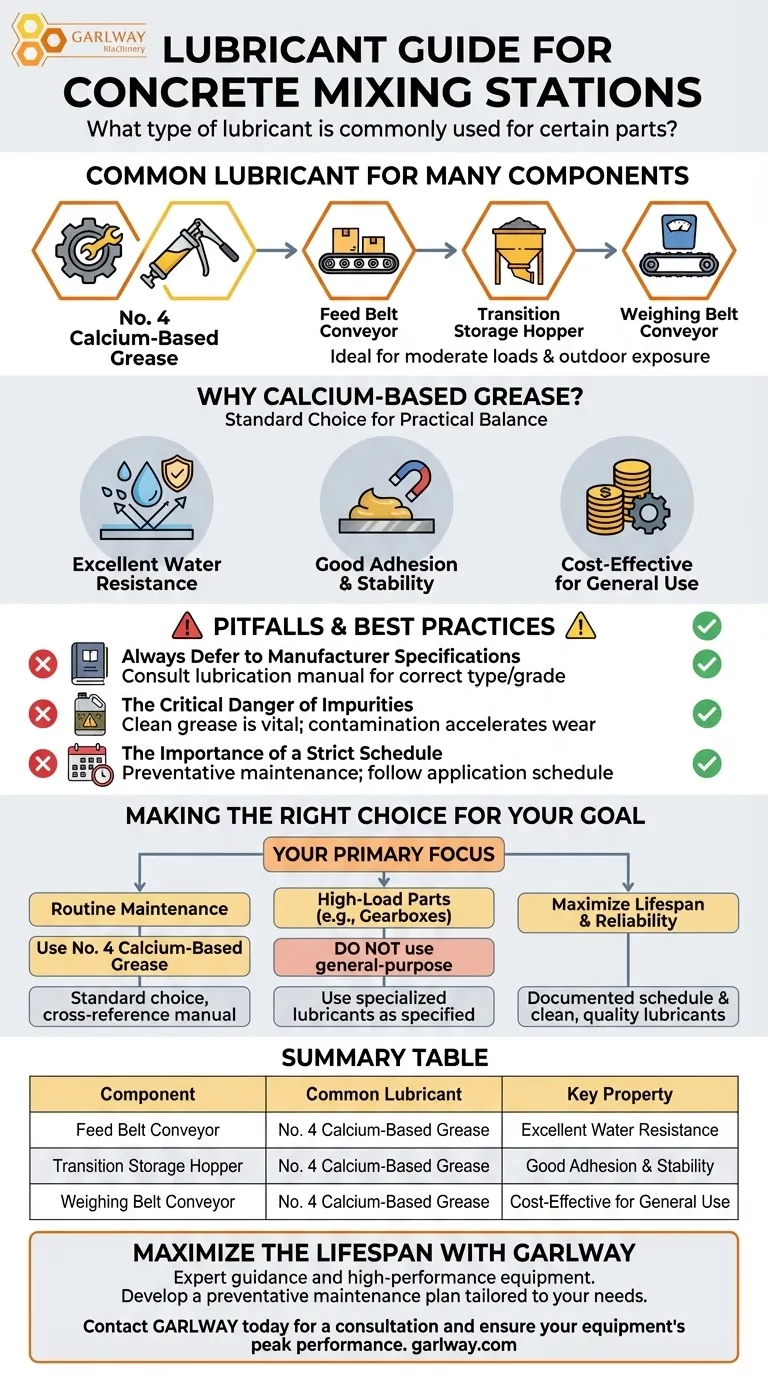
For many common components in a concrete mixing station, the standard lubricant used is No. 4 calcium-based grease. This is specifically applied to parts with moderate loads and exposure to the elements, such as the feed belt conveyor, the transition storage hopper, and the weighing belt conveyor.
Choosing the right lubricant is less about a single product name and more about a core maintenance principle: using the correct, clean lubricant according to a strict schedule is fundamental to preventing costly downtime and extending the life of your equipment.
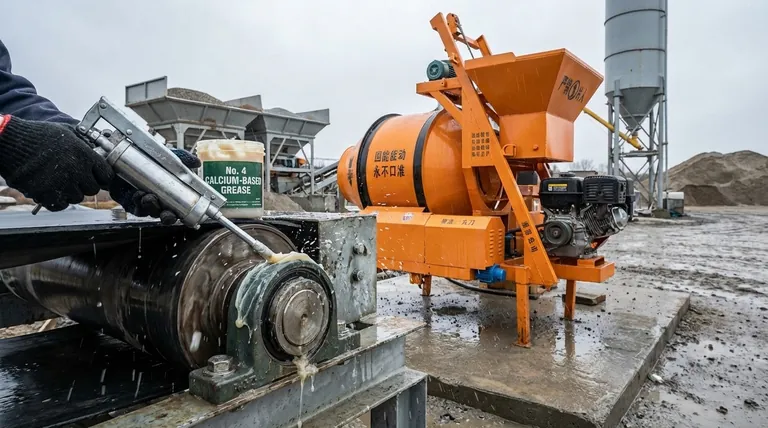
Why Calcium-Based Grease is a Standard Choice
Calcium-based grease is a workhorse lubricant valued for its specific properties that align well with the harsh environment of a concrete plant. Its selection for general-purpose applications is based on a practical balance of performance and cost.
Excellent Water Resistance
The primary advantage of calcium-based grease is its inherent resistance to being washed out by water. Concrete mixing stations are inherently wet environments, and this property ensures the lubricant stays in place to protect components.
Good Adhesion and Stability
This type of grease adheres well to metal surfaces, providing a stable lubricating film that doesn't easily fling off moving parts like conveyor rollers. It maintains its consistency under the typical operating pressures of these components.
Cost-Effectiveness for General Use
For components that are not under extreme temperature or pressure, No. 4 calcium-based grease provides reliable performance at an economical price point, making it a practical choice for routine maintenance.
Understanding the Pitfalls and Best Practices
Simply applying any grease is not enough. The reliability of your entire mixing station often hinges on adhering to disciplined lubrication practices and avoiding common, yet costly, mistakes.
Always Defer to Manufacturer Specifications
While No. 4 calcium-based grease is common, your equipment's lubrication manual is the absolute authority. Always consult it to confirm the correct type and grade of lubricant for every single part, as some may require specialized solutions.
The Critical Danger of Impurities
Lubricant must be clean and free from any contaminants. Applying grease contaminated with dust, sand, or cement particles effectively turns it into a grinding paste, which will accelerate wear and cause severe damage to precision parts.
The Importance of a Strict Schedule
Lubrication is not a reactive task; it is the cornerstone of preventative maintenance. Following the manufacturer's recommended schedule for application ensures that a protective film is always present, preventing metal-on-metal contact and corrosion.
Making the Right Choice for Your Goal
Your lubrication strategy should be directly tied to your operational objectives. Use these principles to guide your maintenance decisions.
- If your primary focus is routine maintenance of conveyors and hoppers: No. 4 calcium-based grease is a reliable and standard choice, but always cross-reference with your equipment manual first.
- If your primary focus is lubricating high-load parts like mixer gearboxes: Do not use general-purpose grease. These critical components require specialized lubricants designed for high pressure and temperature, as specified by the manufacturer.
- If your primary focus is maximizing equipment lifespan and reliability: Your priority must be creating and following a documented lubrication schedule, using only high-quality, uncontaminated lubricants from sealed containers.
Ultimately, a disciplined approach to lubrication is the most effective investment you can make in the reliability of your operation.
Summary Table:
| Component | Common Lubricant | Key Property |
|---|---|---|
| Feed Belt Conveyor | No. 4 Calcium-Based Grease | Excellent Water Resistance |
| Transition Storage Hopper | No. 4 Calcium-Based Grease | Good Adhesion & Stability |
| Weighing Belt Conveyor | No. 4 Calcium-Based Grease | Cost-Effective for General Use |
Maximize the lifespan and reliability of your concrete mixing station with GARLWAY.
Choosing the right lubricant is just one part of a comprehensive maintenance strategy. As a specialist in construction machinery, GARLWAY provides not only high-performance equipment like concrete mixers and batching plants but also the expert guidance to keep them running smoothly.
Let our team help you develop a preventative maintenance plan tailored to your operation's specific needs.
Contact GARLWAY today for a consultation and ensure your equipment's peak performance.
Visual Guide
Related Products
People Also Ask
- How do cement mixers enhance safety on construction sites? Reduce Strain, Hazards, and Accidents
- What are the main components of a cement mixer? A Guide to Core Parts & Functions
- What are some tips for using a cement mixer effectively? Maximize Your Mixer's Performance & Concrete Quality
- How does cleaning a cement mixer after use benefit its performance? Maximize Lifespan and Mix Quality
- Why is it important to clean the cement mixer after use? Prevent Costly Damage and Ensure Quality Concrete
