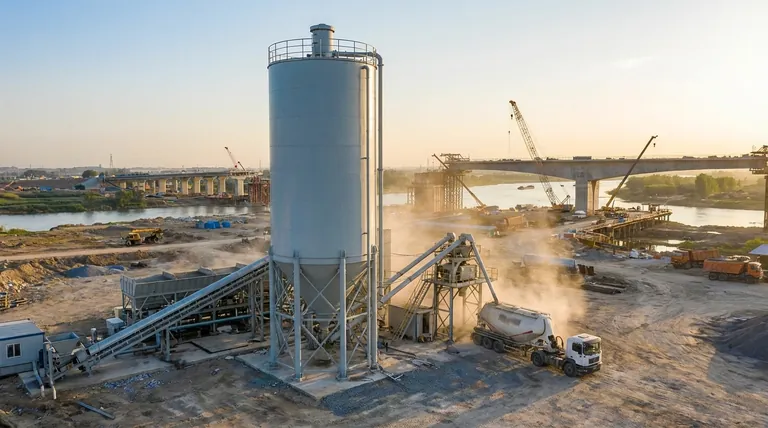
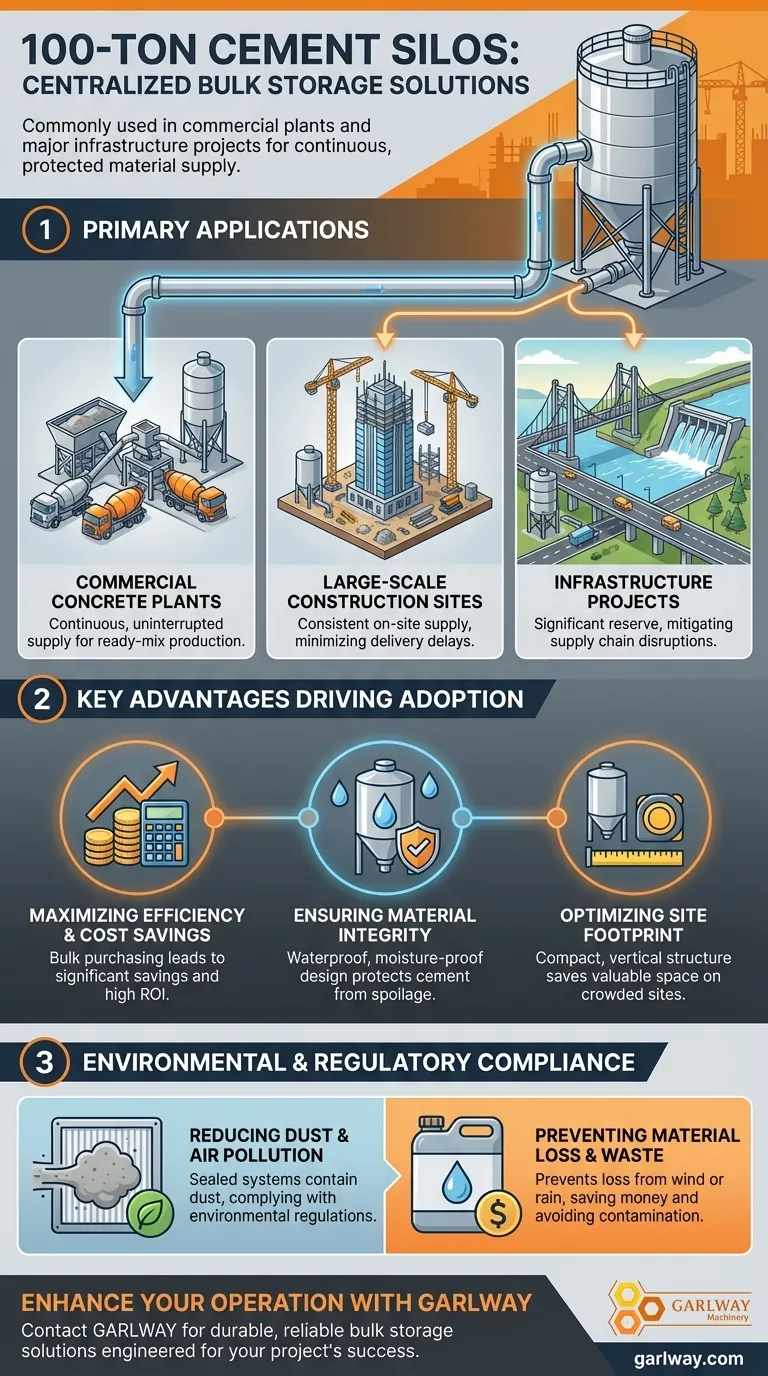
100-ton cement silos are most commonly used in commercial concrete mixing plants, large-scale construction sites, and major infrastructure projects like road, bridge, and water conservancy construction. They serve as the central storage unit for bulk cement, enabling a consistent and protected supply of material for high-demand operations.
The core value of a 100-ton cement silo is not just storage, but operational control. It transforms cement from a delivered commodity into an on-demand, protected asset, which is fundamental for efficiency, cost savings, and environmental compliance in modern construction.
The Role of Centralized Bulk Storage
A 100-ton silo is a strategic component for any operation that consumes large volumes of cement. It acts as a buffer between bulk deliveries and daily production needs, ensuring a seamless workflow.
In Commercial Concrete Mixing Plants
These plants require a continuous, uninterrupted supply of cement to meet production schedules. The 100-ton silo is a standard piece of equipment, feeding cement directly into the batching system to produce ready-mix concrete.
For Large-Scale Construction Sites
For major building projects, foundations, or other concrete-intensive structures, an on-site silo eliminates the reliance on frequent, smaller deliveries. This provides a consistent supply of material, minimizing costly delays.
In Infrastructure Development
Projects like highways, bridges, and dams are often located in areas with complex logistics. A large-capacity silo ensures that a significant reserve of cement is always available, mitigating the risk of supply chain disruptions.
Key Advantages Driving Adoption
The widespread use of these silos is driven by a clear set of economic and operational benefits that address common challenges in the construction industry.
Maximizing Efficiency and Cost Savings
Storing up to 100 tons of cement allows businesses to purchase material in bulk, which is significantly cheaper than buying it in bags. This large storage capacity, combined with a long service life, delivers a strong return on investment.
Ensuring Material Integrity
Cement is highly susceptible to moisture, which can ruin the material. Modern silos feature superior welding, tight seals, and anti-corrosion properties, making them waterproof and moisture-proof. This protects the cement from the elements and prevents costly spoilage.
Optimizing Site Footprint
Despite their large capacity, 100-ton silos are designed with a relatively small footprint and a compact, vertical structure. This is a critical advantage on crowded construction sites where space is at a premium.
Environmental and Regulatory Compliance
Beyond operational efficiency, cement silos play a vital role in meeting modern environmental standards. They are considered essential supporting equipment for environmentally responsible construction.
Reducing Dust and Air Pollution
Bulk cement is a fine powder that can easily become airborne during transfer and handling. A sealed silo system contains this dust, drastically reducing particulate air pollution and helping projects comply with local environmental regulations.
Preventing Material Loss and Waste
The sealed design prevents cement from being lost to wind or rain. This not only saves money but also prevents the environmental contamination that can occur from spilled material.
Understanding the Trade-offs
While highly beneficial, adopting a 100-ton silo system involves considerations that are not a fit for every project.
Initial Capital Investment
The upfront cost of purchasing, delivering, and installing a silo is significant. It represents a capital investment that must be justified by the scale and duration of the operation.
Logistical Requirements
These silos must be filled by specialized pneumatic tanker trucks. Operations must have the site access and logistical chain in place to accommodate these large vehicles for bulk deliveries.
Maintenance and Reliability
A silo is a mechanical system with components like level indicators, dust collection systems, and discharge valves. These require periodic inspection and maintenance to ensure reliable, long-term operation.
Making the Right Choice for Your Operation
Deciding to invest in a 100-ton silo depends entirely on the scale and goals of your project.
- If your primary focus is high-volume production: The silo is an essential component for a commercial mixing plant to maintain a continuous, cost-effective supply chain.
- If your primary focus is a large, long-term project: An on-site silo is crucial for reducing logistical delays and material waste on major infrastructure or building jobs.
- If your primary focus is environmental compliance: A sealed silo is a fundamental tool for controlling dust pollution and meeting regulatory standards, especially on urban sites.
Ultimately, the 100-ton cement silo serves as a cornerstone for modern, efficient, and responsible construction operations.
Summary Table:
| Application | Primary Use Case | Key Benefit |
|---|---|---|
| Commercial Concrete Plants | Central storage for batching systems | Continuous, uninterrupted production |
| Large-Scale Construction Sites | On-site cement supply for foundations/structures | Minimizes delays from frequent deliveries |
| Infrastructure Projects (Roads, Bridges) | Buffer against supply chain disruptions in remote areas | Ensures material availability |
| Environmentally Sensitive Sites | Contained storage to meet dust control regulations | Prevents pollution and material loss |
Ready to enhance your project's efficiency and compliance?
GARLWAY specializes in providing durable and reliable construction machinery, including cement silos, winches, concrete mixers, and batching plants, for construction companies and contractors globally. Our 100-ton silos are engineered for superior moisture protection and a compact footprint, helping you save costs and ensure a consistent material supply.
Contact GARLWAY today to discuss the perfect bulk storage solution for your large-scale operation!
Visual Guide
Related Products
- HZS120 Ready Mix Concrete Batching Plant Commercial Mud Cement Mixer
- HZS35 Small Cement Concrete Mixing Batch Plant
- HZS75 Concrete Batching Plant Cement Mixer Price Concrete Mixer Bunnings Mixing Plant
- Portable Cement Mixer with Lift Concrete Machine
- Construction Products Concrete Plant Machine Mixing Concrete Mixer
People Also Ask
- What is a ready mix concrete batching plant? The Engine of Modern Construction
- What is the name of the machine used in ready mix? Unpacking the Complete Concrete System
- What is the core component of a concrete batching plant? The Mixer Unit Defines Your Concrete Quality
- What are the types of concrete mixers used in batching plants? Choose the Right Mixer for Your Project
- What are the advantages and disadvantages of concrete batching plants? Maximize Quality & Efficiency