
To definitively resolve shaft end leakage in a mixing station, you must replace the four core components of the shaft end sealing device: the sealing ring, the oil seal, the sliding hub, and the rotating hub. Merely replacing these parts, however, only addresses the symptom. The underlying cause is almost always a failure in the lubrication system that protects them.
A shaft end leak is not just a component failure; it's a system failure. The immediate fix is to replace the seals, but the permanent solution requires diagnosing and repairing the lubrication system that allowed those seals to fail in the first place.
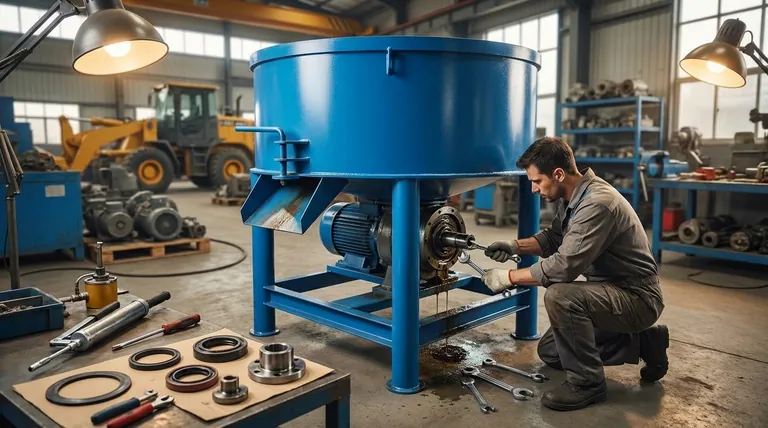
The Anatomy of a Shaft End Leak
Understanding the sequence of failure is critical to performing a lasting repair. The leak you observe is the final step in a chain reaction that begins with a loss of lubrication.
The Core Sealing Components
The shaft end sealing device relies on a precise assembly to contain lubrication and prevent material egress. The key players are the sealing ring and oil seal, which form the primary barrier, and the sliding and rotating hubs, which create the dynamic sealing surface.
The Role of the Floating Seal
The primary cause of leakage is damage to the floating seal. This component is designed to handle the rotation and pressure differentials at the shaft end, but it is entirely dependent on a consistent film of lubricant.
The Cascade of Failure
When the lubrication system falters, the floating seal is starved of oil. This leads to insufficient lubrication, causing direct friction and rapid wear on the sliding hub and rotating hub. This friction generates excessive heat, which in turn damages the bearings and accelerates the complete failure of the sealing assembly.
Diagnosing the Root Cause: The Lubrication System
Simply replacing the worn sealing components without addressing the cause of their failure is a temporary fix. The new parts will inevitably fail for the same reason. You must investigate the lubrication system.
Insufficient Lubrication: The True Culprit
The physical wear on the hubs and seals is a direct result of inadequate lubrication. Your primary investigation should focus on why the oil isn't reaching these critical components correctly.
Checking the Main Oil Pump
The heart of the system is the main oil pump. Common failure points include a worn drive shaft or malfunctioning plungers at the pressure gauge interface. If the pump cannot generate adequate pressure, the entire system is compromised.
Inspecting the Oil Distribution Circuit
Oil must travel from the pump to the shaft end. A common point of failure is a clogged safety valve spool within the progressive oil circuit distributor. This blockage physically prevents oil from being distributed to the seal assembly, guaranteeing its failure.
Common Pitfalls to Avoid
Achieving a long-term solution requires avoiding two common but critical mistakes that lead to repeat failures.
The "Parts-Only" Fix
The most frequent mistake is replacing the four sealing components without a thorough inspection of the lubrication system. This approach ignores the root cause, ensuring the new seals will wear out prematurely, leading to another leak in a short amount of time.
The Risk of Non-Original Parts
When replacing seals and bearings, it is highly recommended to use original manufacturer parts. Aftermarket components can have slight dimensional discrepancies that, while seemingly minor, can prevent a proper seal and lead to rapid, uneven wear.
How to Apply This to Your Repair
Your strategy should depend on whether you are reacting to a failure or working to prevent one.
- If you are fixing an active leak: Replace the sealing ring, oil seal, sliding hub, and rotating hub, but do not stop there. You must proceed to a full lubrication system check.
- If you want to ensure long-term reliability: Thoroughly inspect the main oil pump and the oil circuit distributor for wear or blockages before reassembling the unit with new seals.
- If the lubrication system shows any signs of failure: Replace the main oil pump to restore proper lubrication flow and protect your new investment in the sealing components.
By addressing both the damaged components and the systemic cause of their failure, you move from a temporary patch to a permanent and reliable repair.
Summary Table:
| Core Components to Replace | Key Lubrication System Checks |
|---|---|
| Sealing Ring | Main Oil Pump (Drive Shaft, Plungers) |
| Oil Seal | Progressive Oil Circuit Distributor |
| Sliding Hub | Safety Valve Spool for Blockages |
| Rotating Hub | Overall Oil Pressure & Flow |
Stop recurring shaft end leaks and costly downtime. GARLWAY specializes in construction machinery, providing reliable solutions for construction companies and contractors globally. Our genuine replacement parts and expert support ensure your mixing stations operate at peak performance. Contact our specialists today to diagnose your leak and get a permanent repair solution.
Get a Free Consultation & Quote Now
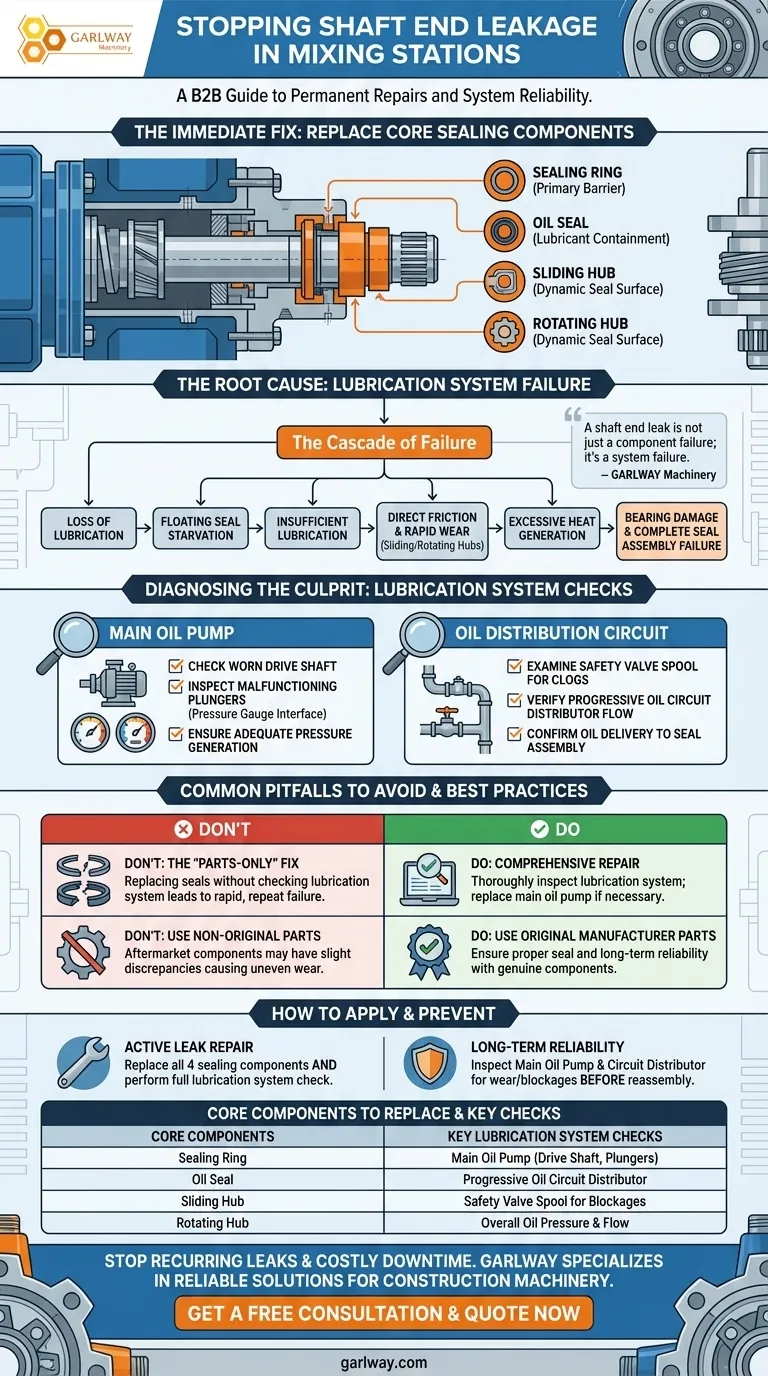
Visual Guide
Related Products
- HZS90 Large Multiquip Concrete Mixers for Construction
- HZS75 Concrete Batching Plant Cement Mixer Price Concrete Mixer Bunnings Mixing Plant
- Portable Concrete Mixer Machine Equipment for Mixing Concrete
- Commercial Electric Concrete Mixer Machine HZS 50 Small Batch Plant for Sale
- HZS35 Small Cement Concrete Mixing Batch Plant
People Also Ask
- What are the types of concrete mixers used in batching plants? Choose the Right Mixer for Your Project
- What is the core component of a concrete batching plant? The Mixer Unit Defines Your Concrete Quality
- What are the different power sources for concrete mixers? Choose the Right Power for Your Project
- What are the main types of concrete mixers? A Guide to Batch, Continuous & More
- What are the main types of concrete mixers mentioned? Find the Perfect Mixer for Your Project





