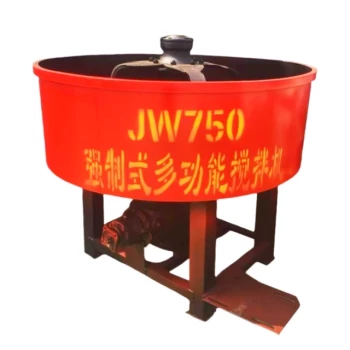
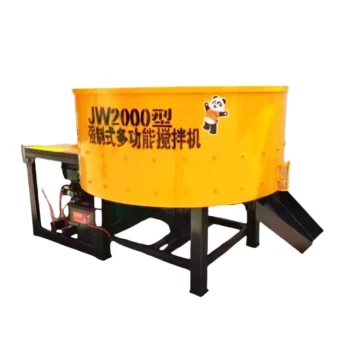
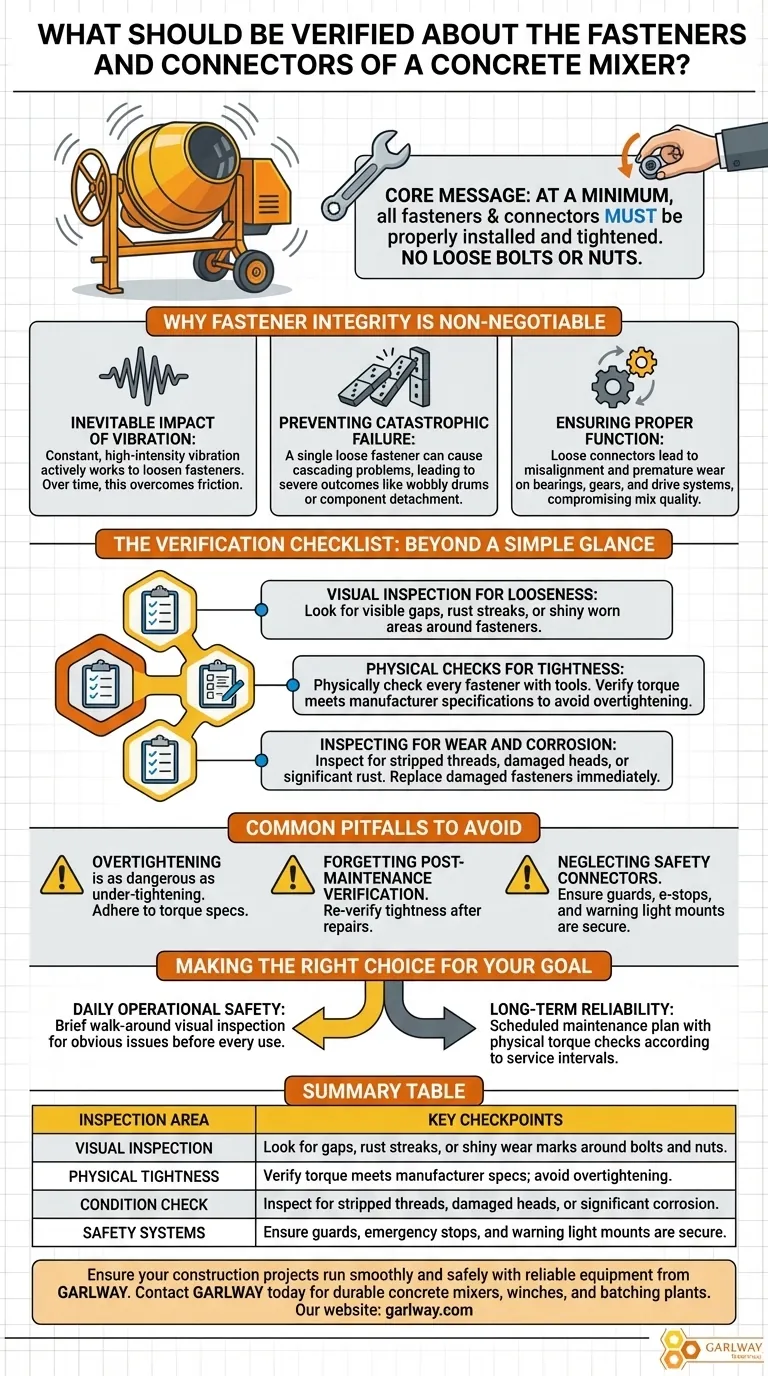
At a minimum, all fasteners and connectors on a concrete mixer must be verified to ensure they are properly installed and tightened, with no loose bolts or nuts. This simple check is a foundational step in ensuring both the operational safety and mechanical integrity of the equipment.
The constant, high-intensity vibration inherent to a concrete mixer’s function actively works to loosen its fasteners. Therefore, a systematic inspection is not just routine maintenance; it is a critical safety protocol to prevent mechanical failure and ensure consistent performance.
Why Fastener Integrity is Non-Negotiable
A concrete mixer is a machine designed for violent motion. Understanding the forces at play reveals why its nuts and bolts are a primary point of failure if neglected.
The Inevitable Impact of Vibration
The core function of a mixer—tumbling heavy aggregate, sand, cement, and water—generates significant and constant vibration. This energy travels through the machine's frame, directly targeting every fastener.
Over time, this vibration can overcome the friction holding a nut and bolt together, causing them to loosen progressively.
Preventing Catastrophic Failure
A single loose fastener can create a cascading problem. It places additional stress on surrounding bolts, which can then loosen or shear under the increased load.
This can lead to severe outcomes, from a wobbly drum that mixes inefficiently to the complete detachment of a critical component during operation.
Ensuring Proper Function
The mixer's components, such as the drum, motor, and gearbox, are aligned with specific tolerances. Loose connectors can lead to misalignment, causing premature wear on bearings, gears, and drive systems.
This not only compromises the quality of the concrete mix but also leads to expensive and avoidable repairs.
The Verification Checklist: Beyond a Simple Glance
A thorough check goes beyond casually looking for anything that has fallen off. It requires a deliberate, methodical approach to inspection.
Visual Inspection for Looseness
Before touching a wrench, perform a careful visual check. Look for tell-tale signs of a loose connection, such as a visible gap between a bolt head and the frame.
Also, watch for rust streaks originating from a bolt, which can indicate moisture intrusion and movement, or shiny, worn areas around a fastener, which signals shifting (fretting).
Physical Checks for Tightness
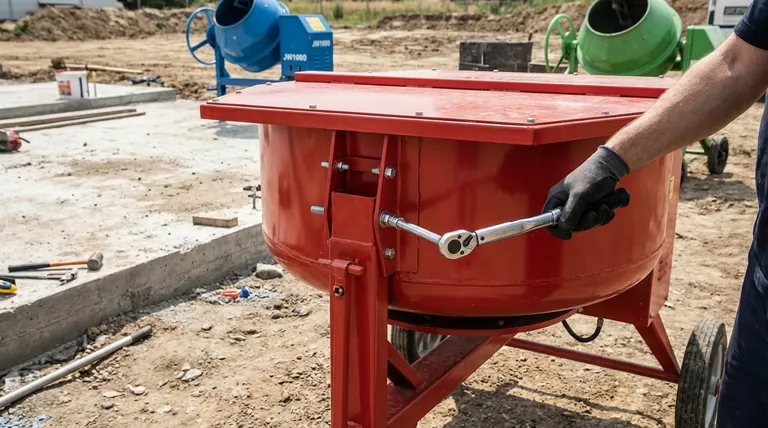
Every fastener should be checked physically. While a wrench can confirm tightness, it's crucial to follow the manufacturer's specifications.
This ensures that every connection meets the required clamping force without being overtightened.
Inspecting for Wear and Corrosion
During your check, inspect the condition of the fasteners themselves. Look for stripped threads, rounded or damaged bolt heads, and signs of significant rust or corrosion.
A damaged or corroded fastener lacks the strength of a new one and should be replaced immediately, even if it feels tight.
Common Pitfalls to Avoid
Simply "checking the bolts" is not enough. Inexperience or rushing can lead to critical oversights that undermine the entire process.
Overtightening is as Dangerous as Under-tightening
The instinct to make a bolt as tight as possible is a mistake. Overtightening can stretch a bolt beyond its elastic limit, permanently weakening it and making it more susceptible to shearing under load.
Always adhere to the torque specifications provided by the equipment manufacturer.
Forgetting Post-Maintenance Verification
After any repair or part replacement, it is absolutely essential to re-verify the tightness of all fasteners that were removed or disturbed.
These new or re-seated connections are especially prone to settling and loosening during the first few hours of subsequent operation.
Neglecting Safety Connectors
While structural bolts are critical, don't overlook the connectors for safety systems. Ensure that safety guard bolts, emergency-stop button enclosures, and warning light mounts are all secure.
A safety device that is not securely mounted cannot function reliably when it is needed most.
Making the Right Choice for Your Goal
Your approach to fastener verification can be tailored to your immediate needs, but the principle of diligence remains the same.
- If your primary focus is daily operational safety: Conduct a brief walk-around visual inspection before every use, looking for any obviously loose, damaged, or missing fasteners.
- If your primary focus is long-term reliability: Implement a scheduled maintenance plan that includes physically checking the torque of all critical fasteners according to the manufacturer's recommended service intervals.
Ultimately, treating every fastener as a critical safety component is the most effective way to ensure the long-term, reliable, and safe operation of your equipment.
Summary Table:
| Inspection Area | Key Checkpoints |
|---|---|
| Visual Inspection | Look for gaps, rust streaks, or shiny wear marks around bolts and nuts. |
| Physical Tightness | Verify torque meets manufacturer specs; avoid overtightening. |
| Condition Check | Inspect for stripped threads, damaged heads, or significant corrosion. |
| Safety Systems | Ensure guards, emergency stops, and warning light mounts are secure. |
Ensure your construction projects run smoothly and safely with reliable equipment from GARLWAY.
As a specialist in construction machinery, we understand that the integrity of every bolt and connector is paramount to your operation's safety and efficiency. GARLWAY provides durable, high-performance concrete mixers, winches, and batching plants designed for contractors and construction companies worldwide who demand reliability.
Don't let equipment failure cause downtime or safety hazards. Let our experts help you maintain peak performance.
Contact GARLWAY today to discuss your machinery needs and discover how our solutions can bring durability and peace of mind to your job site.
Visual Guide
Related Products
- Portable Concrete Mixer Machine Equipment for Mixing Concrete
- Construction Products Concrete Plant Machine Mixing Concrete Mixer
- Portable Electric Concrete Mixer Machine for Cement Mixing
- Concrete Cement Mixer Machine Drum Mixer for Construction
- HZS90 Large Multiquip Concrete Mixers for Construction
People Also Ask
- Why is it necessary to use a portable concrete mixer? Gain Total Control & Efficiency
- How much concrete can you pour with a portable mixer? Find the Perfect Fit for Your Project
- What types of projects are portable concrete mixers suitable for? Ideal for DIY & Small-Scale Construction
- How much does a portable concrete mixer hold? A Guide to Choosing the Right Capacity
- What types of portable concrete mixers exist? Find the Perfect Mixer for Your Project