In short, a cement mixer is vastly more efficient than manual mixing because it saves significant time and labor while producing a structurally superior, consistent concrete mix. The machine’s automated process removes the guesswork and physical strain, ensuring a high-quality result that is difficult, if not impossible, to achieve by hand.
The core advantage of a cement mixer isn't just speed—it's reliability. By guaranteeing a homogenous and perfectly hydrated mix, the machine ensures the final concrete is strong and durable, directly impacting the safety and longevity of your construction project.
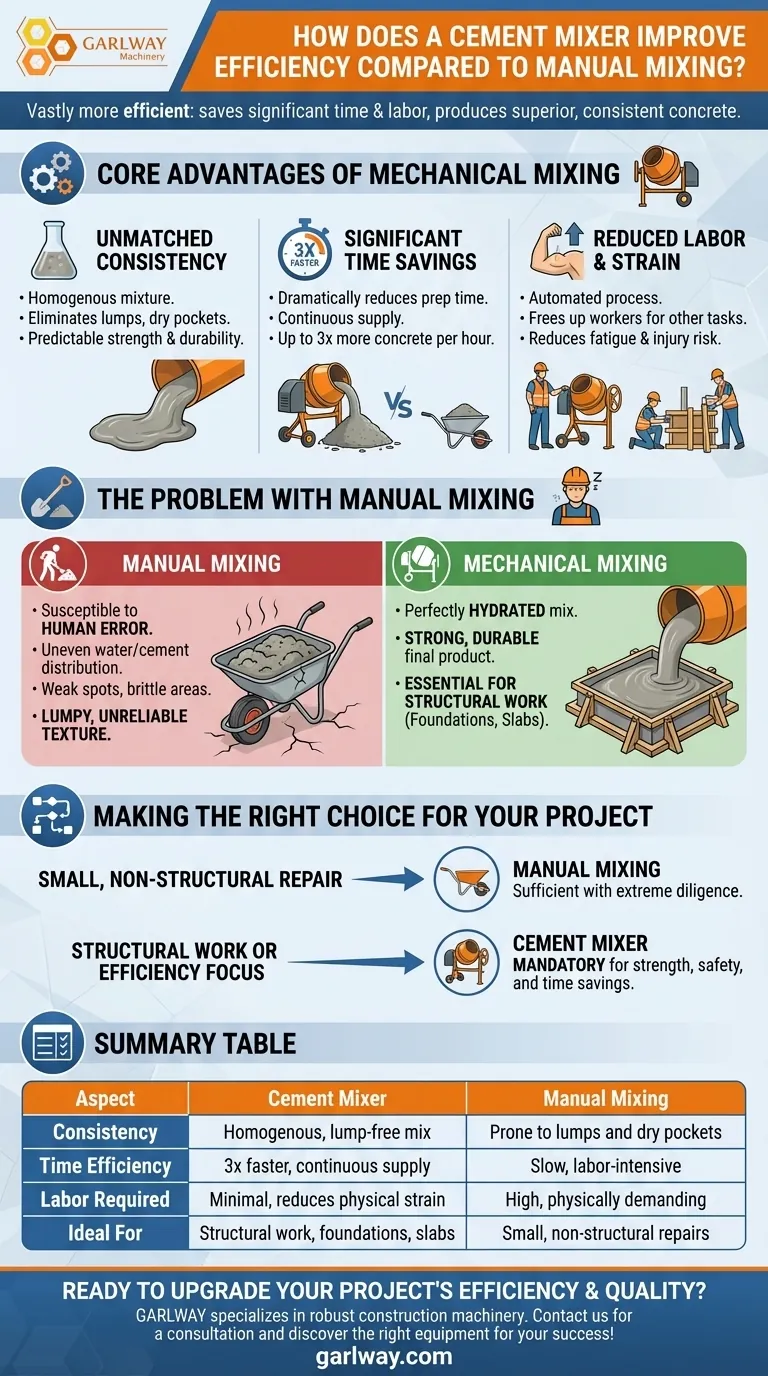
The Core Advantages of Mechanical Mixing
Using a cement mixer fundamentally changes the quality and pace of concrete work. The benefits go far beyond simply avoiding a shovel and a wheelbarrow; they translate to a better, safer final product.
Unmatched Consistency and Quality
A mixer's primary function is to create a homogenous mixture. Its continuous tumbling action ensures that cement, aggregates (sand and gravel), and water are thoroughly and evenly combined.
This process eliminates the lumps, dry pockets, and inconsistencies common in manual mixing. The result is high-quality, reliable concrete with predictable strength and durability.
Significant Time Savings
Mechanical mixing dramatically reduces preparation time. A machine can prepare a batch of concrete in a fraction of the time it would take to do so by hand.
For larger projects, this efficiency is critical. It allows for a continuous supply of fresh concrete, enabling workers to pour, place, and finish without costly delays. Some systems can produce up to three times more concrete per hour than a manual team.
Reduced Labor and Physical Strain
Mixing concrete by hand is an intensely laborious and physically demanding task. A cement mixer handles this strenuous work automatically.
This automation frees up workers to focus on other critical tasks like building formwork, placing rebar, or finishing the concrete pour. It reduces worker fatigue and the risk of injury, improving overall job site productivity.
Understanding the Trade-offs
While manual mixing has its place, it's crucial to understand its limitations and the risks involved, especially as project scale and structural importance increase.
The Problem with Manual Mixing
Manual mixing is highly susceptible to human error. It often results in an uneven distribution of water and cement, creating weak spots or areas that are too brittle.
This inconsistency makes hand-mixed concrete unreliable for any application where structural integrity is a concern. The lumpy, uneven texture is a clear sign of a poor mix that will compromise longevity.
When to Prioritize Mechanical Mixing
For any structural work—such as foundations, slabs, footings, or load-bearing walls—a cement mixer is not optional, it's essential.
The investment in renting or purchasing a mixer is a direct investment in the quality and safety of the final structure. The precision it provides cannot be reliably duplicated by hand.
Making the Right Choice for Your Project
Choosing your mixing method depends entirely on the scale and structural requirements of your job.
- If your primary focus is a small, non-structural repair (like setting a single fence post): Manual mixing in a wheelbarrow can be sufficient, but you must be extremely diligent to achieve a consistent texture.
- If your primary focus is any structural work (foundations, slabs, footings): A cement mixer is mandatory to guarantee the concrete's strength, durability, and safety.
- If your primary focus is project efficiency and labor management: The mixer is a force multiplier, saving immense time and allowing your team to focus on placement and finishing rather than exhausting manual labor.
Ultimately, using a cement mixer elevates your work from a manual task to a precise, controlled process.
Summary Table:
| Aspect | Cement Mixer | Manual Mixing |
|---|---|---|
| Consistency | Homogenous, lump-free mix | Prone to lumps and dry pockets |
| Time Efficiency | 3x faster, continuous supply | Slow, labor-intensive |
| Labor Required | Minimal, reduces physical strain | High, physically demanding |
| Ideal For | Structural work, foundations, slabs | Small, non-structural repairs |
Ready to upgrade your project's efficiency and concrete quality?
GARLWAY specializes in providing robust and reliable construction machinery, including high-performance cement mixers, concrete batching plants, and winches for construction companies and contractors worldwide. Our equipment is designed to save you time, reduce labor costs, and ensure the structural integrity of your builds.
Contact GARLWAY today for a consultation and discover the right machinery to power your success!
Visual Guide
Related Products
- HZS25 Best Cement Mixer for Quick Mix Concrete at Bunnings
- JDC350 Small Cement Concrete Mortar Mixer
- JW1000 Mobile Cement Mixer Concrete Mixer Truck and Batching Plant
- Concrete Cement Mixer Machine Drum Mixer for Construction
- JZC400 Mobile Small Concrete Mixer Cement Mixer Machine
People Also Ask
- How do cement mixers enhance safety on construction sites? Reduce Strain, Hazards, and Accidents
- What are the main components of a cement mixer? A Guide to Core Parts & Functions
- What are some tips for using a cement mixer effectively? Maximize Your Mixer's Performance & Concrete Quality
- How does cleaning a cement mixer after use benefit its performance? Maximize Lifespan and Mix Quality
- Why is it important to clean the cement mixer after use? Prevent Costly Damage and Ensure Quality Concrete