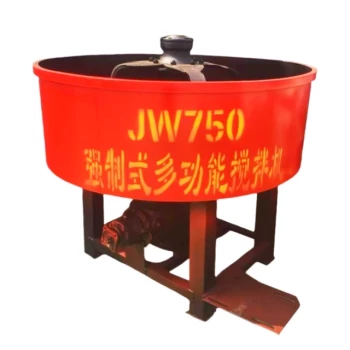
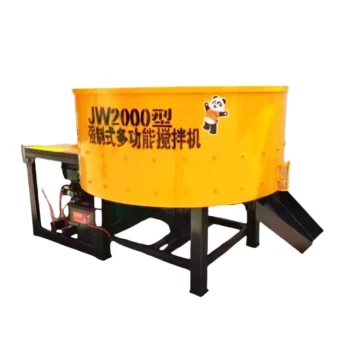
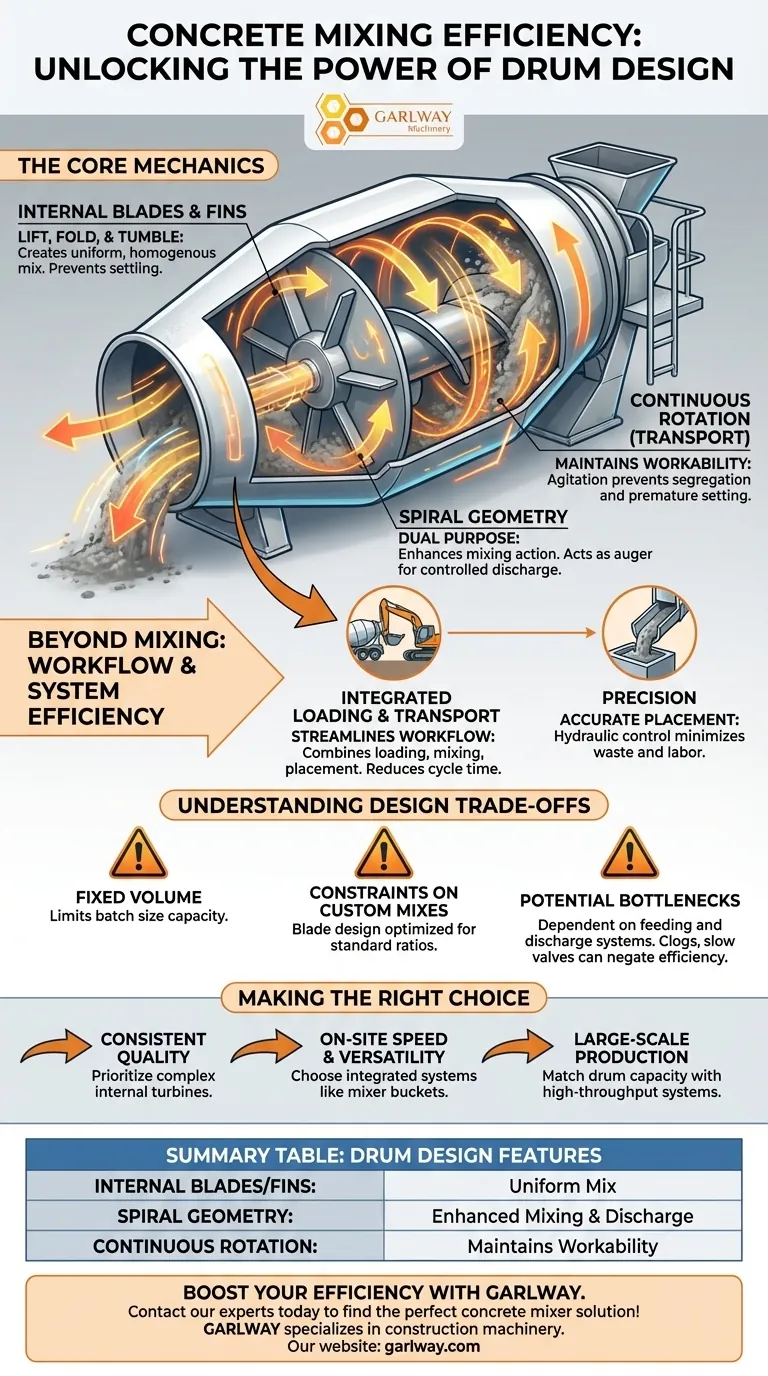
At its core, a concrete mixer's efficiency is determined almost entirely by the drum's internal geometry. The strategic placement and shape of internal blades or fins create a specific lifting, folding, and tumbling action as the drum rotates. This engineered motion ensures that cement, aggregates, and water are combined into a completely uniform, or homogenous, mixture.
The design of a concrete mixer drum is not about simple stirring; it is a precisely engineered system designed to guarantee material consistency, maintain workability during transport, and facilitate controlled discharge.
The Mechanics of an Efficient Drum
To understand efficiency, we must look at the specific components inside the drum and how they interact with the materials during rotation. Each element serves a distinct purpose in achieving a high-quality final product.
The Critical Role of Blades and Fins
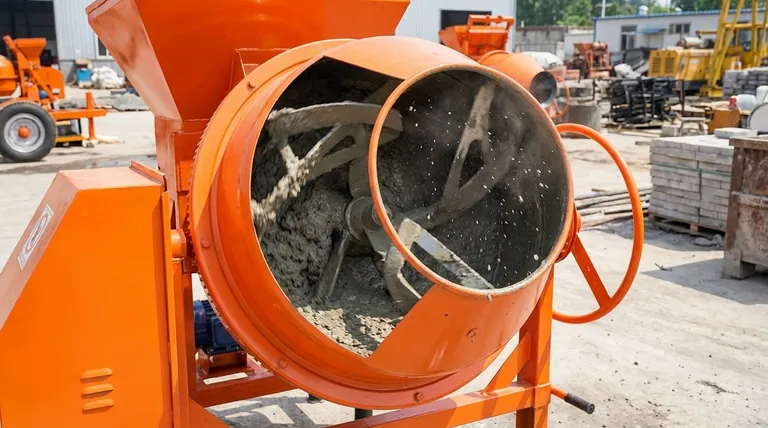
The internal blades are the primary actors in the mixing process. As the drum turns, these blades continuously lift material from the bottom of the pile and drop it back onto the top.
This action forces a constant intermingling of particles, preventing heavier aggregates from settling and ensuring the cement paste evenly coats every surface.
The Importance of Spiral Geometry
Most transit mixer drums feature a spiral blade design. This geometry is a dual-purpose engineering marvel.
During mixing, the spiral pushes material towards the back of the drum, enhancing the tumbling action. When the drum's rotation is reversed, the same spiral acts as an auger, efficiently guiding the finished concrete out for discharge.
Maintaining Workability During Transport
Efficiency isn't just about initial mixing; it's also about maintaining the concrete's quality until it's poured.
The slow, continuous rotation during transport keeps the mixture agitated. This prevents segregation of components and premature setting, ensuring the concrete remains workable and meets specifications upon arrival.
Beyond Mixing: Workflow and System Efficiency
A highly efficient drum is only one part of a larger process. The design of the entire machine, from loading to pouring, contributes to overall operational speed and effectiveness.
Integrating Loading and Transport
Modern designs, such as mixer buckets, streamline the entire workflow. By combining loading, mixing, and precise placement into a single attachment, they eliminate the need for separate machines and reduce total cycle time.
Precision in the Discharge Process
Efficiency is also measured in how little material and time are wasted.
Hydraulic-controlled discharge systems give operators precise command over the pour. This allows for quick and accurate concrete placement directly where it's needed, minimizing manual labor and cleanup.
Understanding the Design Trade-offs
While drum design is highly optimized, it also introduces specific constraints and potential failure points that are important to recognize.
Fixed Volume and Batch Size
The physical size of the drum dictates the maximum volume of concrete that can be produced in a single batch. This creates a hard limit on production capacity per cycle.
Constraints on Custom Mix Designs
The internal blade configuration is optimized for standard ratios of cement, water, and aggregates. This standardization ensures consistency but can reduce flexibility for highly specialized or custom concrete mixes that might require a different mixing action.
Potential System Bottlenecks
The drum's performance is dependent on the systems that feed it. Issues like clogging in the feeding tools, valve malfunctions, or a slow temporary storage device can create significant bottlenecks, negating the efficiency of the drum itself.
Making the Right Choice for Your Goal
The "best" drum design ultimately depends on your primary operational objective.
- If your primary focus is consistent, high-quality concrete: Prioritize designs with complex internal turbines and well-defined spiral blades that guarantee a homogenous mixture.
- If your primary focus is on-site speed and versatility: Look for integrated systems like mixer buckets that combine multiple steps into one streamlined process.
- If your primary focus is large-scale production: Ensure the drum capacity is correctly matched with a high-throughput feeding and discharge system to avoid workflow interruptions.
Ultimately, understanding the principles behind drum design empowers you to select the right tool and achieve a more reliable, durable, and efficient outcome for your project.
Summary Table:
| Drum Design Feature | Contribution to Efficiency |
|---|---|
| Internal Blades/Fins | Lifts and folds materials for a uniform, homogenous mix. |
| Spiral Geometry | Enhances mixing action and enables fast, controlled discharge. |
| Continuous Rotation | Prevents segregation and maintains workability during transport. |
Ready to boost your project's efficiency with a high-performance concrete mixer? GARLWAY specializes in construction machinery, offering robust concrete mixers, batching plants, and winches for contractors and construction companies globally. Our equipment is engineered for maximum mixing uniformity and workflow speed. Contact our experts today to find the perfect solution for your needs!
Visual Guide
Related Products
- Concrete Cement Mixer Machine Drum Mixer for Construction
- Belle Mixer Drum Self Loading Mortar Mixers JS3000
- Portable Concrete Mixer Machine Equipment for Mixing Concrete
- Construction Products Concrete Plant Machine Mixing Concrete Mixer
- JZC400 Mobile Small Concrete Mixer Cement Mixer Machine
People Also Ask
- What are the key advantages of using drum mixers in concrete mixing? Boost Volume & Efficiency on Your Site
- What are the key components that maintain concrete mix consistency in the drum? Ensure Uniform Quality from Plant to Site
- How do cement mixers enhance safety on construction sites? Reduce Strain, Hazards, and Accidents
- When was the first concrete mixer developed and by whom? Discover the 1900 Breakthrough
- What is the average lifespan of a concrete mixer? Maximize Your Equipment's Lifespan & ROI