
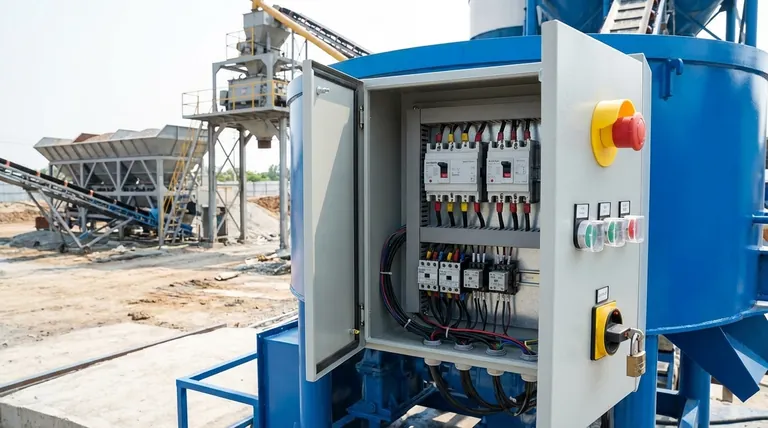
To ensure operational safety, the electrical control system of a twin-shaft forced concrete mixer incorporates several critical protective features. These include automatic switches and AC contactors that enable short-circuit protection, overload protection, and phase-loss protection, safeguarding both the equipment and the operator from electrical faults. Physical security is also addressed with a lockable control box door and protective shields over the control buttons.
The safety design of the mixer's control system is twofold: it actively protects the electrical components from damaging power faults while also physically preventing unauthorized or accidental operation by personnel.
Core Electrical System Protections
The primary function of the electrical safety system is to protect the mixer's motors and wiring from destructive electrical events. Each feature addresses a specific type of fault.
Preventing Catastrophic Failure: Short-Circuit Protection
A short circuit creates a path of very low resistance, causing a massive and instantaneous surge of current. Short-circuit protection, typically a circuit breaker or fuse, immediately cuts power to prevent overheating, fire, and catastrophic damage to the entire system.
Protecting the Motor: Overload Protection
An overload occurs when the motor draws too much current due to excessive mechanical load, such as a jam or mixing an overly dense batch. Overload protection monitors this current and will trip if it exceeds a safe level for a set period, preventing the motor from burning out.
Ensuring Stable Power: Phase-Loss Protection
Twin-shaft mixers often use three-phase motors for their power and efficiency. If one of the three power phases is lost, phase-loss protection deactivates the motor to prevent severe damage that can occur from running on incomplete power.
Operator and Access Safety
Beyond internal electrical protection, the system includes features designed to control who can use the machine and to prevent accidental activation.
Preventing Unauthorized Use: The Locked Control Box
The main control buttons are housed on a batching box door that is equipped with a lock. This physical barrier ensures that only authorized and trained personnel can access the controls and operate the mixer.
Avoiding Accidental Activation: Shielded Control Buttons
The start, stop, and other control buttons are covered with protective shields. This simple but effective measure prevents an operator from accidentally bumping a button and starting or stopping a cycle unintentionally.
Integrated Electromechanical Safety
The electrical system works in tandem with mechanical sensors to ensure the safe operation of the mixer's moving parts. These are crucial for preventing accidents during the loading and discharging phases.
Safe Material Loading: The Hoist Limit Switch
The feeding system's hoist uses a limit switch on the feeding track. This electrical switch automatically stops the hopper at the correct top and bottom positions, preventing it from over-traveling and causing mechanical damage or spillage.
Controlled Discharging: The Door Positioning Device
The discharge system is fitted with a positioning device to confirm the discharge door's status. This ensures the door is either fully open or fully sealed, preventing dangerous partial openings or material leakage during the mixing cycle.
Understanding the Limitations
While these features provide a robust safety net, they are not infallible. Their effectiveness depends on proper procedure and maintenance.
Reliance on Proper Maintenance
Safety components like switches, sensors, and breakers must be regularly inspected and maintained to ensure they are functional. A faulty limit switch or a disabled overload relay completely negates the intended protection.
Not a Substitute for Procedure
These features are designed as fail-safes, not as replacements for established safety protocols. Operators must still follow standard procedures like lock-out/tag-out during maintenance and never bypass a safety device that has been tripped.
Key Safety Priorities for Your Operation
Use this understanding to focus your team's safety and maintenance efforts.
- If your primary focus is equipment longevity: Emphasize responding to overload and phase-loss alerts, as these are direct indicators of mechanical strain or power supply issues that can destroy the motor.
- If your primary focus is operator safety: Prioritize training on access control, the function of button shields, and proper emergency stop procedures.
- If your primary focus is operational reliability: Ensure the electromechanical limit switches for the feeding and discharging systems are perfectly calibrated and regularly checked for wear.
A well-understood control system is the foundation of a safe and efficient mixing operation.
Summary Table:
| Safety Feature | Protection Type | Key Function |
|---|---|---|
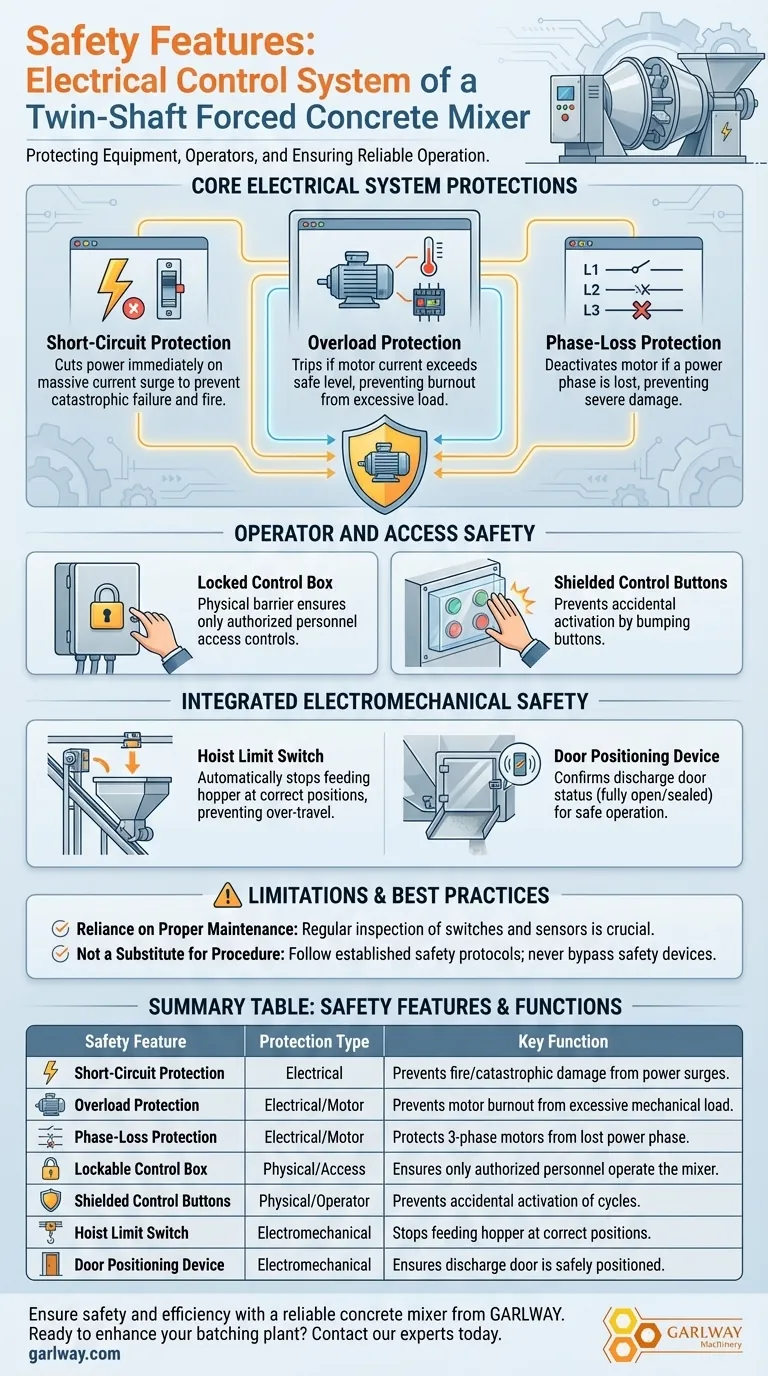
| Short-Circuit Protection | Electrical | Prevents fire and catastrophic damage from power surges. |
| Overload Protection | Electrical/Motor | Prevents motor burnout from excessive mechanical load. |
| Phase-Loss Protection | Electrical/Motor | Protects three-phase motors from damage due to lost power phase. |
| Lockable Control Box | Physical/Access | Ensures only authorized personnel can operate the mixer. |
| Shielded Control Buttons | Physical/Operator | Prevents accidental activation of start/stop cycles. |
| Hoist Limit Switch | Electromechanical | Automatically stops the feeding hopper at correct positions. |
| Door Positioning Device | Electromechanical | Ensures discharge door is fully open or sealed for safe operation. |
Ensure your construction site's safety and efficiency with a reliable concrete mixer from GARLWAY.
GARLWAY specializes in engineering robust construction machinery, including twin-shaft forced concrete mixers with comprehensive safety systems. Our mixers are designed to protect your operators and your investment, ensuring smooth, uninterrupted operation on your projects.
Ready to enhance your batching plant's safety and performance? Contact our experts today to discuss your specific requirements and find the perfect mixer solution for your company.
Visual Guide
Related Products
- JS500 Electric Cement Concrete Mixer for Sale
- Shaft Mixer Machine for Cement and Regular Concrete Mixing
- Portable Cement Mixer with Lift Concrete Machine
- HZS90 Large Multiquip Concrete Mixers for Construction
- HZS25 Best Cement Mixer for Quick Mix Concrete at Bunnings
People Also Ask
- What are the benefits of electric concrete mixers? Quiet, Clean, and Low-Maintenance Mixing
- What are the four factors to consider when selecting a concrete mixer? Optimize Your Construction Project
- What are the two main types of concrete mixers and their uses? Choose the Right Mixer for Your Project
- What is a concrete mixer used for? Achieve Consistent, High-Quality Concrete
- How can a concrete mixer be used to remove rust from metal parts? A Powerful, Large-Scale Cleaning Method





