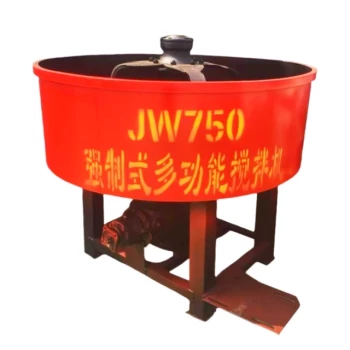
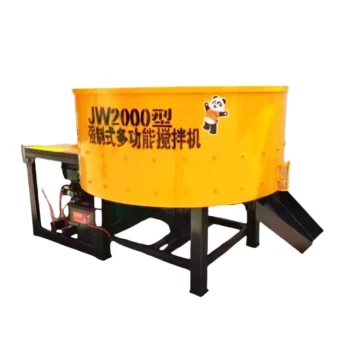
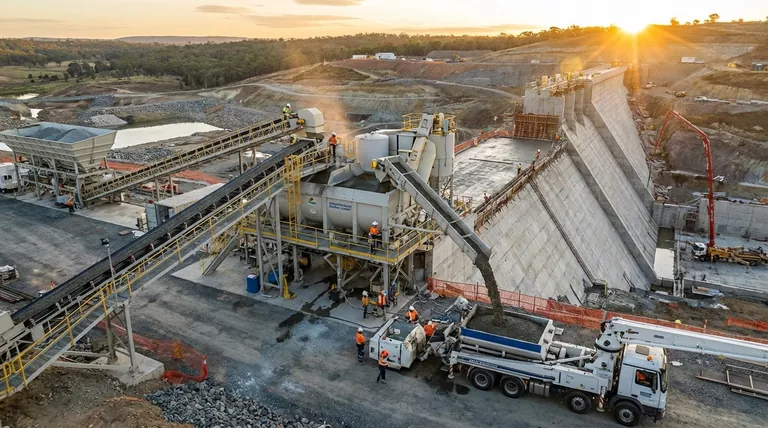
In short, continuous mixers are purpose-built for projects demanding a massive, uninterrupted supply of concrete. Their primary applications include the construction of large-scale structures like dams, bridges, tunnels, and high-rise buildings, as well as high-volume paving for roads and infrastructure.
The decision to use a continuous mixer is driven by the need for operational efficiency at scale. It's chosen when the project's success depends less on producing varied, small batches and more on a relentless, consistent flow of material.
The Core Principle: Uninterrupted Production
To understand the applications, you first need to grasp the fundamental operational difference between continuous and batch mixers.
How They Work
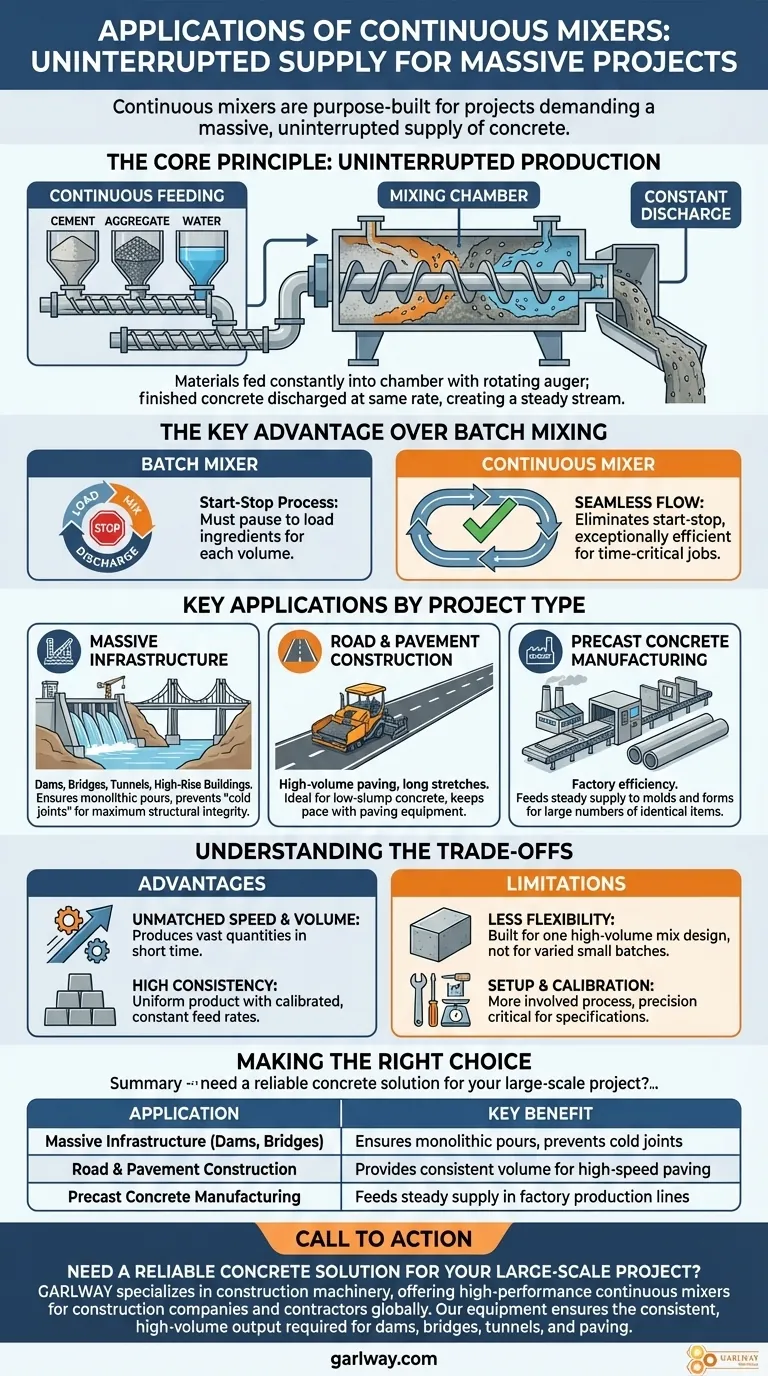
A continuous mixer does not operate in distinct cycles. Instead, materials like cement, aggregate, and water are fed constantly from hoppers into the system, often using screw feeders or augers.
The mixing occurs as the materials travel through a chamber, typically a trough with a rotating auger or mixing screw.
The finished concrete is discharged at the same rate the raw materials are fed in, creating a steady, unbroken stream of product.
The Key Advantage Over Batch Mixing
Unlike batch mixers, which must stop to load ingredients for each specific volume, continuous mixers eliminate this start-stop process entirely.
This single difference makes them exceptionally efficient for jobs where any pause in concrete supply would be detrimental to the project's timeline and structural integrity.
Key Applications by Project Type
The operational model of a continuous mixer makes it the ideal choice for several distinct categories of work.
Massive Infrastructure Projects
For structures like dams, large bridges, tunnels, and skyscrapers, the pour is often a critical, continuous event.
Stopping a pour midway can create "cold joints," which are planes of weakness in the final structure. A continuous mixer ensures a monolithic pour, which is essential for maximum strength and durability.
Road and Pavement Construction
Paving long stretches of roadway requires an enormous volume of concrete delivered quickly and consistently.
Continuous mixers are ideal for this task, especially for producing low-slump concrete, which is a stiffer mix commonly used in paving applications. The mixer can keep pace with the paving equipment without interruption.
Precast Concrete Manufacturing
In a factory setting, efficiency is paramount. Precast operations that produce large numbers of identical items like panels, pipes, or blocks benefit from a continuous production line.
A continuous mixer acts as the heart of this line, feeding a steady supply of concrete to molds and forms without delay.
Understanding the Trade-offs
While powerful, continuous mixers are not a universal solution. Understanding their limitations is key to making an informed decision.
Advantage: Unmatched Speed and Volume
The primary benefit is the ability to produce a vast quantity of concrete in a short amount of time. For high-volume projects, their output simply cannot be matched by batch systems.
Advantage: High Consistency
Once calibrated, a continuous mixer produces a highly uniform product. Since the feed rates are constant, every portion of the concrete discharged is virtually identical, ensuring consistent quality across the entire project.
Limitation: Less Flexibility
These systems are built for one job: producing a single mix design at high volume. They are not well-suited for projects requiring multiple, distinct concrete mixes in small quantities throughout the day.
Limitation: Setup and Calibration
Properly setting up and calibrating the material feed rates on a continuous mixer is a more involved process than with a simple batch mixer. Precision is critical to ensure the final product meets design specifications.
Making the Right Choice for Your Project
Selecting the appropriate mixer comes down to your project's core requirements.
- If your primary focus is a massive, non-stop pour for structural integrity: The continuous mixer is the correct and often only viable choice.
- If your primary focus is project speed across a large area like paving: A continuous mixer provides the volume and efficiency needed to keep the project moving forward.
- If your primary focus is creating multiple custom concrete mixes for varied applications on a single site: A traditional batch mixer offers the flexibility you need.
Ultimately, choosing a continuous mixer is a strategic decision to prioritize volume and consistency above all else.
Summary Table:
| Application | Key Benefit |
|---|---|
| Massive Infrastructure (Dams, Bridges) | Ensures monolithic pours, prevents cold joints |
| Road & Pavement Construction | Provides consistent volume for high-speed paving |
| Precast Concrete Manufacturing | Feeds steady supply in factory production lines |
Need a reliable concrete solution for your large-scale project? GARLWAY specializes in construction machinery, offering high-performance continuous mixers for construction companies and contractors globally. Our equipment ensures the consistent, high-volume output required for dams, bridges, tunnels, and paving. Contact us today to discuss how our mixers can enhance your project's efficiency and structural integrity!
Visual Guide
Related Products
- JS1000 Volumetric Concrete Mortar Mixer for Sale Skid Steer Cement Mixer
- HZS25 Best Cement Mixer for Quick Mix Concrete at Bunnings
- JDY350 Electric Hydraulic Mortar Mud Concrete Mixer
- Portable Concrete Mixer Machine Equipment for Mixing Concrete
- Concrete Cement Mixer Machine Drum Mixer for Construction
People Also Ask
- What is the basic working principle of volumetric concrete mixers? On-Demand Mixing for Zero Waste
- What are the advantages of using volumetric mixers for small concrete jobs? Save Costs and Gain On-Site Control
- What are the advantages of volumetric concrete mixers compared to drum mixers? Achieve On-Demand Mixing & Zero Waste
- What are some innovations in volumetric concrete mixers? Boost Efficiency with On-Demand Production
- Why do volumetric mixers provide better ROI? Maximize Profit with On-Demand Concrete Production