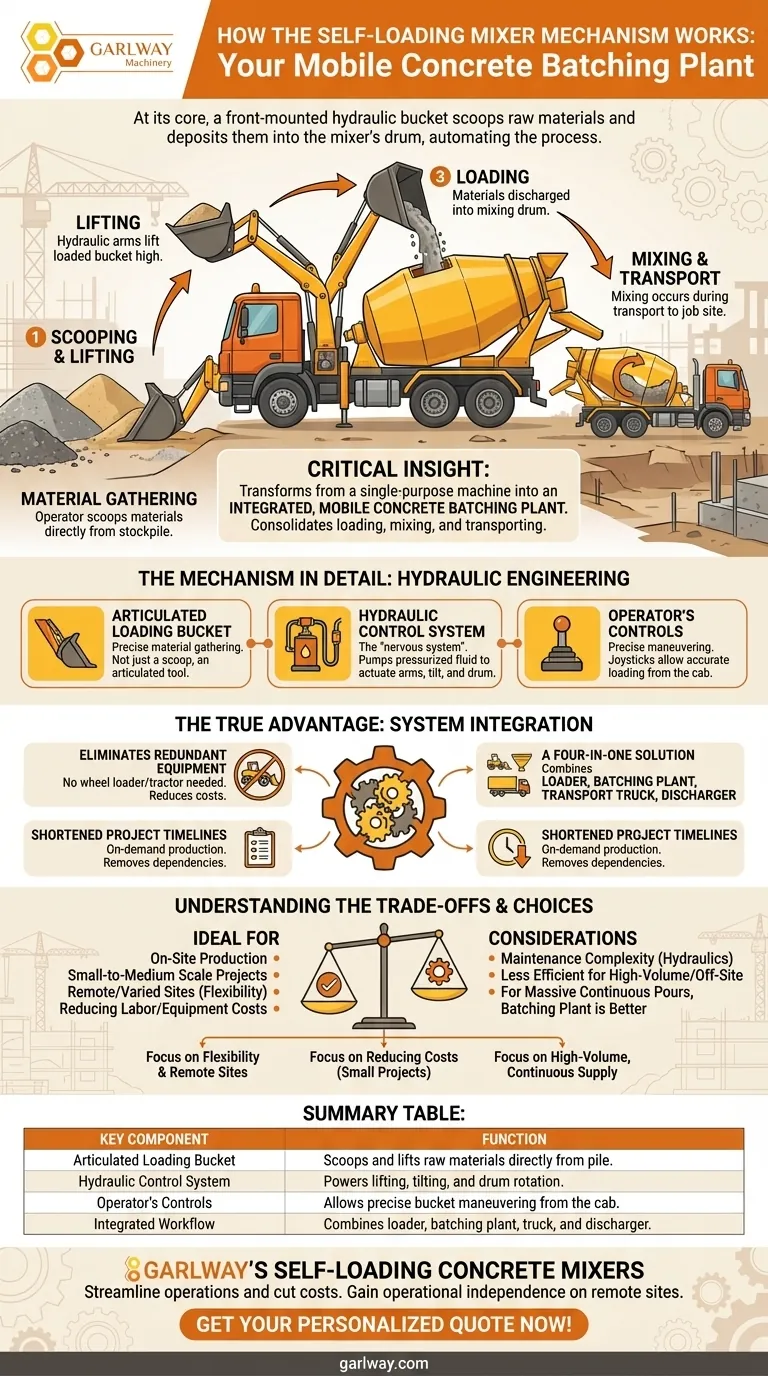
At its core, the self-loading mechanism works by using a front-mounted, hydraulically controlled bucket to scoop raw materials like sand and aggregate directly from a pile. The operator then maneuvers this bucket to lift and deposit the materials into the mixer's rotating drum, automating the entire loading process without needing separate machinery.
The critical insight is that the self-loading mechanism isn't just a feature; it transforms the mixer from a single-purpose machine into an integrated, mobile concrete batching plant. This consolidation of loading, mixing, and transporting is its fundamental advantage.
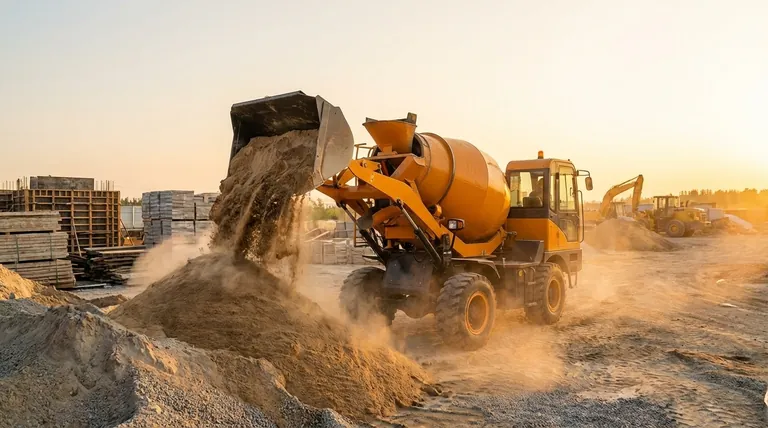
How the Mechanism Functions
The self-loading system is a masterpiece of hydraulic engineering, designed for efficiency and control. It consists of a few key interconnected parts that work in unison.
The Articulated Loading Bucket
The most visible component is the loading bucket at the front of the vehicle. This is not a simple scoop; it's an articulated piece of equipment designed for precise gathering of materials.
The Hydraulic Control System
This is the "nervous system" of the entire operation. A hydraulic pump sends pressurized fluid through a series of hoses to cylinders that actuate the mechanical components. This system powers the lifting arms, bucket tilt, and drum rotation.
The Operator's Controls
Inside the cab, the operator uses a set of joysticks or levers. These controls allow for precise maneuvering of the bucket, ensuring accurate loading of materials into the mixing drum.
The Process in Action, Step-by-Step
Understanding the workflow reveals the system's true efficiency. The entire cycle is a seamless, operator-led process.
Step 1: Material Gathering
The operator drives the mixer directly to the stockpiles of sand, aggregate, and cement.
Step 2: Scooping and Lifting
Using the hydraulic controls, the operator lowers the bucket and scoops the required amount of raw material. This action is similar to operating a standard front-end loader.
Step 3: Loading into the Drum
The hydraulic arms then lift the loaded bucket high over the cab and tilt it forward, discharging the materials directly into the opening of the mixing drum.
Step 4: Automated Mixing and Transport
This process is repeated for each material. Once all components are inside, the machine begins mixing the concrete as it travels to the exact location where it is needed on the job site.
The True Advantage: System Integration
The genius of the self-loading mechanism is how it consolidates four distinct tasks into one automated process.
Eliminating Redundant Equipment
The most significant benefit is the elimination of a separate wheel loader or tractor for loading the mixer. This immediately reduces equipment and personnel costs.
A Four-in-One Solution
The machine effectively combines the functions of a loader, a batching plant, a transport truck, and a discharger. This drastically streamlines the entire concrete production workflow.
Shortened Project Timelines
By removing logistical dependencies on separate machines, project timelines can be significantly shortened. Concrete is produced on-demand, exactly when and where it's needed.
Understanding the Trade-offs
While highly efficient for its intended purpose, this integrated system presents certain considerations.
Best for On-Site Production
These mixers are designed for producing and placing concrete on-site. They are less efficient for supplying large volumes to multiple off-site locations compared to a traditional transit mixer fleet.
Maintenance of Integrated Systems
The hydraulic system that makes the machine so versatile also adds a layer of maintenance complexity. A single hydraulic issue can impact loading, mixing, and transport functions.
Batch Volume Considerations
Self-loading mixers are ideal for small-to-medium scale projects. For massive, continuous pours, a dedicated, high-capacity batching plant remains the more suitable choice.
Making the Right Choice for Your Goal
To determine if this mechanism suits your needs, consider your project's primary objective.
- If your primary focus is flexibility on remote or varied job sites: The self-contained, all-in-one nature of this mechanism provides unmatched operational independence.
- If your primary focus is reducing labor and equipment costs on smaller projects: This system directly replaces the need for a separate loader and its operator, offering significant financial savings.
- If your primary focus is high-volume, continuous concrete supply: A traditional setup with a dedicated batching plant and transit mixers will likely offer greater throughput.
Ultimately, the self-loading mechanism transforms a simple mixer into an autonomous, on-demand concrete production unit.
Summary Table:
| Key Component | Function |
|---|---|
| Articulated Loading Bucket | Scoops and lifts raw materials (sand, aggregate) directly from a pile. |
| Hydraulic Control System | Powers the lifting arms, bucket tilt, and drum rotation with pressurized fluid. |
| Operator's Controls | Allows precise maneuvering of the bucket from the cab for accurate loading. |
| Integrated Workflow | Combines the roles of a loader, batching plant, transport truck, and discharger. |
Ready to streamline your concrete operations and cut costs?
GARLWAY's self-loading concrete mixers are engineered for construction companies and contractors who need maximum flexibility and efficiency. By integrating the entire concrete production process into a single, powerful machine, we help you:
- Eliminate the need for separate loading equipment, reducing machinery and labor costs.
- Produce concrete on-demand, directly at the job site, shortening project timelines.
- Gain operational independence on remote or varied sites.
Contact GARLWAY today to find the perfect self-loading solution for your project's scale and needs. Let's discuss how our machinery can bring unparalleled efficiency to your work.
Get Your Personalized Quote Now!
Visual Guide
Related Products
- Skid Steer Self Loading Concrete Mixers for Construction
- Belle Mixer Drum Self Loading Mortar Mixers JS3000
- Portable Cement Mixer with Lift Concrete Machine
- Portable Concrete Mixer Machine Equipment for Mixing Concrete
- JW1000 Mobile Cement Mixer Concrete Mixer Truck and Batching Plant
People Also Ask
- How does the control system improve production efficiency in a self loading concrete mixer? Automate Mixing for Speed & Quality
- What is the purpose of keeping the drum rotating during transportation in a self loading concrete mixer? Ensure Quality & Consistency
- How does the weighing process work in a self loading concrete mixer? Achieve Precise, On-Site Concrete Batching
- What components are involved in the loading process of a self loading concrete mixer? A Guide to the Key Systems
- How should materials be loaded into a self-loading concrete mixer? Master the Step-by-Step Process