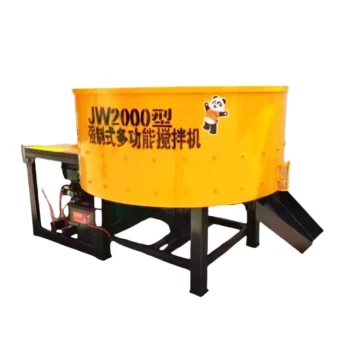
Before every shift, the essential pre-operation check for a mixing blade is to run the mixer idle. You must operate the machine empty for two to three minutes to audibly and visually confirm that the blades are secure and functioning correctly before introducing any materials.
This brief idle run is more than a routine task; it is a critical diagnostic test for mechanical integrity and a foundational safety protocol. Proper execution requires not only observing the machine but also enforcing a strict safety zone to prevent injury from potential equipment failure.
The Pre-Operation Protocol
A consistent pre-operation check is the first line of defense against mechanical failure and workplace accidents. It establishes a baseline for normal operation before any load is applied to the system.
The Idle Run Test
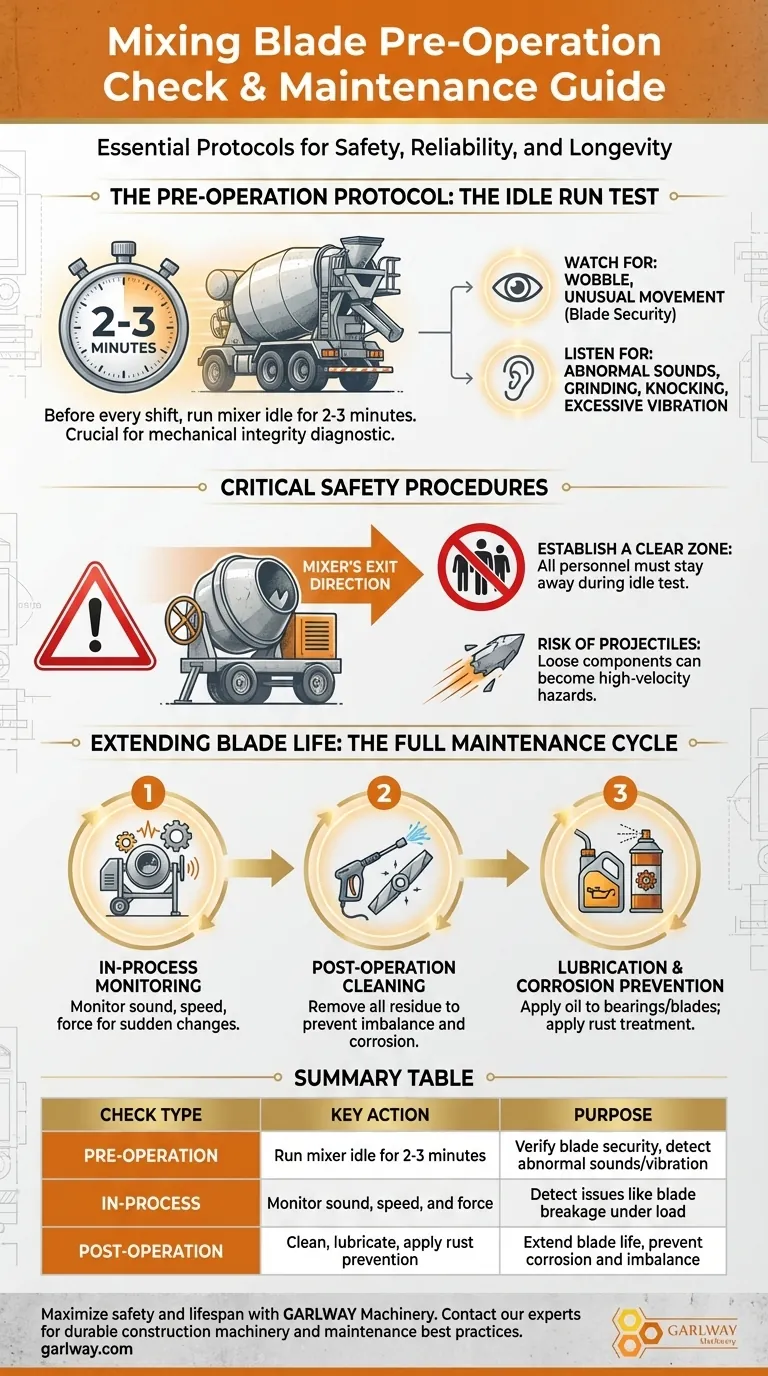
Before the start of each shift, run the mixer completely empty for two to three minutes. This allows the components to move freely without the stress of a workload.
This duration is long enough to reveal issues like imbalance, looseness, or bearing problems that might not be apparent from a simple visual inspection.
What to Look and Listen For
The purpose of the idle run is to verify that the mixing blades are secure. Watch for any wobble or unusual movement in the blade assembly.
Listen for any abnormal sounds, such as grinding, knocking, or excessive vibration. These are often the first indicators of a loose component or impending mechanical failure.
Critical Safety Procedures
Executing the pre-operation check correctly is as much about personal safety as it is about mechanical assessment. The kinetic energy of a mixer is significant, even when idle.
Establish a Clear Zone
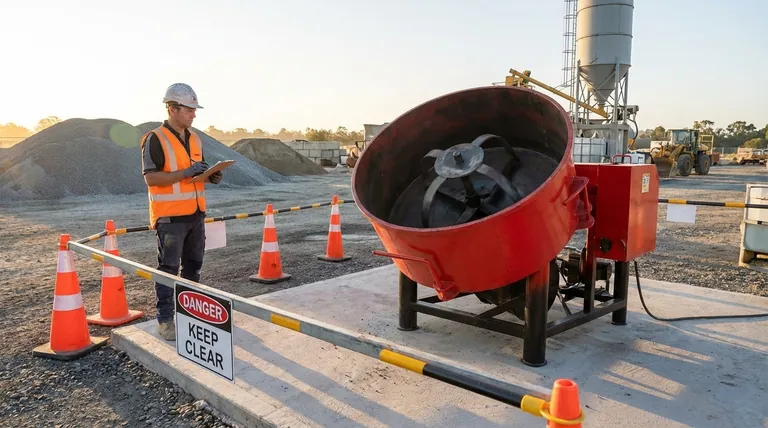
All maintenance and construction personnel must stay away from the mixer's exit direction during the idle test. This area is the most likely trajectory for any component that might break loose.
The Risk of Projectiles
If a blade or fastening component is not secure, the rotational force of the mixer can easily turn it into a high-velocity projectile. Enforcing a clear zone is a non-negotiable step to prevent serious injury.
Extending Blade Life: The Full Maintenance Cycle
While the pre-operation check is critical for immediate safety, a comprehensive maintenance routine ensures long-term reliability and performance. This includes monitoring during and after each use.
In-Process Monitoring
During the actual mixing process, operators should remain attentive to the sound, speed, and force of the blade's operation. Any sudden change can indicate a problem, such as blade breakage under load.
Post-Operation Cleaning
After every use, the mixing blades must be thoroughly cleaned to remove all residue. Material buildup can cause imbalance, accelerate corrosion, and place unnecessary strain on the motor and bearings.
Lubrication and Corrosion Prevention
Apply lubricating oil between the mixer bearings and the blades, as well as between the blades and their shanks. This reduces friction and wear on critical moving parts.
Finally, apply appropriate rust prevention treatments directly to the blades. This is crucial for preventing the corrosion that weakens the metal and leads to premature failure.
How to Apply This to Your Goal
Your maintenance focus will dictate which part of this process you emphasize most.
- If your primary focus is operator safety: Enforcing the "clear zone" during the pre-operation idle run is the single most important action to prevent injury.
- If your primary focus is equipment longevity: Consistent post-operation cleaning, lubrication, and rust prevention will provide the greatest return on investment.
- If your primary focus is operational reliability: Combining the pre-shift idle run with active in-process monitoring gives you the earliest possible warning of a potential failure.
A disciplined approach to these checks transforms routine procedure into a guarantee of both safety and performance.
Summary Table:
| Check Type | Key Action | Purpose |
|---|---|---|
| Pre-Operation | Run mixer idle for 2-3 minutes | Verify blade security, detect abnormal sounds/vibration |
| In-Process | Monitor sound, speed, and force | Detect issues like blade breakage under load |
| Post-Operation | Clean, lubricate, apply rust prevention | Extend blade life, prevent corrosion and imbalance |
Maximize the safety and lifespan of your construction equipment. A proper pre-operation check is just the start. GARLWAY specializes in durable construction machinery, including robust concrete mixers and batching plants designed for demanding job sites. Our equipment is built to support your rigorous maintenance protocols, helping contractors and construction companies globally achieve peak operational reliability. Contact our experts today to find the perfect mixing solution for your project's needs and learn more about our maintenance best practices.
Visual Guide
Related Products
- Portable Concrete Mixer Machine Equipment for Mixing Concrete
- Construction Products Concrete Plant Machine Mixing Concrete Mixer
- Commercial Construction Mixer Machine for Soil Cement Mixing Concrete
- Portable Electric Concrete Mixer Machine for Cement Mixing
- Hydraulic Concrete Mixer Machine Cement Mixing Equipment for Mixture Concrete
People Also Ask
- Why is it necessary to use a portable concrete mixer? Gain Total Control & Efficiency
- How much concrete can you pour with a portable mixer? Find the Perfect Fit for Your Project
- What types of projects are portable concrete mixers suitable for? Ideal for DIY & Small-Scale Construction
- How much does a portable concrete mixer hold? A Guide to Choosing the Right Capacity
- What types of portable concrete mixers exist? Find the Perfect Mixer for Your Project