
For pharmaceutical applications, rotary drum mixers are highly specialized pieces of equipment used for gently blending powders and executing complex, multi-step processes like low-temperature vacuum drying. They are essential for manufacturing everything from prescription drugs and generic medications to clinical nutrition powders, all while preserving the integrity of delicate active pharmaceutical ingredients (APIs).
The true value of a rotary drum mixer in pharmaceuticals lies not just in its ability to blend, but in its capacity to serve as a single, contained, and highly controlled environment for multiple processes like drying, coating, and thermal management, which is critical for sensitive and high-value materials.
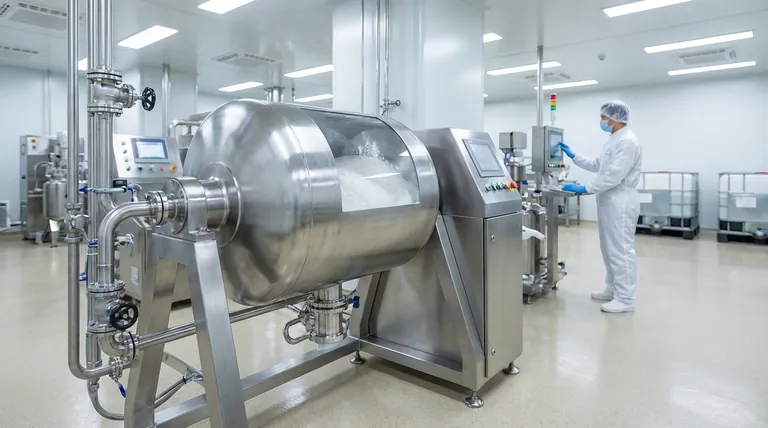
The Core Principle: Gentle and Precise Blending
In pharmaceuticals, maintaining the physical structure of a powder is often as important as ensuring its chemical purity. Rotary drum mixers are engineered specifically to meet this need through a low-impact process.
The Mixing Mechanism
Ingredients are introduced into the drum through a top inlet, typically using gravity. The drum then rotates at a very slow speed.
This gentle rotation, combined with internal flights or chutes, continuously folds, cuts, and turns the material. This action ensures a homogenous mixture without the high shear forces that could damage fragile particles or crystals.
Preserving Material Integrity
The primary advantage of this low-energy mechanism is the preservation of delicate powder structures. For many APIs, aggressive mixing can lead to particle attrition, altering dissolution rates and bioavailability. The rotary drum's action avoids this degradation.
Contained Discharge
Once blended, the final product is discharged either by gravity through a gate or via a discharge auger. This process is fully contained, minimizing operator exposure and preventing contamination of the product.
Beyond Blending: Specialized Pharmaceutical Processes
Modern pharmaceutical manufacturing often requires more than simple mixing. Rotary drum mixers can be customized to perform several critical process steps within the same vessel, improving efficiency and reducing product handling.
Low-Temperature Vacuum Drying
A key application is the vacuum drying of APIs at low temperatures. This is vital for heat-sensitive compounds that would be destroyed by conventional high-temperature drying methods, allowing for the removal of solvents without compromising the product.
Coating and Impregnation
Equipped with liquid injection systems, these mixers can uniformly coat powders or impregnate granular materials. This is used for applying functional coatings, adding liquid active ingredients, or agglomerating fine powders.
Advanced Thermal Management
Precise temperature control is non-negotiable. Mixers can be fitted with heating and cooling jackets that use steam, water, or thermal oil. For cryogenic applications, liquid nitrogen can be used to achieve extremely low temperatures.
Atmosphere Control
Many pharmaceutical processes must occur in a controlled atmosphere to prevent oxidation or unwanted reactions. Rotary drum mixers can be designed for pressure or vacuum operation, allowing for inert gas blanketing or processing under specific atmospheric conditions.
Meeting Stringent Pharmaceutical Standards
The design of equipment for pharmaceutical use is heavily governed by regulations focusing on safety, cleanliness, and process validation.
Hygienic Design (WIP/CIP)
To prevent cross-contamination between batches, mixers are available with Wash-in-Place (WIP) and Clean-in-Place (CIP) systems. These automated cleaning systems ensure the vessel is thoroughly cleaned and sanitized without manual disassembly.
Handling Hazardous Materials (ATEX)
Many pharmaceutical powders and solvents can create explosive atmospheres. ATEX compliance ensures the mixer is designed with explosion-proof components, making it safe for use in these hazardous environments.
Operator Accessibility and Safety
Features like extra-large, easy-opening doors and retractable inlet/outlet systems (QSR) simplify inspection, manual cleaning, and maintenance, enhancing both operational efficiency and operator safety.
Understanding the Trade-offs
While highly effective, it's important to understand the operational context for rotary drum mixers to determine if they are the right fit.
Batch-Oriented Workflow
The fundamental design of a rotary drum mixer is best suited for batch processing. While continuous mixing is an available feature, the core strength lies in processing a single, defined batch through multiple steps in one vessel.
Low-Shear Limitations
The gentle mixing action that protects delicate particles also means this equipment is not suitable for applications requiring high shear. It will not effectively break down hard agglomerates or disperse certain thick pastes.
Making the Right Choice for Your Application
Selecting the correct mixer configuration depends entirely on your specific process goals.
- If your primary focus is preserving delicate API crystal structures: The inherent low-shear, gentle tumbling action of a rotary drum mixer is its most significant advantage.
- If your primary focus is multi-step processing in a single vessel: Seek a customized unit with features for vacuum drying, liquid injection, and precise thermal control.
- If your primary focus is meeting strict cGMP and operator safety standards: Prioritize equipment with validated CIP systems, full material traceability, and ATEX certification if handling flammable materials.
Ultimately, choosing the right rotary drum mixer configuration empowers you to achieve superior product quality and process efficiency in a demanding regulatory environment.
Summary Table:
| Application | Key Function | Benefit |
|---|---|---|
| Gentle Blending | Low-shear tumbling action | Preserves delicate API crystal structures |
| Vacuum Drying | Low-temperature solvent removal | Protects heat-sensitive compounds |
| Powder Coating | Uniform liquid injection | Enables agglomeration and functional coating |
| cGMP Compliance | CIP/WIP systems & full traceability | Ensures batch safety and prevents contamination |
Optimize Your Pharmaceutical Powder Processing with GARLWAY
Are you a pharmaceutical manufacturer or contractor seeking to improve the efficiency and quality of your powder blending, drying, or coating processes? GARLWAY specializes in engineering robust and compliant construction and processing machinery, including customized mixing solutions.
We can help you achieve:
- Superior Product Integrity: Our equipment designs prioritize gentle handling to protect your valuable and sensitive active ingredients.
- Streamlined Multi-Step Processing: Combine blending, drying, and coating in a single, contained vessel to reduce handling and increase efficiency.
- Full Regulatory Compliance: Ensure your operations meet stringent cGMP, ATEX, and other industry standards.
Contact our experts today to discuss how a tailored rotary drum mixer can solve your specific pharmaceutical manufacturing challenges.
Get a Custom Quote & Technical Support
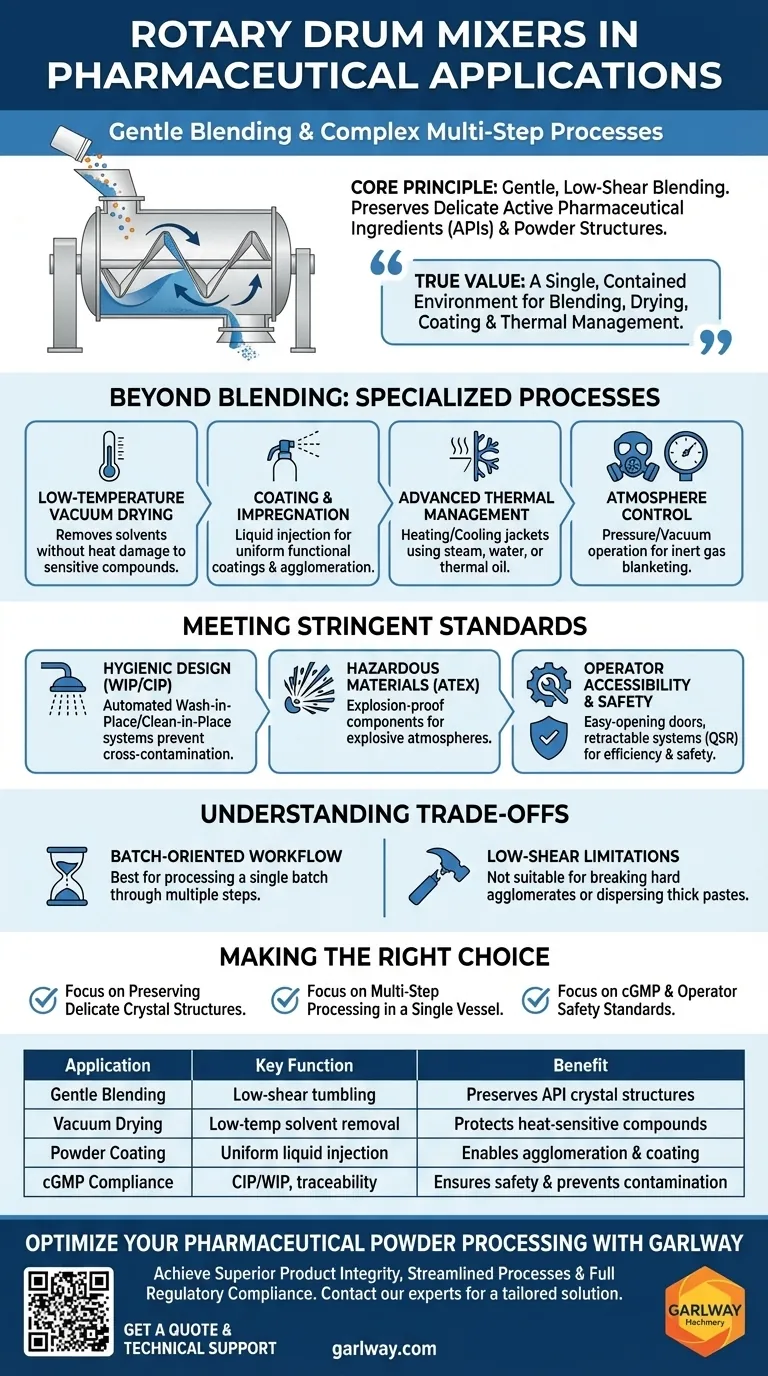
Visual Guide
Related Products
- Belle Mixer Drum Self Loading Mortar Mixers JS3000
- Concrete Cement Mixer Machine Drum Mixer for Construction
People Also Ask
- What are the features of mobile transporting in a self loading mixer? Boost On-Site Efficiency
- Why is timely cleaning important for a self loading mixer? Prevent Costly Downtime and Mix Failure
- How is discharging accomplished in a self loading mixer? Master Precise Concrete Placement
- What is the purpose of keeping the drum rotating during transportation in a self loading concrete mixer? Ensure Quality & Consistency
- What components are involved in the loading process of a self loading concrete mixer? A Guide to the Key Systems

