To improve a winch setup, the most critical modifications involve correcting the system's geometry and ensuring the power supply is robust. Key adjustments include reversing the drum rotation so the line feeds over the top, removing unnecessary intermediate rollers, and increasing the distance and height between the winch and the first roller to promote even spooling.
The core principle is to treat your winch not as a single component, but as an integrated system. Optimal performance comes from perfecting the geometry of the line feed and ensuring the power system (whether hydraulic or electric) can handle the load without failure.
Optimizing Line Feed and Spooling Geometry
A significant number of winch problems, especially uneven line stacking and binding, stem from poor geometry. The path the line, or rode, takes from the bow roller (or fairlead) to the drum is the most critical factor to address.
The "Over the Top" Principle
Feeding the line over the top of the winch drum, rather than from underneath, is a foundational improvement. This orientation provides a better approach angle for the line, which naturally encourages it to lay more evenly across the drum during retrieval.
The Critical Role of Distance and Height
For optimal spooling, the winch should be positioned a significant distance back from the first guide, such as a bow roller. One recommendation is a direct distance of approximately 980mm.
A more general principle, similar to a fishing reel, is to set the winch back and elevate it by 3-4 feet. This distance gives the line enough unsupported length to "sweep" from side to side, allowing it to self-distribute across the full width of the drum instead of piling up in the center.
Eliminating Unnecessary Components
The recommendation to remove an intermediate roller points to a key concept: simplicity reduces points of failure. Every roller or guide adds friction and a potential point of misalignment. A clean, direct path from the primary bow roller to the winch is almost always the most efficient and reliable setup.
Addressing Power and Control Deficiencies
Once the geometry is correct, you must ensure the system has the power and control to function under load. This applies to both hydraulic and electric winch systems.
For Hydraulic Systems: Boosting Performance
If your hydraulic winch feels underpowered or slow, the issue often lies with the fluid supply. Consider upgrading to a larger pump for increased flow and an oversized reservoir to better manage heat. Additionally, installing a smaller diameter pulley on the pump can increase its RPMs, further boosting performance.
For Electric Systems: Diagnosing the Root Cause
A melted component, such as a control switch, is a serious symptom of a deeper electrical problem. Using jumper cables is a temporary field fix, not a solution. The failure indicates that the component was not rated for the amperage being drawn by the winch motor.
This is likely caused by undersized wiring, a failing solenoid, or a winch motor working too hard due to mechanical binding. Simply replacing the switch without diagnosing the root cause will only lead to another failure.
Understanding the Trade-offs
Implementing these improvements involves practical considerations and compromises.
Space and Structural Constraints
The ideal winch placement—set back and elevated by several feet—is not always possible due to vehicle or vessel design. This modification often requires significant fabrication and reinforcement to ensure the mounting point can withstand the immense forces of winching.
Cost vs. Reliability
Upgrading a hydraulic pump, installing a larger reservoir, or rewiring an electric winch with heavy-gauge cable and high-amperage solenoids is a significant investment. The trade-off is between the upfront cost and the long-term reliability and safety of having a system that will not fail under a critical load.
How to Apply This to Your Project
Your specific modifications should be prioritized based on the problems you are experiencing.
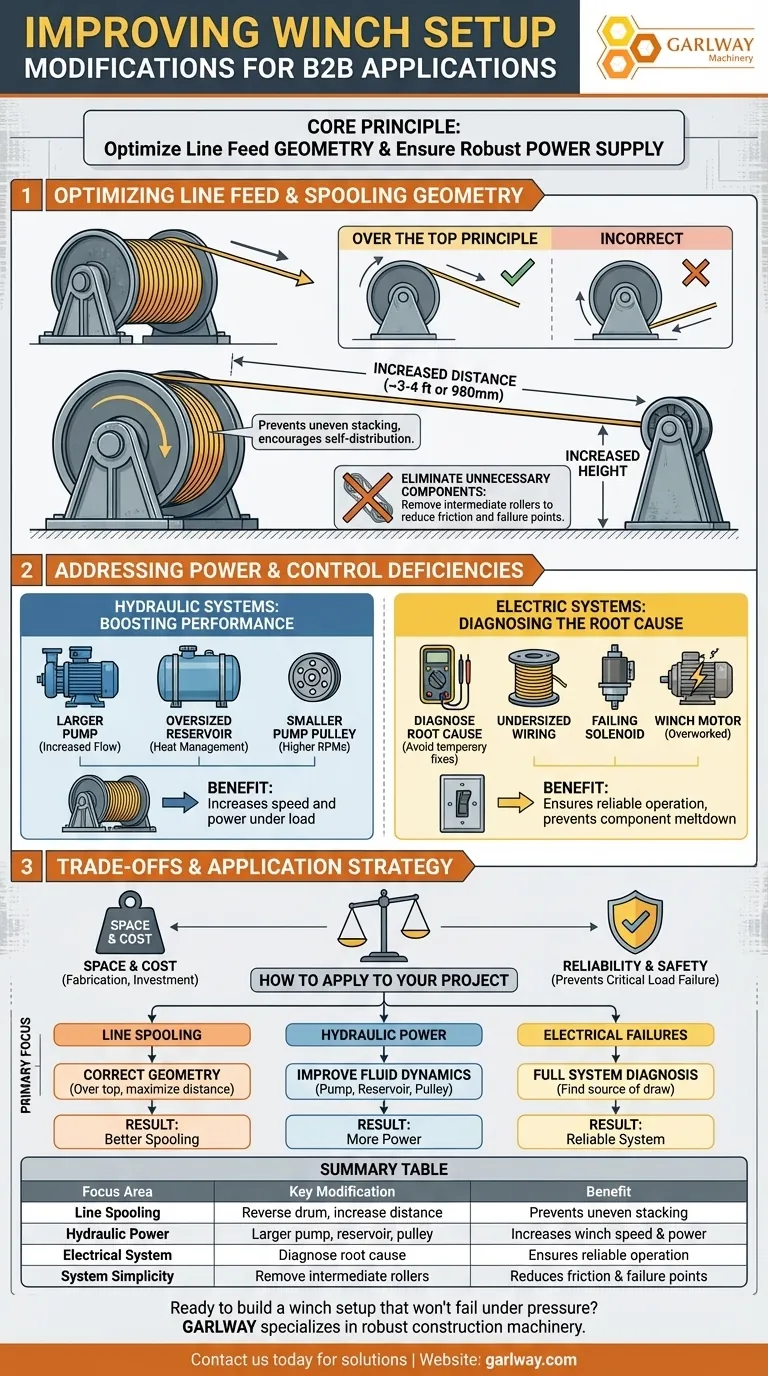
- If your primary focus is fixing poor line spooling: Start by correcting the system geometry—ensure an over-the-top feed and maximize the distance and elevation between the winch and the bow roller.
- If your primary focus is increasing hydraulic power: Your solution lies in improving fluid dynamics by upgrading the pump, reservoir, and potentially the pump drive pulley.
- If your primary focus is resolving electrical failures: You must perform a full system diagnosis to find the source of the excessive current draw before replacing any single failed component.
By methodically addressing both the mechanical geometry and the power system, you can build a winch setup that is both powerful and exceptionally reliable.
Summary Table:
| Focus Area | Key Modification | Benefit |
|---|---|---|
| Line Spooling | Reverse drum to feed over the top; increase distance to bow roller (~980mm or 3-4 ft) | Prevents uneven stacking and binding |
| Hydraulic Power | Upgrade to larger pump, oversized reservoir, smaller pump pulley | Increases winch speed and power under load |
| Electrical System | Diagnose root cause of failures (e.g., undersized wiring, faulty solenoid) | Ensures reliable operation and prevents component meltdown |
| System Simplicity | Remove unnecessary intermediate rollers | Reduces friction and points of failure |
Ready to build a winch setup that won't fail under pressure? GARLWAY specializes in construction machinery, offering robust winches, concrete mixers, and batching plants for construction companies and contractors globally. Our expertise ensures your equipment is powerful, reliable, and tailored to your needs. Contact us today to discuss your project and get a solution that delivers!
Visual Guide
Related Products
- Warn Winch Windlass Boat Trailer Winch
- Electric and Hydraulic Winch for Heavy Duty Applications
- Small Electric Winch 120V and 240V for Compact Applications
- 12000 lb Electric Boat Trailer Winch with Windlass Anchor Warn
- Quick Windlass Portable Winch for Truck and Boat Best Boat Winch
People Also Ask
- What are the main components of a boat trailer winch? A Guide to Safe & Efficient Boat Loading
- What factors should be considered when choosing a boat trailer winch? Ensure Safe and Effortless Boat Loading
- What is the purpose of boat trailer winches? Safely and Efficiently Load Your Boat
- What are the two main types of boat trailer winches? Manual vs. Electric Explained
- How often should a boat trailer winch be replaced? Your Guide to Safety and Longevity