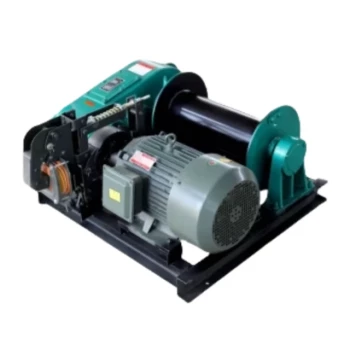
For long-duration winching sessions, hydraulic and Power Take-Off (PTO) winches are the definitive choice. Unlike electric models that are limited by battery life and heat buildup, these systems are powered directly by the vehicle's running engine, allowing them to operate continuously without risk of overheating or power depletion.
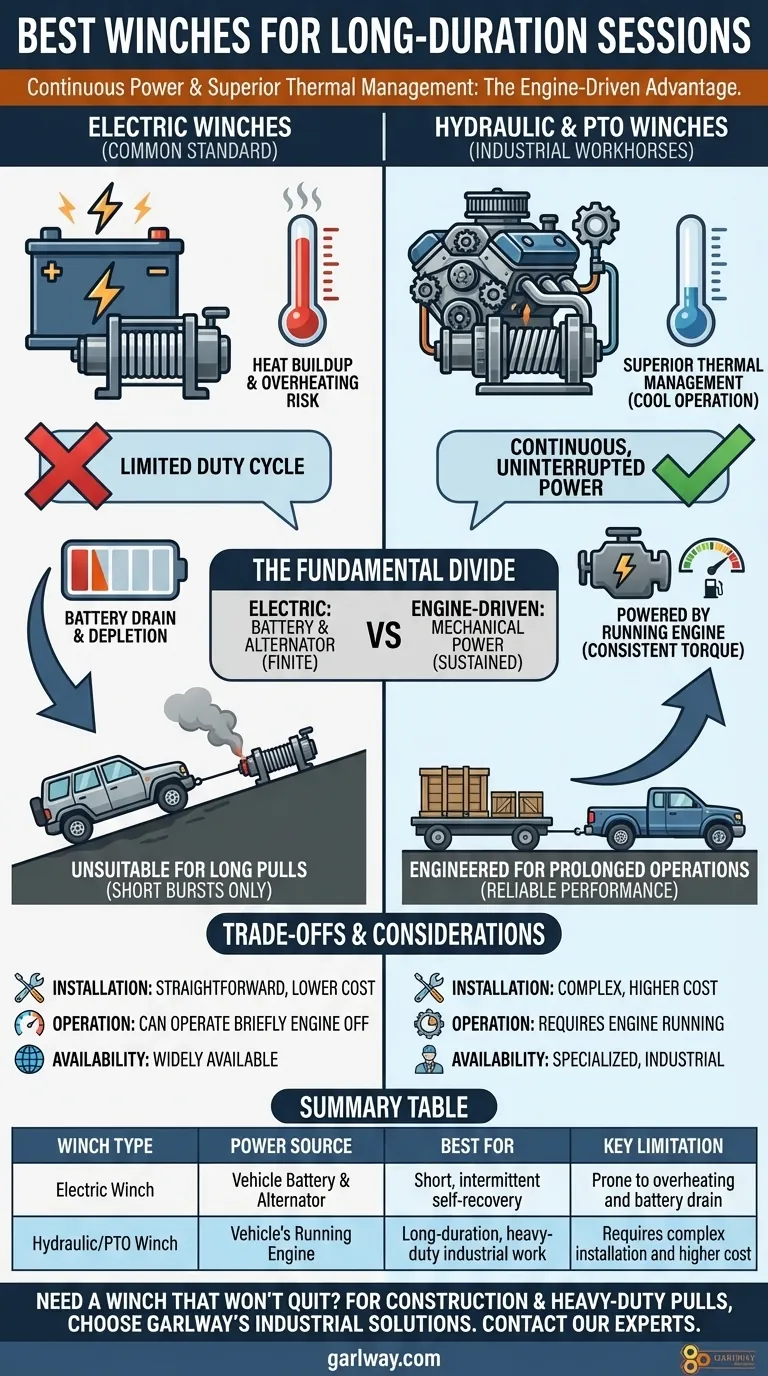
The critical factor for extended winching is not just pulling capacity, but the winch's power source and its ability to manage heat. While electric winches are convenient for short bursts, only engine-driven systems like hydraulic and PTO winches can provide the sustained, reliable power needed for prolonged operations.
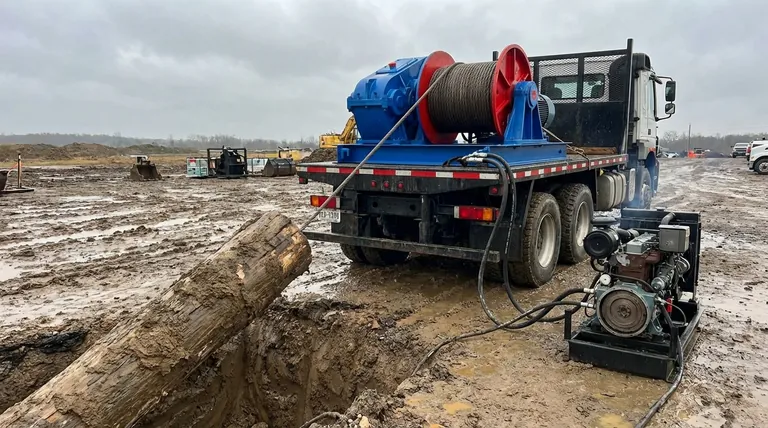
The Fundamental Divide: Electric vs. Engine-Driven Power
To understand why this distinction is so crucial, we must first look at how each type of winch functions. The power source dictates the winch's endurance and ideal use case.
Electric Winches: The Common Standard
Electric winches are the most common type found on consumer trucks and 4x4s. They are powered by the vehicle's electrical system, drawing a massive amount of current directly from the battery and alternator.
Their popularity stems from their relative ease of installation and lower upfront cost. They are perfectly suited for the most common winching scenario: brief, intermittent self-recovery pulls.
Hydraulic & PTO Winches: The Industrial Workhorses
Hydraulic and PTO winches are fundamentally different. Instead of relying on the electrical system, they tap into the vehicle's mechanical power.
A hydraulic winch is driven by fluid pressure, typically supplied by the vehicle's power steering pump. A PTO winch connects directly to the vehicle's transmission or transfer case, drawing mechanical power straight from the drivetrain.
Why Electric Winches Fail During Extended Use
While excellent for quick recoveries, electric winches have two significant vulnerabilities that make them unsuitable for long, heavy pulls.
The Overheating Problem
Electric motors generate immense heat under load. To prevent catastrophic failure, they are rated for a specific duty cycle—a period of operation followed by a much longer cool-down period.
Exceeding this duty cycle by winching continuously will damage the motor's internal components, leading to reduced performance and eventual failure.
The Battery Drain Dilemma
A heavy pull can cause an electric winch to draw over 400 amps of current. A vehicle's alternator, especially at idle, cannot produce nearly enough power to keep up with this demand.
This forces the winch to pull directly from the battery, rapidly draining its charge. A depleted battery not only stops the winch but can also leave you unable to start your vehicle, creating a more dangerous situation.
The Advantage of Engine-Driven Systems
Hydraulic and PTO winches solve the two core problems of heat and power that limit electric models. Their design is inherently built for endurance.
Continuous, Uninterrupted Power
Because these winches are powered by the engine, they can run for as long as the engine is running. Their power source is not a finite battery but the consistent, massive torque produced by the vehicle's internal combustion engine.
Superior Thermal Management
These systems are built to manage heat effectively. Hydraulic systems use circulating fluid to dissipate heat, while PTO systems are integrated into the vehicle's robust drivetrain, which is designed for constant, heavy workloads. This prevents the thermal breakdown that plagues electric motors during prolonged use.
Understanding the Trade-offs
The superior endurance of hydraulic and PTO winches comes with significant trade-offs that are critical to consider.
Installation and Cost
Electric winches are a relatively straightforward, self-contained system to install. Hydraulic and PTO winches require complex integration with the vehicle's core systems, demanding specialized labor and parts. This makes them significantly more expensive to purchase and install.
Operational Requirements
An electric winch can technically operate for a very short time with the engine off. In contrast, hydraulic and PTO winches cannot function at all unless the vehicle's engine is running.
Availability and Compatibility
Electric winches are widely available for nearly any truck or SUV. Hydraulic and PTO systems are more specialized and are typically found on commercial, agricultural, or purpose-built industrial vehicles where their cost and complexity are justified by the need for relentless reliability.
Making the Right Choice for Your Needs
Choosing the correct winch requires an honest assessment of your most likely use case.
- If your primary focus is occasional self-recovery or helping others on a recreational trail: An electric winch offers the best balance of cost, accessibility, and performance for short, infrequent pulls.
- If your primary focus is commercial work, industrial applications, or expeditions where long, arduous, and continuous pulls are a real possibility: A hydraulic or PTO winch is the only professional-grade solution that guarantees performance and reliability.
Ultimately, matching the winch's core architecture to your expected workload is the key to a safe and successful recovery.
Summary Table:
| Winch Type | Power Source | Best For | Key Limitation |
|---|---|---|---|
| Electric Winch | Vehicle Battery & Alternator | Short, intermittent self-recovery pulls | Prone to overheating and battery drain |
| Hydraulic/PTO Winch | Vehicle's Running Engine | Long-duration, heavy-duty industrial work | Requires complex installation and higher cost |
Need a winch that won't quit on the job? For construction companies and contractors who demand reliability during long, arduous pulls, GARLWAY's industrial-grade hydraulic and PTO winches are engineered for continuous power and superior thermal management. Don't let equipment failure halt your progress—contact our experts today to find the perfect winch solution for your heavy-duty needs.
Visual Guide
Related Products
- Warn Winch Windlass Boat Trailer Winch
- Electric and Hydraulic Winch for Heavy Duty Applications
- Small Electric Winch 120V and 240V for Compact Applications
- 12000 lb Electric Boat Trailer Winch with Windlass Anchor Warn
- Quick Windlass Portable Winch for Truck and Boat Best Boat Winch
People Also Ask
- What are the main components of a boat trailer winch? A Guide to Safe & Efficient Boat Loading
- What factors should be considered when choosing a boat trailer winch? Ensure Safe and Effortless Boat Loading
- What is the purpose of boat trailer winches? Safely and Efficiently Load Your Boat
- What are the two main types of boat trailer winches? Manual vs. Electric Explained
- How often should a boat trailer winch be replaced? Your Guide to Safety and Longevity