
The primary alternative to a drum winch for handling a combination rode is a standard vertical or horizontal anchor windlass equipped with a specialized combination gypsy. These modern gypsies are engineered with unique teeth that can grip both rope and chain seamlessly, feeding the entire rode into an anchor locker below deck without manual intervention.
Choosing an anchoring system is not about which is "better," but about understanding the fundamental difference in how they operate: a drum winch spools and stores the entire rode on deck, while a windlass retrieves and feeds the rode into a separate locker.
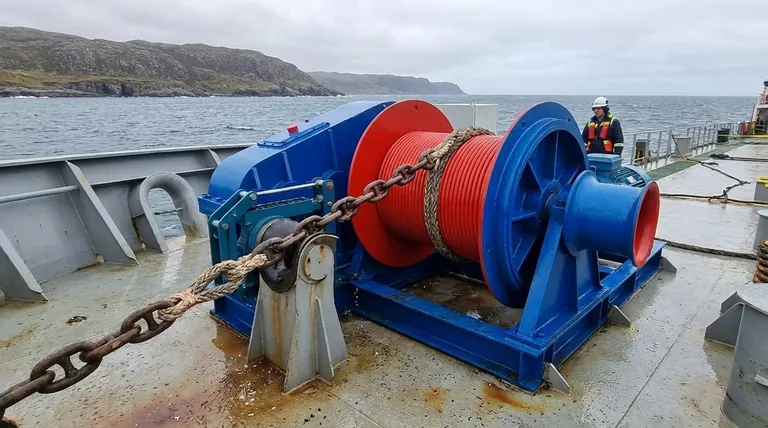
How Each System Manages a Combination Rode
To make an informed decision, you must first grasp the core mechanical difference between these two systems. They solve the same problem—retrieving a mixed rope/chain rode—in fundamentally different ways.
The Drum Winch: Spooling Everything Together
A drum winch acts like a massive fishing reel. The entire length of your rope and chain is wound directly onto the large drum, which is typically mounted on the foredeck.
Its primary advantage is simplicity of concept and often a very high retrieval speed. It is particularly effective for deep-water anchoring where long rodes are common.
The Windlass with a Combination Gypsy: The Feed-Through Solution
A modern windlass, like those in the Maxwell HRC series, uses a much smaller rotating component called a gypsy. This gypsy is specifically designed to engage the links of the chain and firmly grip the anchor rope.
Instead of storing the rode, the windlass simply pulls it up and feeds it through a hole in the deck (the hawsepipe) into a dedicated anchor locker below. This keeps the deck clear and protects the rode.
Understanding the Key Differences
The choice between a drum and a windlass system impacts your boat's layout, your anchoring process, and the longevity of your equipment.
On-Deck Footprint and Storage
A drum winch is a large, self-contained unit that occupies significant space on your deck. It holds the entire rode, eliminating the need for a deep anchor locker.
A windlass, especially a vertical model, has a much smaller on-deck footprint. However, it requires a dedicated, sufficiently deep anchor locker below deck for the rode to fall into.
Rode Handling and Potential for Jams
With a drum winch, the rode can sometimes "bunch up" on one side of the drum, requiring you to manually guide it for an even wrap. If not spooled evenly, the rope can get crushed under the pressure of the layers above it.
A windlass avoids this issue but can introduce another: chain piling. If the rode piles up in the locker and reaches the bottom of the hawsepipe, it can prevent more rode from coming in, causing a jam at the windlass itself.
Wear and Tear on Your Equipment
The references correctly note that on a drum winch, the steel chain is spooled directly against the drum's surface (often aluminum), which can cause abrasion and wear over time.
A windlass gypsy is made of hardened material designed for this contact. The rode itself is stored loosely in a locker, protecting it from the sun and reducing compression damage to the rope section.
The Critical Trade-offs to Consider
Neither system is perfect. Being aware of the potential downsides is essential for making a choice that aligns with your tolerance for maintenance and operational quirks.
Alignment Sensitivity
Proper alignment between the bow roller and the drum winch is absolutely critical. A poor angle will cause the rode to bunch up on one side of the drum, leading to jams and uneven spooling.
A windlass is generally more forgiving with alignment, though a fair lead from the bow roller is still important for smooth operation and to reduce wear on the gypsy.
Risk of Rope Binding vs. Chain Piling
The core risk with a drum winch is the rope section getting wedged and crushed under high tension.
The core risk with a windlass is the rode creating a pile in the anchor locker that blocks the incoming chain or rope, forcing you to manually knock the pile over to clear the jam.
Manual Intervention Requirements
While both systems are designed to be hands-off, they can require intervention. A drum winch may need you to guide the line for a level wind, while a windlass may need you to clear a pile-up in the locker below deck.
Making the Right Choice for Your Vessel
Your decision should be based on your vessel's design, your typical anchoring depth, and your personal priorities.
- If your primary focus is deep-water anchoring with very long rodes: A drum winch often provides faster retrieval and simpler storage for extreme lengths of line and chain.
- If your primary focus is maximizing clear deck space: A vertical windlass with a combination gypsy offers a much smaller footprint and keeps the rode neatly stowed below.
- If your primary focus is protecting your rode and minimizing complexity: A windlass system protects the rope and chain from UV damage and eliminates the need to worry about level-winding onto a drum.
Ultimately, understanding these core operational differences empowers you to select the anchoring system that best serves your needs on the water.
Summary Table:
| System | Primary Function | Rode Storage | Key Advantage | Key Consideration |
|---|---|---|---|---|
| Drum Winch | Spools & stores rode on deck | On the drum itself | High retrieval speed for deep water | Requires careful level-winding to avoid jams |
| Windlass with Combination Gypsy | Retrieves & feeds rode into locker | Below deck in anchor locker | Clear deck space, protects rode from UV/compression | Requires a deep locker to prevent chain piling/jams |
Still deciding on the best anchoring system for your vessel?
At GARLWAY, we specialize in robust construction and marine machinery, including powerful winches and hauling solutions. Our expertise can help you select the right equipment for reliable performance and durability.
Contact our experts today to discuss your specific needs and ensure your anchoring system is up to the task.
Get a Personalized Consultation →
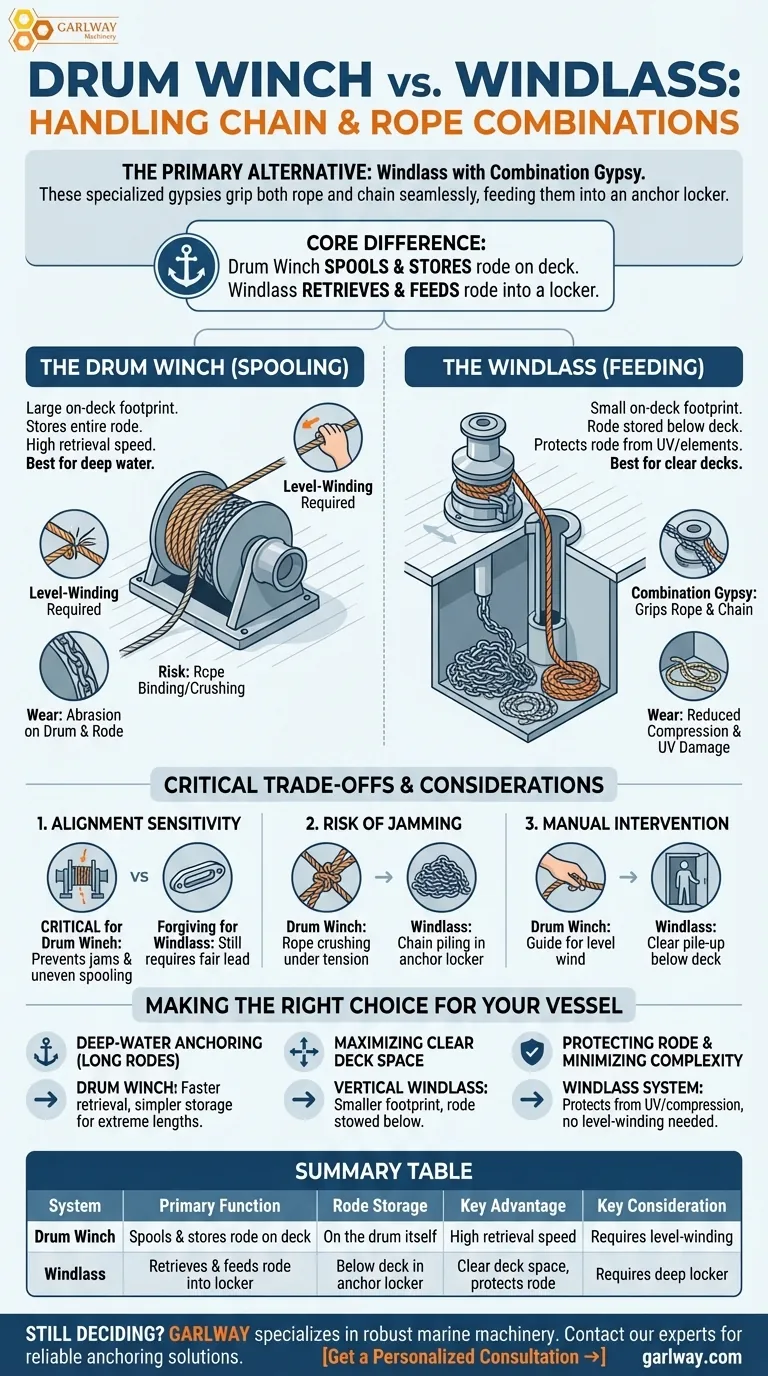
Visual Guide
Related Products
- Warn Winch Windlass Boat Trailer Winch
- Quick Windlass Portable Winch for Truck and Boat Best Boat Winch
- Electric Hoist Winch Boat Anchor Windlass for Marine Applications
- Heavy Duty Electric Boat Winch Windlass Anchor
- 12000 lb Electric Boat Trailer Winch with Windlass Anchor Warn
People Also Ask
- What are the main components of a boat trailer winch? A Guide to Safe & Efficient Boat Loading
- What factors should be considered when choosing a boat trailer winch? Ensure Safe and Effortless Boat Loading
- What is the purpose of boat trailer winches? Safely and Efficiently Load Your Boat
- What are the two main types of boat trailer winches? Manual vs. Electric Explained
- How often should a boat trailer winch be replaced? Your Guide to Safety and Longevity


