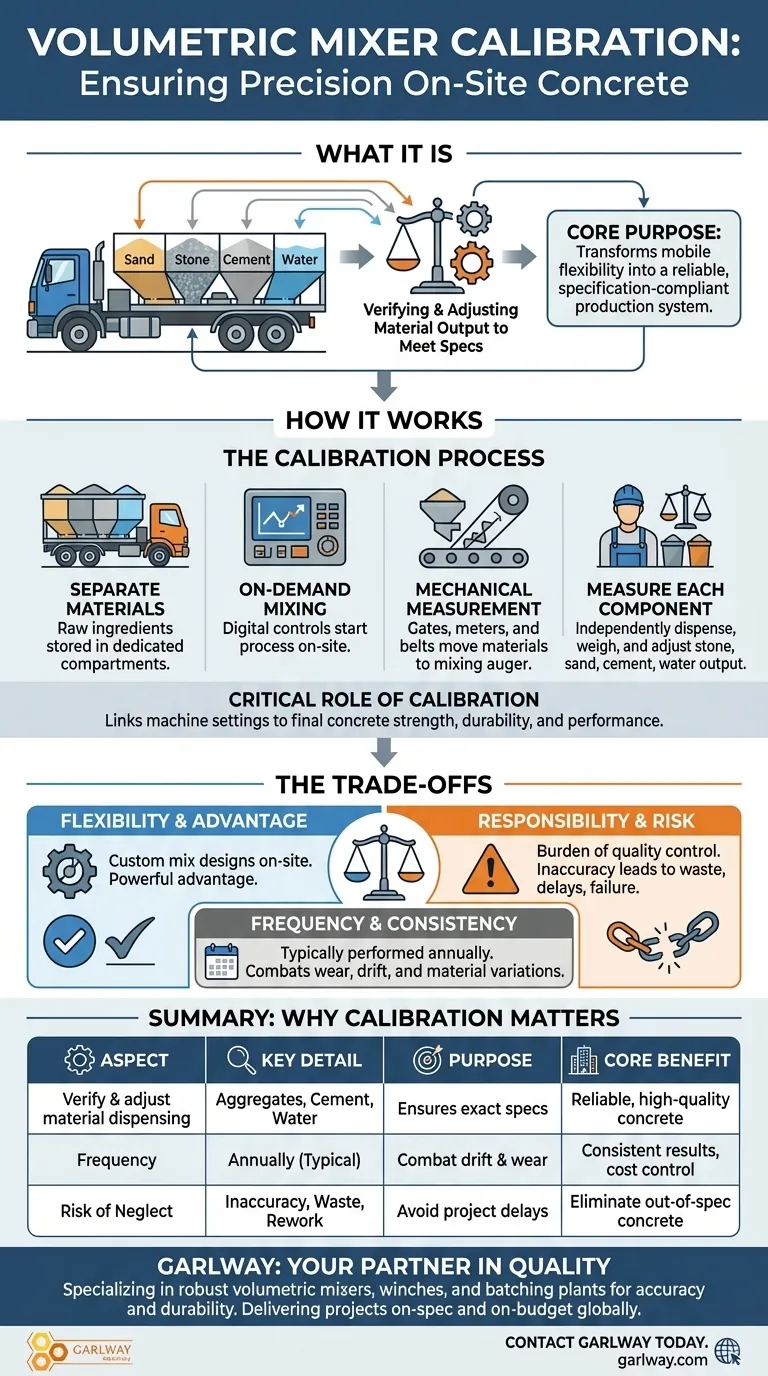
In short, volumetric mixer calibration is the process of verifying and adjusting the machine to ensure it dispenses the precise, pre-determined amounts of raw materials—sand, stone, cement, and water. This verification is performed regularly, typically on a yearly basis, by measuring each material's output separately to guarantee the final concrete mix meets exact engineering and quality specifications.
The core purpose of calibration is to transform the flexibility of a mobile concrete mixer into a reliable, specification-compliant production system. It is the essential quality control step that guarantees the concrete produced on-site is exactly what was designed.
How a Volumetric Mixer Operates
To understand calibration, you must first understand the machine. A volumetric mixer is not just a truck; it's a mobile, self-contained batch plant.
Separate Compartments for Raw Materials
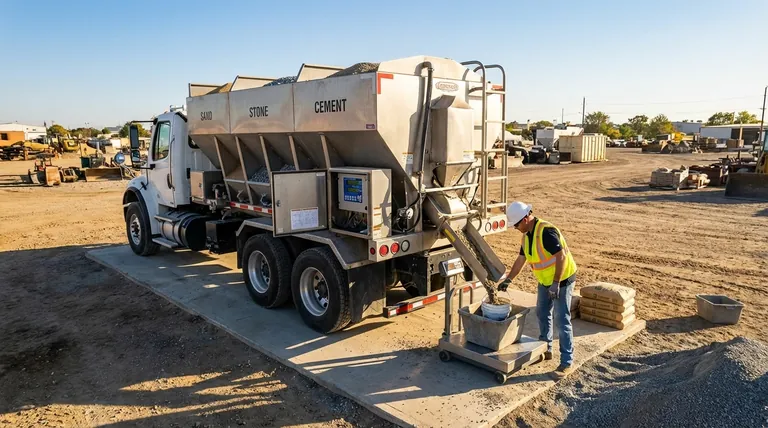
Unlike a traditional drum mixer that receives pre-mixed concrete from a central plant, a volumetric mixer carries all the raw ingredients in separate, dedicated compartments. This includes bins for sand and stone (aggregates), a silo for cement, and a tank for water.
On-Site, On-Demand Mixing
The key advantage is that these materials are not mixed until the truck is at the job site. The operator uses a digital control system to start the process, producing fresh concrete in the exact volume required, eliminating waste and the time constraints of pre-mixed concrete.
The Mechanical Process
A system of gates, meters, and conveyor belts moves the aggregates and cement from their bins onto a central belt. They are then transported to a mixing auger at the rear of the truck, where water and any admixtures are precisely introduced. The auger combines everything thoroughly as the finished concrete is dispensed.
The Critical Role of Calibration
The entire value proposition of a volumetric mixer hinges on its ability to measure materials accurately. This is where calibration becomes non-negotiable.
From Volume to Quality
Calibration ensures that when an operator dials in a specific mix design, the machine's mechanical components deliver the correct volume of each ingredient. This process directly links the machine's settings to the final concrete's strength, durability, and performance.
Measuring Each Component
During calibration, each material's dispensing system is tested independently. Technicians will run the machine to dispense a set amount of stone, weigh it, and adjust the gate settings until the output is perfect. This is repeated for sand, cement, and water, ensuring every part of the system is precise.
Ensuring Consistency Over Time
Calibration is not a one-time event. Mechanical wear, material variations, and environmental factors can cause gradual drifts in accuracy. A formal calibration, often performed annually, resets the machine to its baseline and confirms its ongoing reliability.
Understanding the Trade-offs
While volumetric mixers offer incredible flexibility, that benefit comes with a direct operational responsibility.
Flexibility vs. Responsibility
The ability to create custom mix designs on-site is a powerful advantage. However, this places the burden of quality control squarely on the equipment and its operator. Without rigorous and documented calibration, that flexibility can become a liability.
The Cost of Inaccuracy
Poor or neglected calibration leads to inconsistent concrete. Too little cement results in weak concrete that can compromise structural integrity. Too much cement wastes expensive material and can alter the concrete's properties. In either case, the result is project delays, budget overruns, and potential failure to meet project specifications.
Making the Right Choice for Your Goal
Proper calibration is the foundation of reliable volumetric concrete production. Its importance depends on your primary objective.
- If your primary focus is meeting strict engineering specifications: Calibration is your non-negotiable proof that the concrete produced will meet the required compressive strength and durability standards.
- If your primary focus is operational efficiency and cost control: Accurate calibration prevents the waste of expensive materials like cement and eliminates the costly rework associated with out-of-spec concrete.
Ultimately, consistent calibration ensures that the promise of on-demand, high-quality concrete becomes a reality on every job.
Summary Table:
| Aspect | Key Detail |
|---|---|
| Purpose | Verify and adjust material dispensing (aggregates, cement, water) |
| Frequency | Typically performed annually |
| Core Benefit | Ensures concrete meets exact strength and durability specifications |
| Risk of Neglect | Inconsistent concrete, structural issues, material waste, rework costs |
Need reliable, high-quality concrete on your projects?
GARLWAY specializes in construction machinery, offering robust volumetric mixers, winches, and concrete batching plants designed for accuracy and durability. Our equipment, backed by expert support, helps construction companies and contractors globally deliver projects on-spec and on-budget.
Contact GARLWAY today to discuss how our solutions can enhance your on-site concrete production and quality control.
Visual Guide
Related Products
- Belle Cement Mixer JS2000 Volumetric Concrete Mixer for Harbor Freight
- JS1000 Volumetric Concrete Mortar Mixer for Sale Skid Steer Cement Mixer
- Harbor Freight JS1500 On Site Concrete Mixing Volumetric Cement Mixer
- Portable Concrete Mixer Machine Equipment for Mixing Concrete
- HZS90 Large Multiquip Concrete Mixers for Construction
People Also Ask
- What is a volumetric concrete mixer? A Mobile Concrete Batch Plant for On-Demand Mixing
- What is the predicted future for volumetric concrete mixers? Growth Driven by On-Demand Efficiency
- How does a volumetric concrete mixer contribute to sustainability? Reduce Waste, Water, and Emissions On-Site
- How does volumetric concrete compare to ready-mix concrete? Choose the Right Method for Your Project
- What types of concrete can be produced with volumetric mixers? Achieve On-Demand Mixing for Any Project